
Introduction
The June 2026 release of the PMSG (Power Management Scheme) data highlights how millions of households across West India have received electricity benefits under the scheme. Understanding the distribution of Households Benefitted under PMSG is crucial for policymakers, utilities, and investors who seek to gauge the impact of electrification programs. This article breaks down the latest figures, compares state‑wise performance, and discusses the broader implications for the power sector and regional development.
What Does the Data Reveal About This Topic?
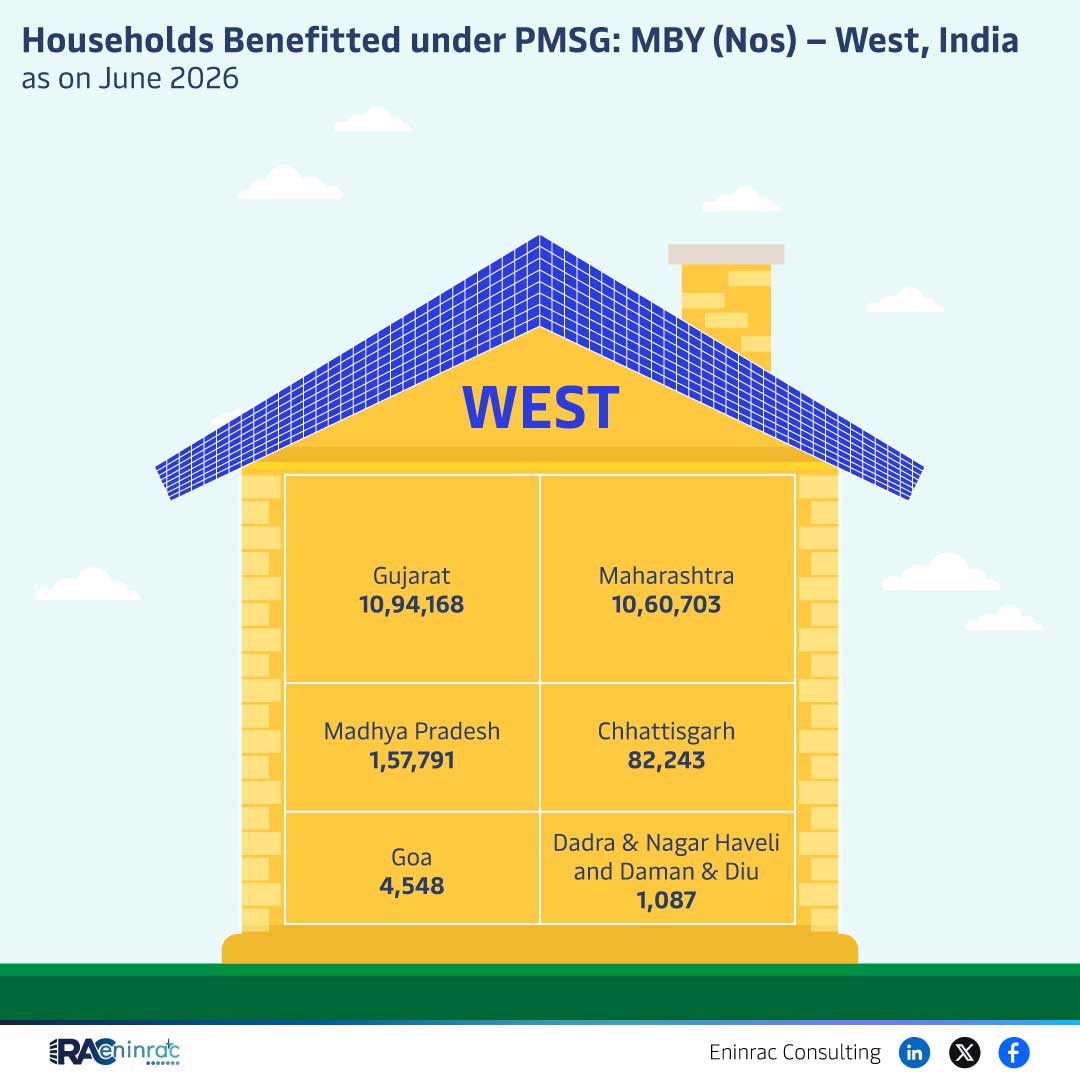
The data shows a clear concentration of benefits in Gujarat and Maharashtra, where 1,094,168 and 1,060,703 households respectively have been supported. Smaller states such as Goa and the union territories record only 1,087 households. The disparity raises questions about resource allocation, implementation efficiency, and the potential for scaling the program in less‑served regions.
State‑wise Comparison of PMSG Household Benefits
Gujarat leads with over one million households, closely followed by Maharashtra, together accounting for more than two million beneficiaries. Madhya Pradesh adds 157,791 households and Chhattisgarh contributes 82,243, reflecting moderate outreach in central India. Goa, Dadra & Nagar Haveli, and Daman & Diu together show just 1,087 beneficiaries, indicating limited penetration in coastal and union‑territory areas. The consulting entry listed as 4,548 suggests auxiliary support activities but remains marginal compared with state totals.
Impact on Sectors and Industries
These figures influence multiple sectors. The power generation and distribution industries adjust capacity planning based on demand from newly electrified households. Renewable energy projects gain market confidence as electrification expands. Financial institutions assess credit risk for utilities serving larger beneficiary bases. Governments can target subsidies and infrastructure upgrades more precisely, while NGOs and community groups focus on underserved regions to promote inclusive growth.
Key Takeaways
- Gujarat and Maharashtra together host over two million PMSG beneficiaries.
- Madhya Pradesh and Chhattisgarh together exceed two‑hundred thousand households.
- Goa and adjacent union territories lag significantly with just over one thousand beneficiaries.
- Regional gaps highlight the need for targeted policy interventions.
- Accurate household data supports better planning for generation and distribution assets.
- Stakeholders can use the insights to prioritize investments and social programs.
FAQs
Which states have the highest number of households benefitted under PMSG?
Gujarat (1,094,168) and Maharashtra (1,060,703) hold the top positions.
How many households benefited in Goa and the surrounding union territories?
Only 1,087 households were recorded as benefitted.
What does the figure 4,548 represent in the data set?
It likely reflects auxiliary consulting support associated with the PMSG rollout.
Why is there a large disparity between western and coastal states?
Differences in implementation capacity, funding allocation, and regional infrastructure development contribute to the gap.
How can policymakers use this data?
By identifying underserved areas, they can design targeted subsidies, improve grid connectivity, and allocate resources more efficiently.