
Introduction
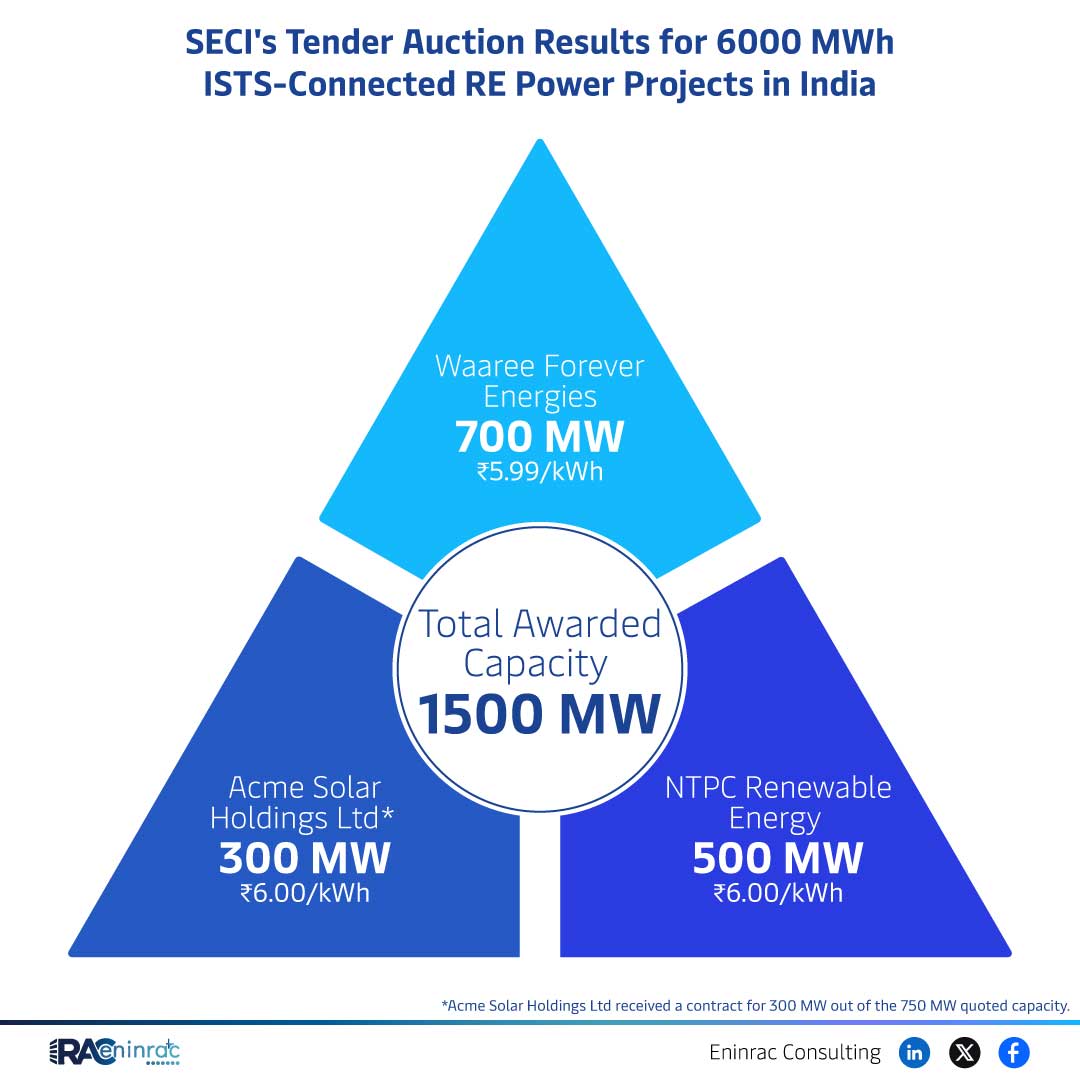
SECIs Tender Auction results for a 6,000 MWh block have been released, offering a clear snapshot of the current momentum in India’s renewable energy market. The auction awarded a total of 1,500 MW of capacity to multiple developers, signalling strong policy support and investor confidence. Among the winners, Acme Solar NTPC Renewable Holdings Ltd secured a 300 MW contract from an originally quoted 750 MW, reflecting competitive pricing at ₹6.00 per kilowatt‑hour. This article unpacks the significance of these numbers, explores how they fit into the broader IS‑TS connected power landscape, and outlines what stakeholders can expect moving forward.
What Does the Data Reveal About This Topic?
The data prompts a straightforward question: what does a 300 MW award within a 1,500 MW allocation tell us about market dynamics? It indicates that bidders are willing to commit sizable blocks yet remain flexible, as Acme Solar opted for less than half of its quoted capacity to match price expectations. The uniform price of ₹6.00/kWh across awarded projects suggests a level playing field, reducing cost uncertainty for developers. Moreover, the focus on IS‑TS‑connected projects highlights an emphasis on integrating renewable generation with existing transmission infrastructure, a critical step toward grid stability.
Detailed Analysis of Awarded Capacity and Pricing
Comparing the quoted 750 MW capacity from Acme Solar with the actual 300 MW award reveals a strategic down‑selection driven by price competitiveness and grid availability. The SECIs auction set a flat rate of ₹6.00/kWh, which aligns with recent trends in solar PPAs across India, making the deal attractive for both the developer and the procurer. When aggregated with other winners, the 1,500 MW total represents roughly 25 % of the 6,000 MWh energy block, indicating that the remaining volume will likely be filled in subsequent rounds or through supplemental agreements. This balance between volume and price ensures that the auction meets fiscal targets while advancing renewable capacity goals.
Impact on Sectors and Industries
The outcome of the SECIs tender reverberates across several industry segments. For solar developers, the clear price signal reduces financing risk and accelerates project pipelines. Grid operators benefit from the emphasis on IS‑TS connectivity, which eases integration of intermittent solar output. Investors see a more predictable revenue model, encouraging capital inflow into Indian renewable infrastructure. Policymakers can gauge the effectiveness of price caps and capacity targets, adjusting future auction designs accordingly. Ultimately, the awarded capacity supports India's broader clean‑energy commitments, contributing to reduced emissions and enhanced energy security.
Key Takeaways
- SECIs auction allocated 1,500 MW across multiple bidders.
- Acme Solar secured 300 MW, half of its quoted 750 MW.
- Uniform price of ₹6.00/kWh set a competitive benchmark.
- IS‑TS connectivity emphasized for grid reliability.
- Awarded capacity fulfills roughly 25 % of the 6,000 MWh block.
- Market confidence rises as renewable projects gain firm contracts.
FAQs
What is the total energy volume of the SECIs auction?
The auction covered 6,000 MWh of renewable energy.
How many megawatts were awarded in total?
A total of 1,500 MW of capacity was awarded.
What price was set for the awarded solar capacity?
The flat price was ₹6.00 per kilowatt‑hour.
Why did Acme Solar receive only 300 MW instead of 750 MW?
The company chose a smaller block to match price and grid constraints.
How does IS‑TS connectivity affect renewable projects?
It ensures better integration with the transmission network, improving stability and efficiency.