
Introduction
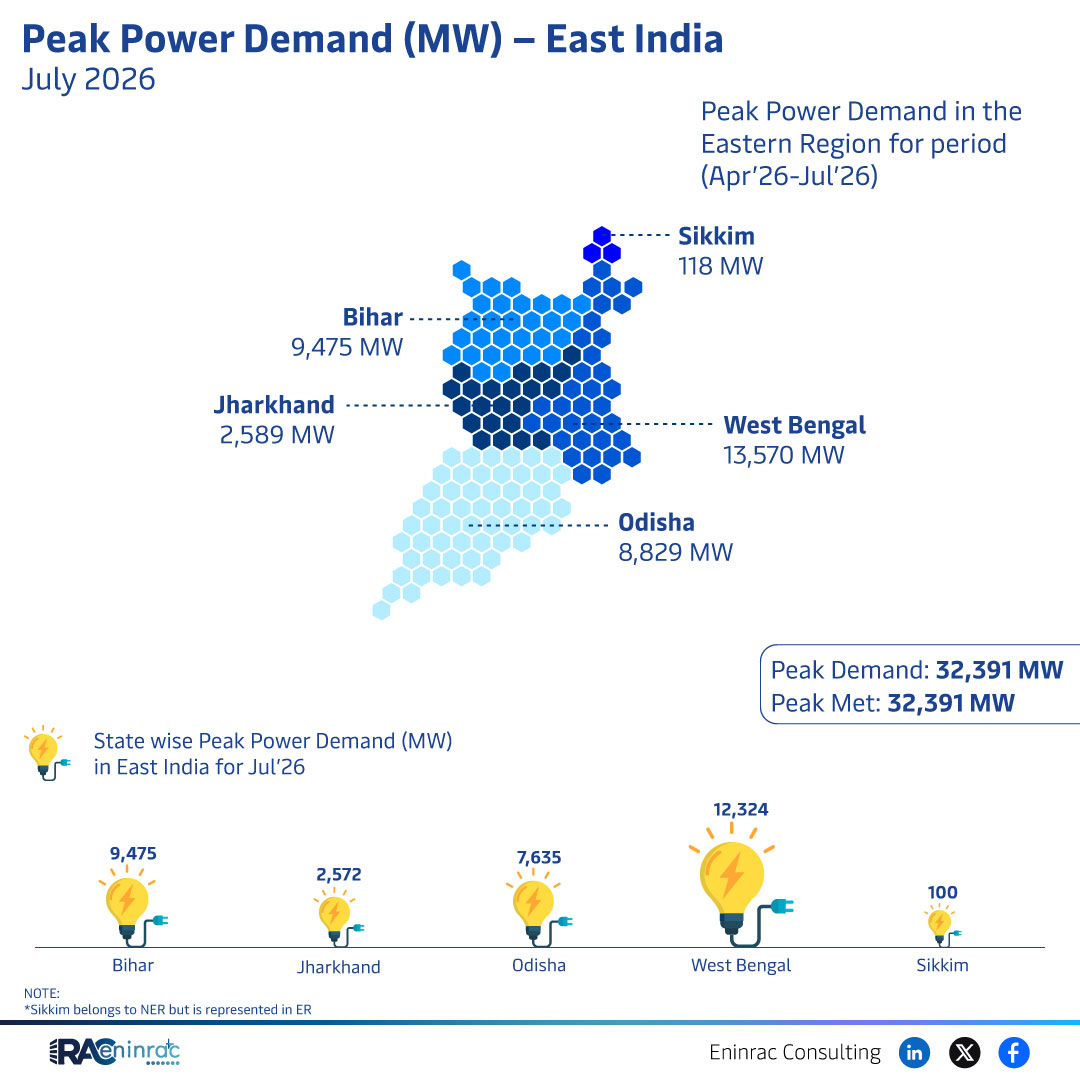
The Eastern Region of India recorded a remarkable peak power demand in July 2026, reaching a cumulative 32,391 MW across six states. This figure reflects the highest electricity load observed between April and July 2026, driven by seasonal temperature rises, industrial activity, and increased residential consumption. Understanding the distribution of this demand helps utilities, policymakers, and investors gauge system stress, plan capacity upgrades, and anticipate future energy needs. In this article we break down the state‑wise numbers, compare performance, and discuss the broader implications for the power sector.
What Does the Data Reveal About This Topic?
Which states contributed most to the peak power demand and why does the figure matter? The data shows West Bengal leading with 13,570 MW, followed by Bihar at 9,475 MW and Jharkhand at 2,589 MW. Odisha and Sikkim add 8,829 MW and 18 MW respectively. These numbers indicate that the bulk of the load is concentrated in densely populated and industrialized states, highlighting the need for robust grid infrastructure and targeted demand‑side management. The overall peak of 32,391 MW underscores the scale of electricity consumption during peak summer months.
State‑wise Comparison of July 2026 Peak Demand
A closer look reveals stark contrasts. West Bengal’s 13,570 MW accounts for over 42 % of the regional total, driven by its large urban centers and manufacturing base. Bihar, with 9,475 MW, represents nearly 29 % and reflects rapid economic growth and rising per‑capita usage. Jharkhand’s 2,589 MW, while lower, is significant given its mining industry. Odisha’s 8,829 MW shows a balanced mix of industrial and residential loads. Sikkim’s modest 18 MW is a reminder that it is part of the North‑East Region but reported here for completeness. The disparity illustrates where grid reinforcement and renewable integration are most urgent.
Impact on Sectors and Industries
High peak demand influences multiple sectors. Power generators must ensure sufficient capacity, prompting calls for additional thermal plants or accelerated renewable projects. Transmission operators face heightened stress on inter‑state lines, requiring upgrades to avoid congestion. Distribution utilities must manage load curtailment and implement smart metering to smooth demand spikes. For investors, the data signals opportunities in energy storage, demand‑response services, and grid‑modernization technologies. Policymakers can use these insights to refine tariff structures, promote efficiency programs, and prioritize funding for resilient infrastructure.
Key Takeaways
- West Bengal recorded the highest peak demand at 13,570 MW.
- Bihar contributed 9,475 MW, making it the second‑largest consumer.
- Overall regional peak reached 32,391 MW in July 2026.
- Demand is heavily concentrated in industrial and urban zones.
- Grid upgrades and renewable integration are critical for reliability.
- Data guides investors toward storage and demand‑side solutions.
FAQs
What was the total peak power demand in East India for July 2026?
The region recorded a combined peak of 32,391 MW across all six states.
Which state had the lowest peak demand?
Sikkim had the lowest reported peak demand, standing at 18 MW.
How does peak demand affect electricity pricing?
Higher peak loads can trigger elevated tariffs during peak periods to manage demand and fund infrastructure upgrades.
What measures can reduce peak demand in the Eastern Region?
Implementing demand‑response programs, expanding renewable capacity, and improving energy efficiency are effective strategies.
Why is West Bengal’s demand so high compared to other states?
West Bengal’s large urban population, industrial activities, and commercial load drive its dominant share of peak demand.