
Introduction
The July 2026 peak power demand data for North East India provides a clear snapshot of electricity consumption across the eight states of the region. Understanding which states generate the highest load helps planners, utilities, and investors allocate resources, improve grid reliability, and shape policy decisions. This article explains the key figures, highlights the leading state, compares regional performance, and discusses the broader implications for the power sector and related industries.
What Does the Data Reveal About This Topic?
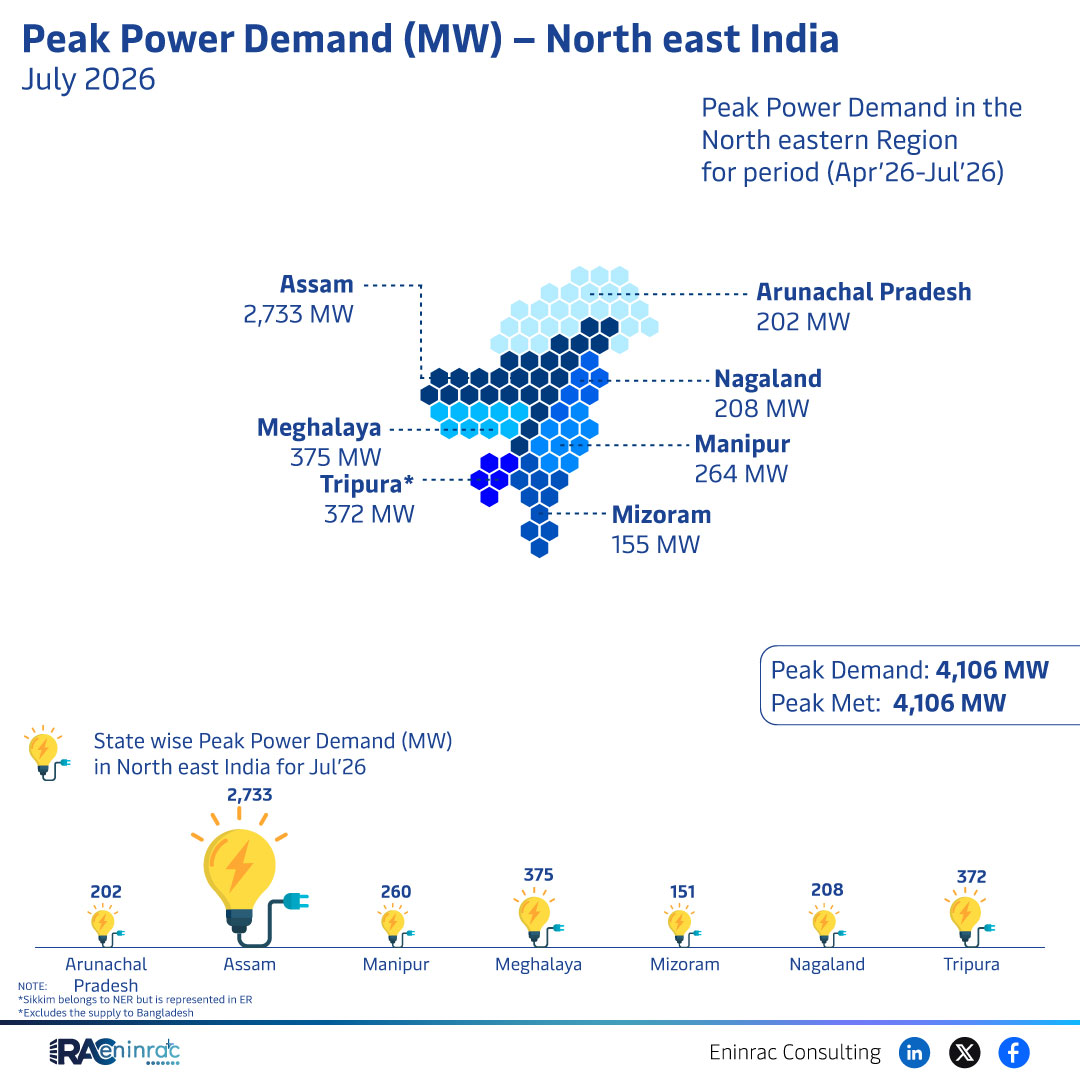
The data shows that Assam recorded the highest peak power demand at 2,733 MW, followed by a steep drop to the next highest state, Arunachal Pradesh, at 202 MW. The total peak demand for the region in July 2026 reached 4,106 MW. This contrast raises the question of why demand is heavily concentrated in Assam and what factors drive the lower demand in neighboring states.
Statewise Comparison of Peak Power Demand in July 2026
When the numbers are placed side by side, Assam’s demand stands out as more than ten times that of the second‑largest state, Arunachal Pradesh. Meghalaya, Manipur, and Tripura each reported demands ranging from 264 MW to 372 MW, while Mizoram, Nagaland, and the rest of the region contributed between 155 MW and 208 MW. The variation reflects differences in population density, industrial activity, and the extent of electrified infrastructure. Assam’s larger urban centers, higher industrial load, and greater connectivity to the national grid explain its dominant position.
Impact on Sectors and Industries
The concentration of peak demand in Assam influences several sectors. Power generators must ensure sufficient capacity and reserve margins to meet peak loads, prompting investments in new generation assets and renewable integration. Transmission operators need to upgrade inter‑state lines to handle the flow from Assam to neighboring states, reducing congestion and losses. Distribution companies benefit from targeted demand‑side management programs that can smooth peaks. Policymakers can use these insights to design region‑specific incentives for energy efficiency, while investors may seek opportunities in areas with lower demand but high growth potential.
Key Takeaways
- Assam leads the region with a peak demand of 2,733 MW in July 2026.
- The total regional peak demand reached 4,106 MW, highlighting the overall load profile.
- There is a pronounced gap between Assam and other Northeastern states.
- Population density and industrial activity drive Assam’s higher electricity consumption.
- Transmission and distribution upgrades are essential to balance regional load.
- Targeted policies can stimulate growth in lower‑demand states while enhancing grid stability.
FAQs
Why is Assam’s peak power demand significantly higher than other Northeastern states?
Assam has larger cities, more industrial activity, and better grid connectivity, which together increase its electricity consumption during peak periods.
What does a total regional peak demand of 4,106 MW indicate for the power sector?
It signals the maximum load the regional grid must support in July 2026, guiding capacity planning and reserve requirements.
How can lower‑demand states improve their peak power figures?
Investments in industrial development, grid expansion, and renewable energy projects can raise demand and improve reliability.
What role do transmission upgrades play in balancing the regional load?
Enhanced transmission lines reduce congestion, allow electricity to flow from high‑demand areas like Assam to lower‑demand states, and improve overall system stability.
How should investors interpret this peak demand data?
Investors can identify opportunities in high‑demand regions for generation assets while also exploring growth potential in states with emerging electricity needs.