
Introduction
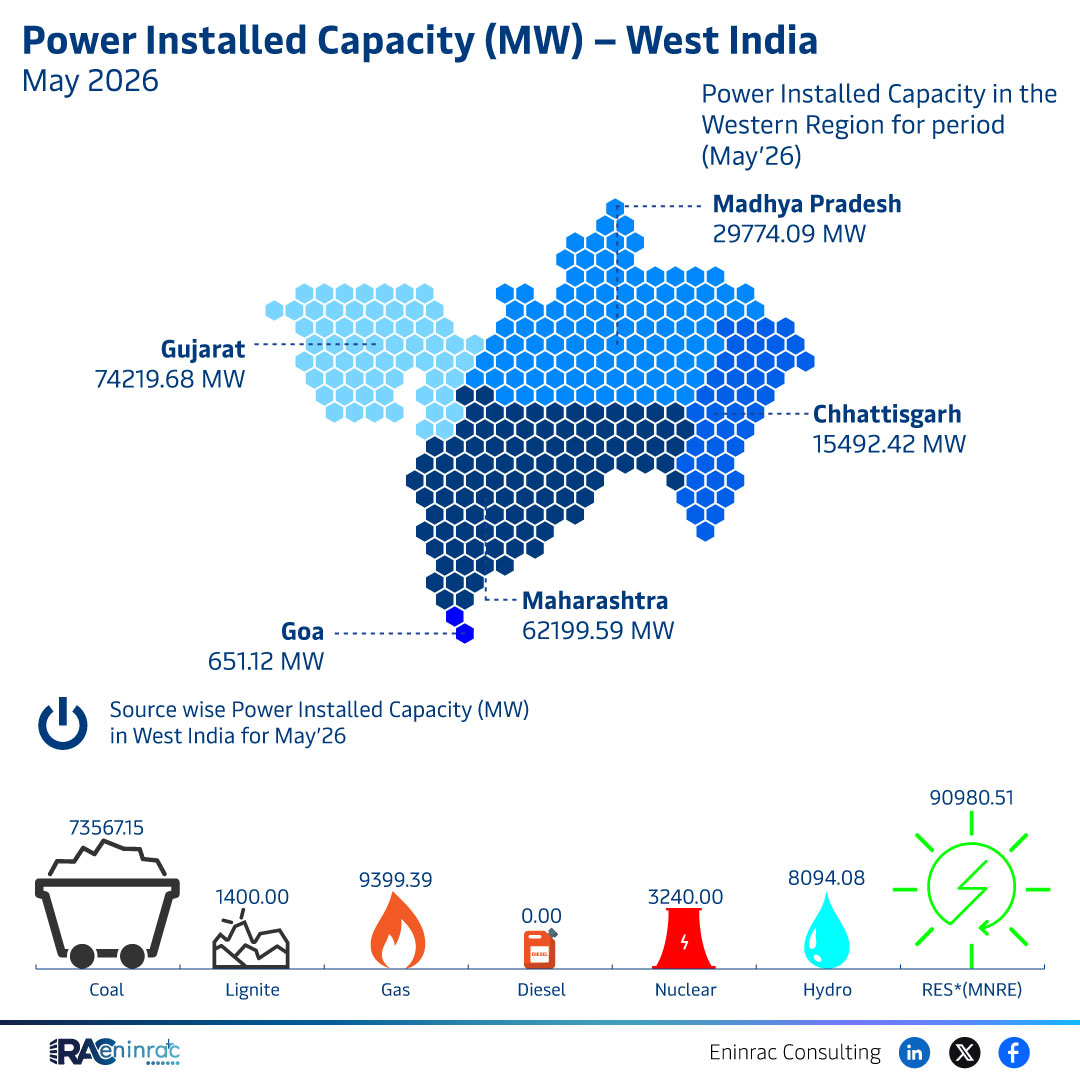
West India power installed capacity in May 2026 reflects the regional energy landscape across Madhya Pradesh, Gujarat, Chhattisgarh, Maharashtra, and Goa. This analysis presents the total installed generation capacity of the Western Region and the source-wise break-up for the period May 2026. Readers will learn about state-level capacity distribution, leading states by installed power, and how different generation sources such as coal, lignite, gas, diesel, nuclear, hydro, and renewable energy under MNRE contribute to the regional mix. Understanding West India power installed capacity is essential for policymakers, investors, and energy sector stakeholders tracking India's western grid development.
What Does the Data Reveal About This Topic?
What is the total West India power installed capacity in May 2026? The raw data shows state capacities of 29774.09 MW for Madhya Pradesh, 74219.68 MW for Gujarat, 15492.42 MW for Chhattisgarh, 62199.59 MW for Maharashtra, and 651.12 MW for Goa, summing to a regional total of approximately 182337 MW. The source-wise installed capacity for West India in May 2026 includes coal at 90980.51 MW, lignite at 7356.15 MW, gas at 9399.39 MW, diesel at 8094.08 MW, nuclear at 1400 MW, and hydro at 3240 MW, with RES under MNRE forming a major remaining share. This shows a coal-dominant profile with significant renewable integration across the western states.
State-Wise Capacity Leadership in Western Region
Gujarat leads West India power installed capacity with 74219.68 MW, followed by Maharashtra at 62199.59 MW and Madhya Pradesh at 29774.09 MW. Chhattisgarh contributes 15492.42 MW while Goa remains minimal at 651.12 MW. The comparative interpretation indicates that Gujarat and Maharashtra together account for nearly 75 percent of the Western Region capacity. Coal and RES dominate Gujarat and Maharashtra, whereas Chhattisgarh and Madhya Pradesh show higher coal dependency. Goa's small footprint reflects its limited generation role within the western power system.
Impact on Sectors and Industries
The West India power installed capacity data impacts multiple sectors including utilities, renewable developers, industrial consumers, and grid planners. High coal capacity signals continued thermal reliance, while RES growth under MNRE affects generation companies and open access consumers. Investors monitor state-level capacity to assess market potential. Policymakers use the source mix to plan transmission and balancing. Businesses in Gujarat and Maharashtra benefit from abundant supply, whereas smaller states face integration challenges within the western regional grid.
Key Takeaways
- Gujarat is the largest state by West India power installed capacity at 74219.68 MW.
- Maharashtra follows with 62199.59 MW of installed generation capacity.
- Madhya Pradesh contributes 29774.09 MW to the Western Region total.
- Chhattisgarh and Goa add 15492.42 MW and 651.12 MW respectively.
- Coal leads source-wise capacity at 90980.51 MW in May 2026.
- RES under MNRE and hydro form critical non-fossil capacity in the west.
FAQs
What is West India power installed capacity in May 2026?
It is the sum of state capacities in the Western Region, approximately 182337 MW across five states.
Which state has highest installed capacity in West India?
Gujarat leads with 74219.68 MW of power installed capacity in May 2026.
What are main sources of western region capacity?
Coal, lignite, gas, diesel, nuclear, hydro, and RES under MNRE are the key sources.
How much coal capacity exists in West India?
Coal installed capacity is 90980.51 MW as per the May 2026 source-wise data.
Why does Goa have low power capacity?
Goa's installed capacity is only 651.12 MW due to its small size and limited generation.