
Introduction
The September 2026 snapshot of West India power installed capacity provides a clear picture of how the western states are progressing toward meeting growing electricity demand. With detailed megawatt (MW) figures for Gujarat, Maharashtra, Chhattisgarh and Goa, the data highlights the mix of coal, lignite, gas, diesel and nuclear sources that feed the regional grid. Understanding these numbers is essential for energy analysts, investors and policymakers who need to gauge supply adequacy, plan future investments and assess the impact of fuel diversification on emissions and reliability.
What Does the Data Reveal About This Topic?
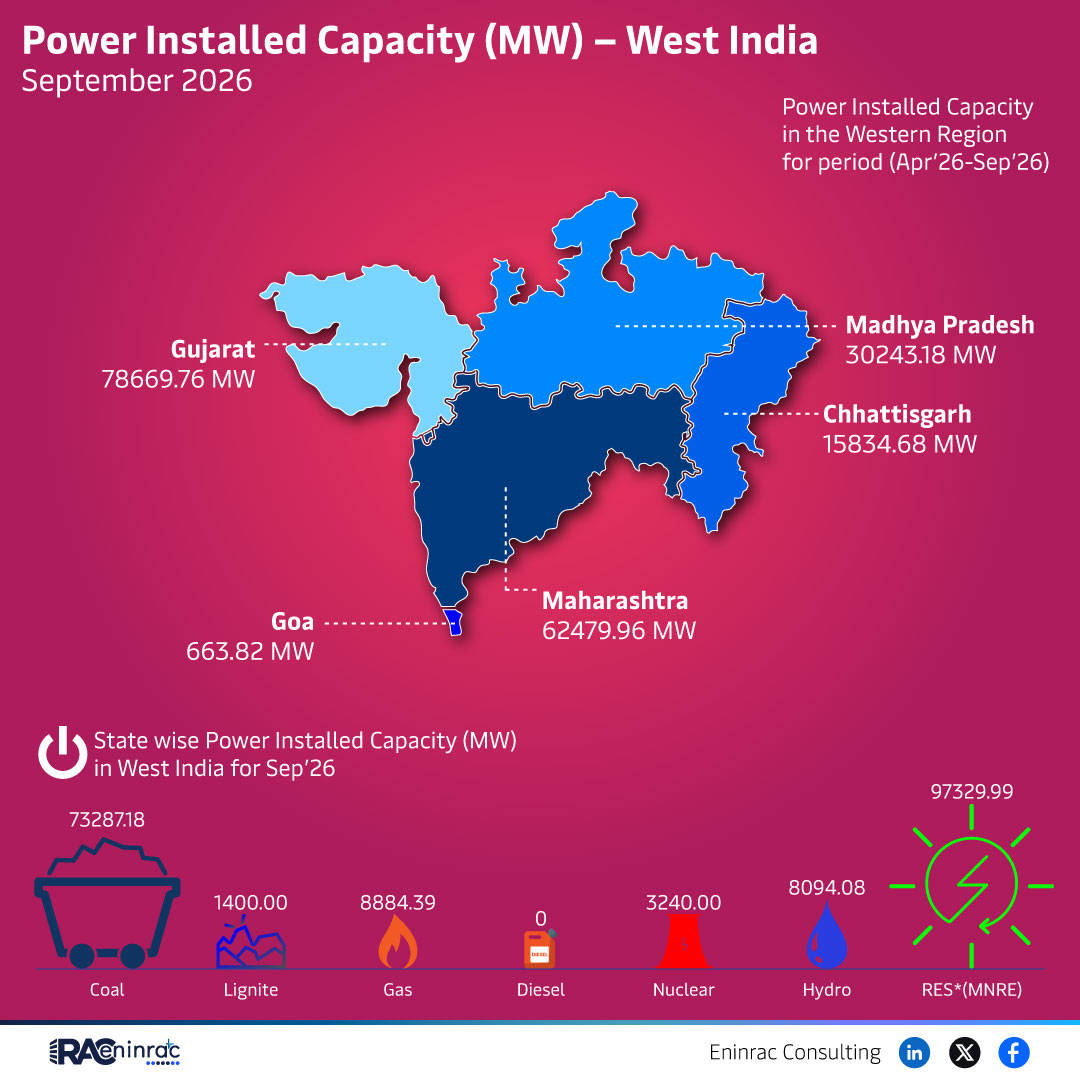
The raw figures show that Gujarat leads the region with an installed capacity of roughly 78,670 MW, followed by Maharashtra at about 62,480 MW. Chhattisgarh contributes around 15,835 MW and Goa adds a modest 664 MW. When aggregated, the western region reaches a total capacity exceeding 157,000 MW. The data also indicates a varied fuel‑type distribution, where coal and lignite dominate, but gas and diesel installations provide essential peaking support, while nuclear capacity remains minimal.
Statewise Capacity Comparison in September 2026
Gujarat’s 78,670 MW reflects aggressive expansion in both thermal and renewable projects, positioning the state as a power hub for neighboring regions. Maharashtra’s 62,480 MW is driven by large coal‑based plants and increasing gas‑fired units that support its industrial base. Chhattisgarh’s 15,835 MW, though smaller, is significant for a primarily agrarian economy, indicating targeted investments in localized generation. Goa’s 664 MW, while limited, underscores its reliance on imported fuel and small‑scale hydro projects. The contrasting capacities illustrate how each state balances economic growth, resource availability and policy priorities.
Impact on Sectors and Industries
Higher installed capacity in West India directly influences manufacturing, mining, and services sectors by reducing power shortages and stabilizing tariffs. Coal‑heavy portfolios ensure baseload reliability but also raise concerns about carbon intensity, prompting a gradual shift toward cleaner gas and renewable options. Investors see opportunities in retrofitting older plants with emission control technology, while policymakers must reconcile energy security with environmental commitments. The data also informs grid operators about potential bottlenecks, guiding transmission upgrades and demand‑side management initiatives.
Key Takeaways
- Gujarat leads West India with the highest installed capacity, exceeding 78,000 MW.
- Maharashtra holds the second position, driven by a mix of coal and gas plants.
- Chhattisgarh’s capacity growth highlights focused investments in localized power.
- Goa’s modest capacity reflects its limited industrial base and reliance on imports.
- The region’s fuel mix remains coal‑dominant, but gas and diesel provide essential peaking support.
- Capacity trends signal ongoing demand‑driven expansion and a gradual move toward cleaner generation.
FAQs
What was the total installed capacity in West India for September 2026?
The combined installed capacity across Gujarat, Maharashtra, Chhattisgarh and Goa exceeded 157,000 MW.
Which state has the highest power capacity in the western region?
Gujarat leads with approximately 78,670 MW of installed capacity.
How does the fuel mix affect the region’s emissions?
Heavy reliance on coal and lignite raises carbon emissions, while gas and diesel units help balance load and reduce peak‑time pollution.
Are there any nuclear plants contributing to West India’s capacity?
Nuclear capacity is minimal in the western region, with the majority of generation coming from thermal sources.
What trends are expected for power capacity after September 2026?
Analysts anticipate continued growth, especially in gas‑fired and renewable projects, as states aim to diversify their energy mix and meet sustainability targets.