
Introduction
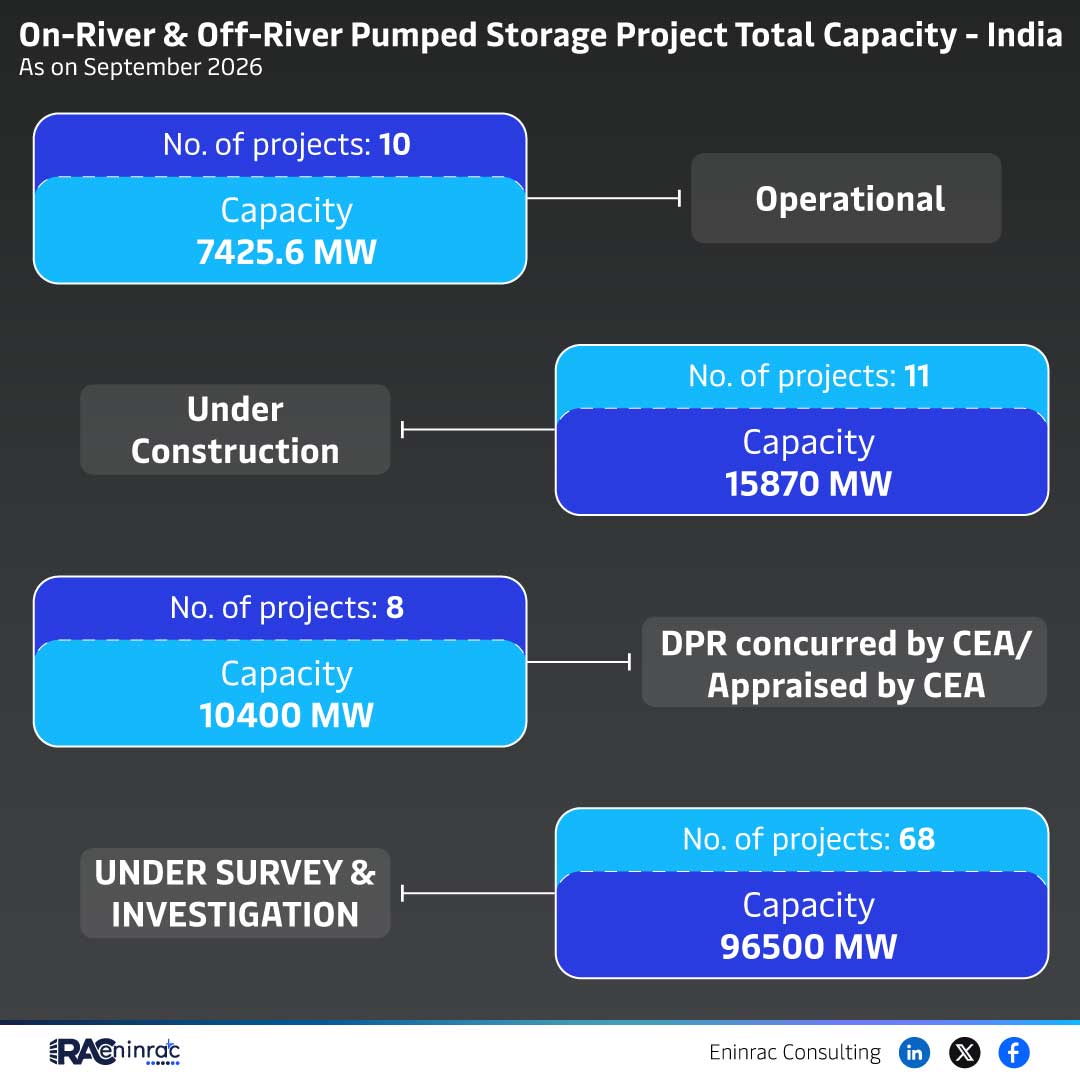
Pumped storage hydroelectricity, commonly known as pumped storage, is a cornerstone of India’s effort to balance a rapidly expanding renewable energy mix. As of September 2026 the country hosts ten on‑river and off‑river pumped‑storage projects that are already operational, while eight additional projects are under construction. Together these facilities deliver a combined operational capacity of 15,870 MW. Beyond what is currently generating power, an ambitious pipeline of studies and investigations accounts for a further 96,500 MW of potential capacity. Understanding these figures helps policymakers, investors, and energy analysts gauge how pumped storage India can support grid reliability, peak‑load management, and the integration of solar and wind power across the nation.
What Does the Data Reveal About This Topic?
What does the latest capacity data tell us about pumped storage in India? The numbers show a clear transition from a modest base of operational plants to a much larger prospective capacity under survey. The operational and under‑construction portfolio of 15,870 MW represents roughly 3 % of India’s total installed generation capacity, yet the surveyed 96,500 MW signals a ten‑fold increase in future storage potential. This disparity highlights both the momentum of ongoing construction and the strategic emphasis placed on expanding storage to complement intermittent renewable sources.
Operational vs Planned Capacity: A Comparative View
When we compare the 15,870 MW that is already online or being built with the 96,500 MW identified in survey and investigation phases, the contrast is striking. Operational projects are concentrated in states with significant elevation differences, such as Himachal Pradesh, Uttarakhand, and Karnataka, where natural topography reduces civil engineering costs. Under‑construction projects follow a similar geographic pattern but also begin to appear in coal‑rich regions seeking to repurpose existing reservoirs for storage. The surveyed capacity, however, extends to many more river basins and plateaus, indicating that future pumped‑storage sites could be distributed across a broader swath of the country, potentially unlocking new economic corridors and regional grid reinforcement opportunities.
Impact on Sectors and Industries
The expansion of pumped storage India influences several key sectors. For the power generation industry, additional storage reduces the need for expensive peaking plants and provides a flexible resource to smooth solar and wind output. Transmission operators benefit from a more stable load curve, which can defer costly upgrades to high‑voltage corridors. Financial markets see new avenues for investment, as both public funding mechanisms and private equity are attracted to the long‑term, relatively low‑risk nature of storage assets. Finally, policymakers gain a concrete tool to meet climate commitments, as pumped storage can be paired with renewable targets to achieve deeper decarbonization without compromising reliability.
Key Takeaways
- India currently operates 10 pumped‑storage projects delivering 15,870 MW.
- Eight additional projects are under construction, expanding capacity further.
- Surveyed and investigative studies suggest up to 96,500 MW of future potential.
- Geographic concentration remains in mountainous states, but future sites may diversify.
- Increased storage supports renewable integration and reduces reliance on fossil‑fuel peakers.
- Investment interest is growing, positioning pumped storage as a key asset class in India’s energy transition.
FAQs
How many pumped‑storage projects are operational in India as of 2026?
There are ten on‑river and off‑river pumped‑storage projects that are currently operational.
What is the total capacity of projects under construction?
Eight projects are under construction, contributing to the combined operational and under‑construction capacity of 15,870 MW.
How much potential capacity is identified under survey and investigation?
Surveys and investigations have identified a potential additional capacity of 96,500 MW for future pumped‑storage development.
Why is pumped storage important for renewable energy integration?
Pumped storage balances supply and demand by storing excess renewable generation and releasing it during peak demand, thus enhancing grid stability.
Which Indian states host the majority of pumped‑storage projects?
The majority are located in Himachal Pradesh, Uttarakhand, and Karnataka, where natural elevation differences favor project economics.