
Introduction
India’s power sector is increasingly turning to on‑river pumped storage as a flexible, renewable‑friendly solution for balancing electricity supply and demand. As of September 2026, several operational projects are delivering a combined capacity of more than five gigawatts across key states. This article examines the latest capacity figures, compares regional contributions, and discusses the broader impact on the nation’s energy landscape.
What Does the Data Reveal About This Topic?
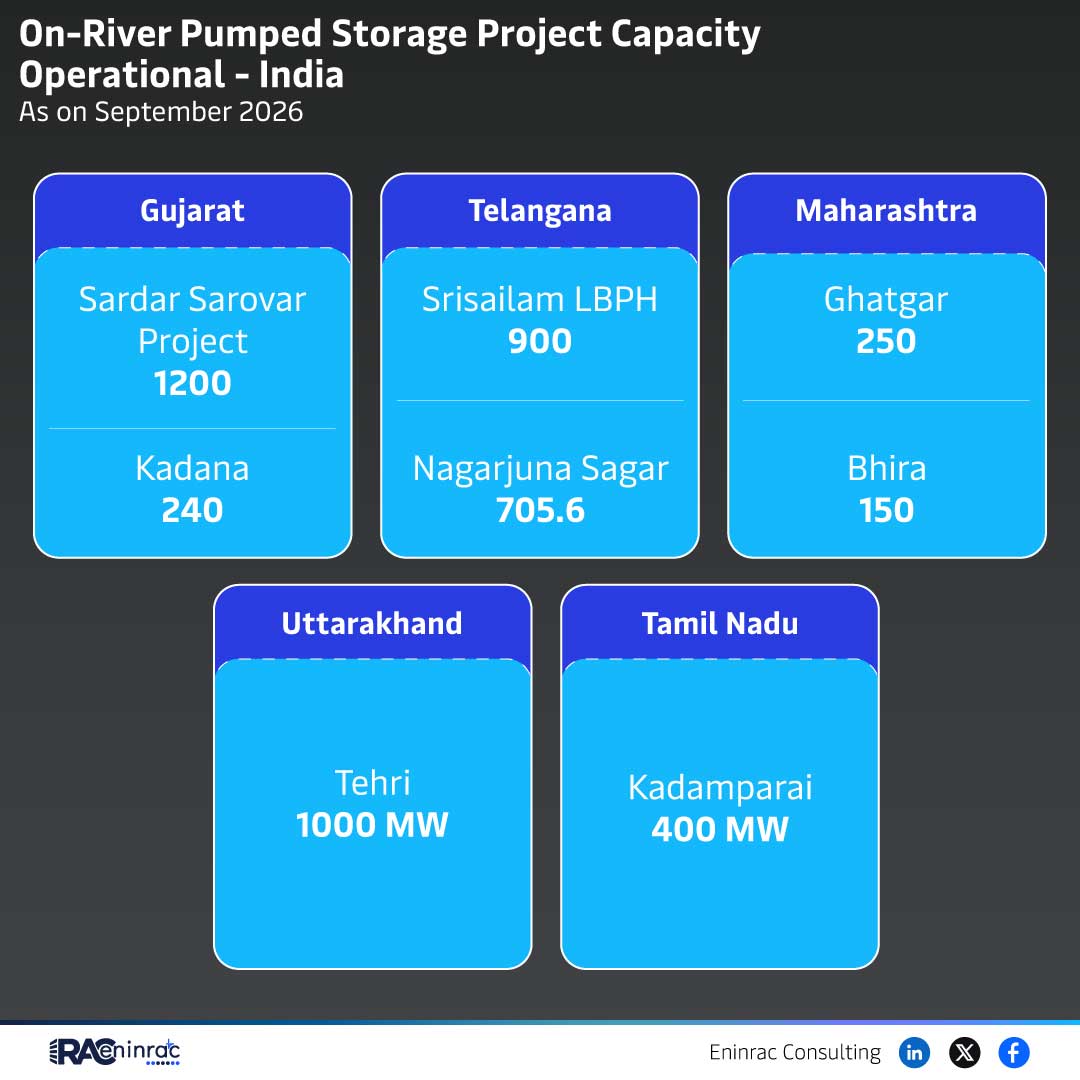
Which states host the largest on‑river pumped storage installations and how do their capacities differ? The data shows that Gujarat leads with projects such as Sardar Sarovar (900 MW) and Kadana (240 MW), while Maharashtra contributes through the Ghatghar (1,200 MW) and Bhira (150 MW) plants. Telangana’s Srisailam adds 705.6 MW, and the southern state of Tamil Nadu hosts Kadamparai (400 MW). Uttarakhand’s Tehri project contributes 1,000 MW, underscoring the geographic spread of pumped storage resources.
Regional Capacity Comparison of Indian On‑River Pumped Storage
When the capacities are grouped by state, Gujarat accounts for roughly 1,140 MW, making it a central hub for on‑river pumped storage development. Maharashtra follows with a combined 1,350 MW from Ghatghar and Bhira, while Telangana’s portfolio reaches about 706 MW. The northern region, represented by Uttarakhand, adds a significant 1,000 MW through the Tehri scheme. Tamil Nadu, though smaller in scale, contributes 400 MW from Kadamparai. This distribution highlights a pattern where both western and southern regions are investing heavily, while the central and eastern parts of the country have yet to launch comparable projects.
Impact on Sectors and Industries
The expansion of on‑river pumped storage influences several sectors. Power generators gain a reliable balancing tool that can store excess renewable energy and release it during peak demand, enhancing grid stability. Transmission operators benefit from reduced congestion because stored energy can be dispatched locally. Investors see a lower risk profile for renewable projects, as pumped storage mitigates intermittency. Policymakers can advance climate goals by integrating more wind and solar capacity, knowing that pumped storage will provide the needed flexibility. Additionally, local construction and engineering firms experience job growth during the development and maintenance phases of these projects.
Key Takeaways
- Gujarat and Maharashtra together hold over two gigawatts of on‑river pumped storage capacity.
- Uttarakhand’s Tehri project is the single largest installation at 1,000 MW.
- Overall capacity across the five states exceeds five gigawatts, marking rapid growth since 2020.
- Pumped storage supports renewable integration by offering large‑scale, fast‑response energy balancing.
- Regional disparities suggest opportunities for new projects in under‑represented eastern states.
- The sector creates economic benefits for construction, engineering, and local communities.
FAQs
What is on‑river pumped storage?
It is a hydroelectric technology that stores energy by moving water between a higher and lower reservoir within a river system, generating power when needed.
How does pumped storage improve grid reliability?
It can quickly inject or absorb large amounts of electricity, smoothing out fluctuations from variable renewable sources such as wind and solar.
Which Indian state has the highest pumped storage capacity?
Uttarakhand’s Tehri project, with 1,000 MW, currently holds the highest single‑project capacity.
Can new pumped storage projects be built on existing rivers?
Yes, on‑river designs minimize the need for large dams and can be integrated with existing waterways, subject to environmental clearances.
What are the environmental considerations?
Projects must address river flow alterations, fish migration, and land use impacts, often mitigated through careful engineering and monitoring.