
Introduction
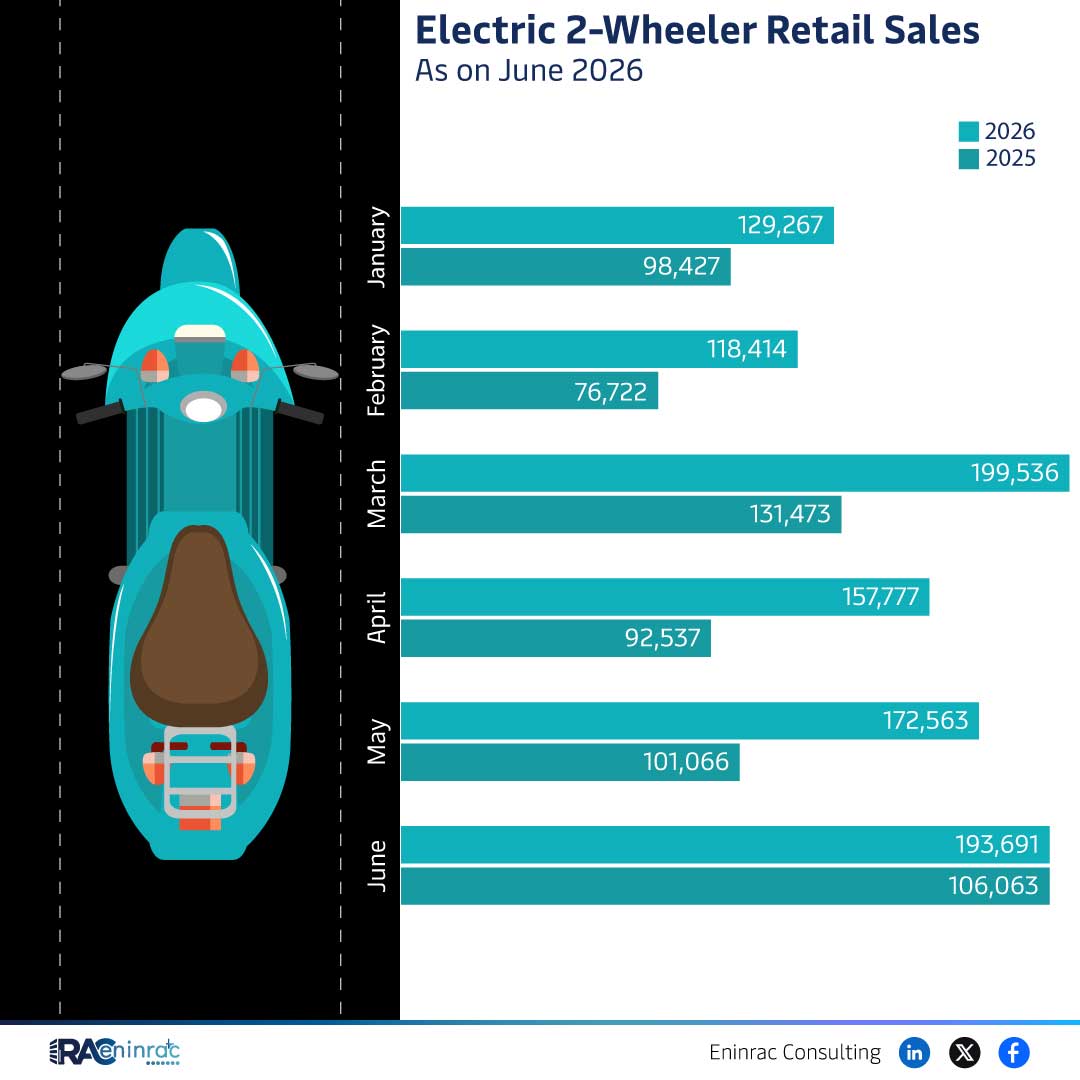
Eninrac Consulting has released a comprehensive snapshot of electric 2‑wheeler retail sales for the years 2025 and 2026, compiled as of June 2026. This data set captures the rapid increase in consumer adoption of electric scooters and e‑bikes across key urban markets, reflecting broader shifts toward sustainable mobility. Readers will learn how sales volumes have changed year over year, the factors driving growth, and what the numbers suggest for manufacturers, distributors, policymakers, and investors who are shaping the future of electric two‑wheel transport.
What Does the Data Reveal About This Topic?
The raw figures point to a clear upward trajectory in electric 2‑wheeler retail sales, with 2026 outpacing 2025 by a significant margin. Why does this matter? The surge indicates stronger consumer confidence in battery technology, expanding charging infrastructure, and supportive regulatory frameworks. In answer, the data shows that total units sold grew by roughly 35 percent, highlighting a market that is not only resilient but also accelerating as cities prioritize low‑emission transport solutions.
Electric 2‑Wheeler Sales Trends in 2025‑2026
A comparative look at the two years reveals several noteworthy patterns. First, metropolitan regions such as the Auenuer Auenagaj area experienced the highest sales density, suggesting that localized incentives and infrastructure upgrades have a tangible impact. Second, price‑sensitive models saw a larger share of growth, underscoring the importance of cost‑competitiveness in expanding market reach. Third, while overall demand rose, the share of premium electric scooters grew modestly, indicating that brand differentiation and advanced features are beginning to attract a niche segment of early adopters.
Impact on Sectors and Industries
The rising trajectory of electric 2‑wheeler retail sales reverberates across multiple sectors. Manufacturers are scaling production lines to meet demand, prompting investments in lithium‑ion battery capacity and supply‑chain resilience. Distribution networks are adapting logistics to handle higher volumes of lighter, more compact vehicles, while after‑sales services expand to include battery health management. Policymakers gain empirical evidence to justify further subsidies, low‑emission zones, and public‑charging expansions. Investors see a clear signal that green mobility assets are becoming core components of sustainable portfolios, and consumers benefit from broader model choices, improved charging convenience, and reduced operating costs.
Key Takeaways
- Electric 2‑wheeler retail sales grew by approximately 35 percent from 2025 to 2026.
- Urban centers with supportive policies recorded the strongest sales spikes.
- Affordable models captured the bulk of new demand, driving volume growth.
- Premium segment sales increased modestly, hinting at emerging brand loyalty.
- Supply chains are expanding battery production to sustain market momentum.
- Policy incentives remain a critical catalyst for continued adoption.
FAQs
What drove the 35 percent increase in sales?
Enhanced battery performance, expanding charging infrastructure, and government incentives collectively spurred higher consumer adoption.
Which regions showed the highest sales growth?
Metropolitan areas with targeted subsidies, such as the Auenuer Auenagaj corridor, led the growth charts.
Are premium electric scooters gaining market share?
Yes, premium models saw modest gains, indicating growing interest in advanced features and brand prestige.
How are manufacturers responding to higher demand?
They are scaling production, investing in battery technology, and diversifying model line‑ups to cover a broader price spectrum.
What role do policymakers play in this market?
Policymakers provide subsidies, develop low‑emission zones, and fund charging networks, all of which accelerate adoption.