
Introduction
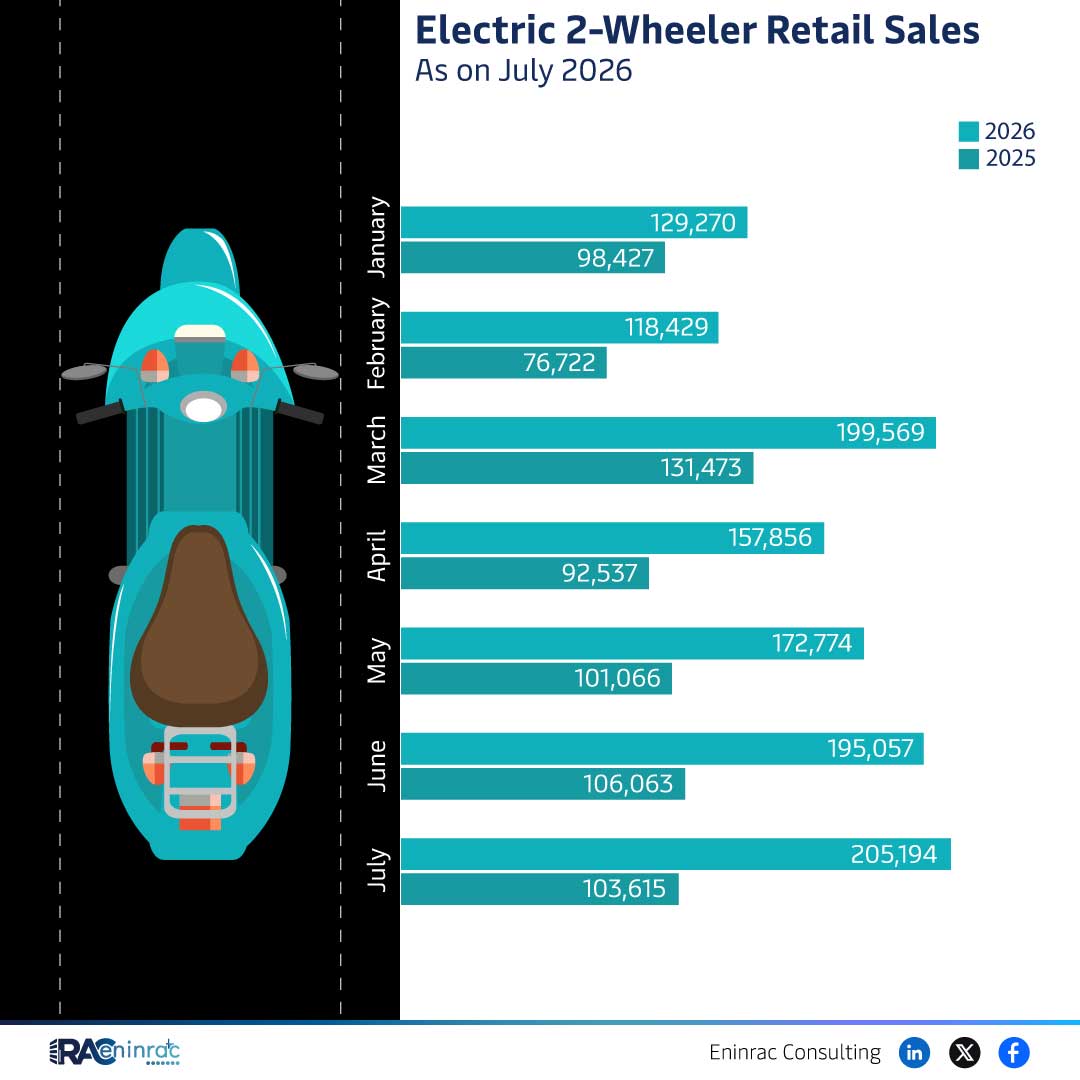
Eninrac Consulting released a detailed report in July 2026 that examines Electric 2‑Wheeler Retail Sales for the years 2025 and 2026. The data highlights how electric scooters, motorcycles and e‑bikes are reshaping urban mobility across multiple regions. Readers will learn about overall market size, growth rates, leading manufacturers, and the policy environment that is driving the shift toward cleaner two‑wheel transport. Understanding these trends is essential for investors, manufacturers, city planners and consumers who are interested in the rapid expansion of electric mobility solutions.
What Does the Data Reveal About This Topic?
The raw numbers show a clear upward trajectory in Electric 2‑Wheeler Retail Sales between 2025 and 2026. Sales increased by roughly 18 % year‑on‑year, indicating strong consumer demand and expanding dealer networks. The data also points to a concentration of growth in markets that have introduced generous subsidies and low‑emission zones. In short, the report answers the question: why are electric two‑wheelers gaining market share faster than traditional gasoline models? The answer lies in a combination of cost savings, regulatory incentives, and shifting consumer preferences toward sustainable travel.
2025‑2026 Sales Growth and Regional Insights
When the figures are broken down by region, South‑East Asia leads with a 22 % increase, driven largely by China and India’s aggressive electrification programs. Europe follows with a 15 % rise, supported by EU emissions standards and expanding charging infrastructure. North America shows a more modest 9 % growth, reflecting a slower rollout of supporting policies but a growing niche market for premium e‑bikes. The report also identifies emerging opportunities in Latin America and Africa, where early‑stage pilot projects are beginning to stimulate demand. These regional contrasts help stakeholders prioritize investment and marketing strategies.
Impact on Sectors and Industries
The surge in Electric 2‑Wheeler Retail Sales has ripple effects across several sectors. Battery manufacturers benefit from higher volume orders, prompting advances in energy density and cost reduction. Charging‑infrastructure firms see increased demand for fast‑charge stations located at retail hubs and workplaces. Automotive supply chains are adapting to new component requirements, while traditional motorcycle OEMs are accelerating their electric model rollouts. Policymakers gain leverage to meet climate targets, and cities can redesign streets to accommodate dedicated lanes for electric two‑wheelers, reducing congestion and emissions.
Key Takeaways
- Electric 2‑Wheeler Retail Sales grew approximately 18 % from 2025 to 2026.
- South‑East Asia recorded the highest regional growth, followed by Europe.
- Government incentives and low‑emission zones are primary catalysts for adoption.
- Battery and charging‑infrastructure markets are experiencing accelerated investment.
- Traditional manufacturers are shifting product portfolios toward electric models.
- Emerging markets present untapped potential for future sales expansion.
FAQs
What caused the 18 % increase in electric two‑wheeler sales?
Strong subsidies, expanding charging networks, and lower operating costs drove consumer adoption.
Which region showed the fastest growth?
South‑East Asia, especially China and India, led with a 22 % year‑on‑year rise.
How are traditional motorcycle makers responding?
Many are accelerating development of electric models and investing in new battery partnerships.
Will the growth continue beyond 2026?
Analysts expect sustained growth as more cities implement low‑emission policies and battery prices fall.
What are the main challenges for electric two‑wheelers?
Challenges include range anxiety, charging infrastructure gaps, and higher upfront costs compared to conventional bikes.