
Introduction
The wind power generation India sector entered June 2026 with notable shifts in capacity distribution across key states. Understanding these changes helps investors, policymakers and industry observers gauge the momentum of renewable energy expansion. This overview highlights the leading states, recent capacity additions, and the broader implications for the national energy mix.
What Does the Data Reveal About This Topic?
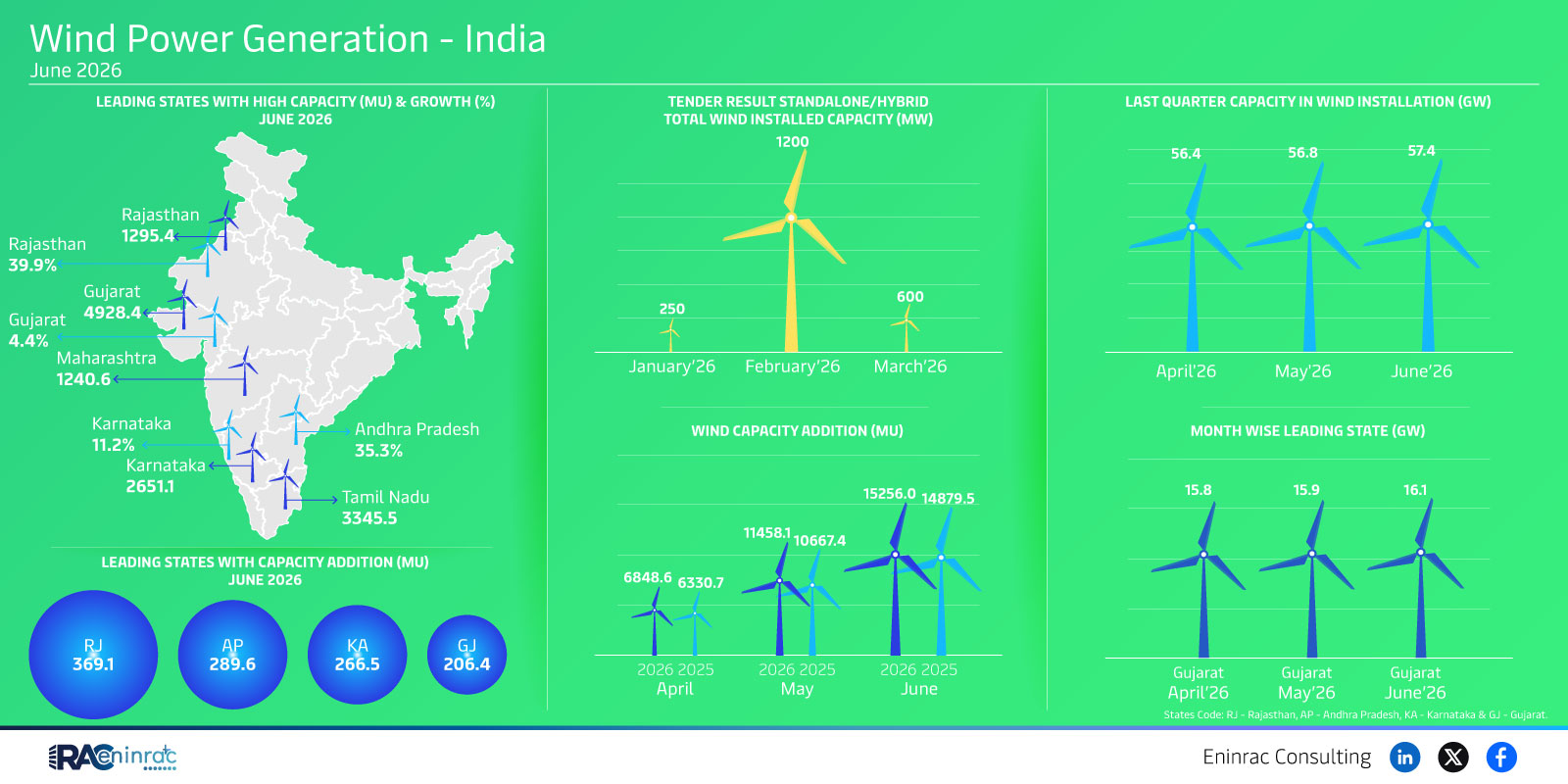
What are the standout trends in wind capacity for June 2026? The data shows Rajasthan, Gujarat and Maharashtra dominate total installed capacity, while Gujarat leads in month‑on‑month additions. The figures illustrate a concentration of growth in western and southern regions, indicating where infrastructure and policy support are most effective.
State‑wise Capacity and Growth Trends for June 2026
Rajasthan records a capacity of 1,295 MW, positioning it as a major contributor. Gujarat tops the capacity addition chart, consistently adding new megawatts each month and surpassing other states in cumulative growth. Maharashtra and Karnataka also feature prominently, reflecting sustained investment and favorable wind resources. The month‑wise breakdown for April, May and June 2026 confirms Gujarat’s dominance, with each month showing higher gigawatt‑hour generation compared to its peers. These patterns underscore regional advantages such as wind corridors, grid connectivity and state‑level incentives.
Impact on Sectors and Industries
The evolving wind power landscape influences multiple sectors. Energy manufacturers benefit from increased demand for turbines and balance‑of‑system components, while financing institutions see new opportunities for green bonds linked to wind projects. Policymakers can tailor subsidies and transmission upgrades to sustain growth in high‑performing states. Moreover, the expansion supports India’s broader climate targets, reducing reliance on fossil fuels and creating jobs in construction, operations and maintenance across the supply chain.
Key Takeaways
- Rajasthan and Gujarat lead total installed wind capacity.
- Gujarat ranks first in monthly capacity additions for April‑June 2026.
- Maharashtra and Karnataka remain strong growth contributors.
- Western and southern regions benefit from favorable wind resources.
- Sector‑wide impacts include higher turbine demand and green financing.
- Continued growth aligns with India’s renewable energy and climate goals.
FAQs
Which state had the highest wind capacity addition in June 2026?
Gujarat recorded the largest addition, maintaining its leadership across the quarter.
How does wind capacity growth affect India’s renewable energy targets?
Increasing wind capacity accelerates progress toward the 450 GW renewable goal set for 2030.
What factors contribute to Gujarat’s strong performance?
Good wind corridors, robust grid infrastructure and supportive state policies drive its growth.
Are investors focusing on any particular state for new wind projects?
Investors are attracted to Gujarat and Rajasthan due to consistent capacity additions and stable returns.
How might this data influence future policy decisions?
Policymakers may prioritize incentives in high‑growth states and expand transmission to underserved areas.