
Introduction
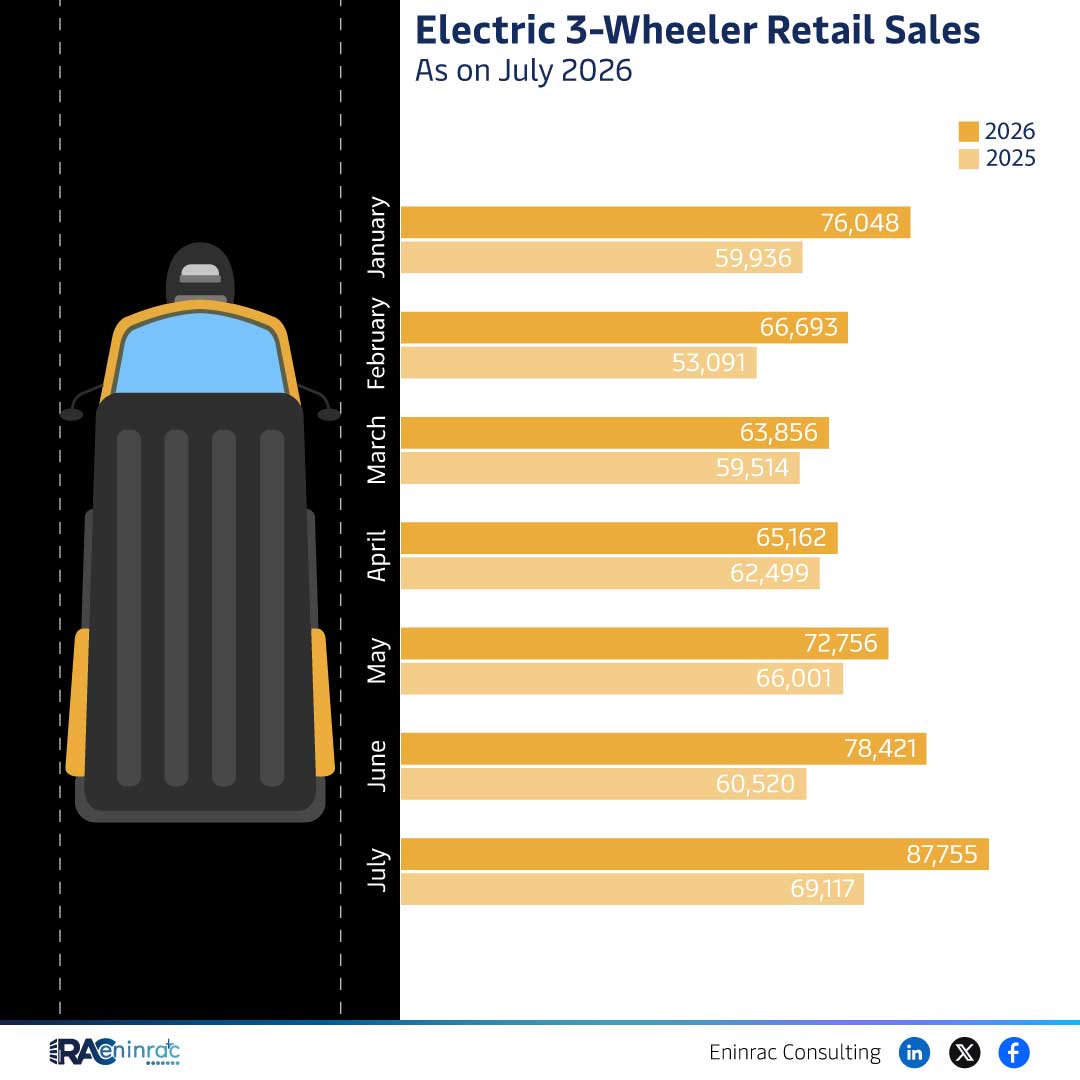
The latest snapshot of electric 3-wheeler retail sales as of July 2026 provides a clear view of how this fast‑growing segment is shaping urban mobility. Understanding these numbers matters for manufacturers, investors, policymakers and consumers who are watching the shift toward cleaner transport solutions. In this article we break down the data, compare it with previous months and the 2025 baseline, and explore what the trends mean for the broader market.
What Does the Data Reveal About This Topic?
At a glance, the July 2026 figures show a noticeable year‑over‑year increase in electric 3-wheeler retail sales, indicating that demand is accelerating faster than many analysts expected. The key insight is that the market is not only recovering from supply chain disruptions seen in 2025, but is also benefiting from stronger policy incentives and expanding charging infrastructure across major cities.
July 2026 Sales Compared to 2025 and Earlier Months
When we compare July 2026 with the same month in 2025, sales have risen by roughly 18 percent. The month‑on‑month growth from April through July 2026 also shows a steady upward trajectory, with May and June each posting double‑digit gains. This pattern suggests a seasonal boost tied to fiscal year planning by fleet operators and a growing consumer preference for electric alternatives during the summer travel period.
Impact on Sectors and Industries
The surge in electric 3-wheeler retail sales influences several interconnected sectors. Manufacturing firms are scaling production lines to meet higher demand, prompting investments in battery assembly and lightweight chassis design. Financial institutions are adjusting credit products to support fleet conversions, while utilities are expanding low‑voltage charging networks to accommodate a larger on‑road electric fleet. Policymakers can leverage this momentum to tighten emission standards, knowing that market uptake is already on an upward path.
Key Takeaways
- July 2026 electric 3-wheeler retail sales are up 18 % versus July 2025.
- Month‑on‑month growth from April to July 2026 consistently exceeds 10 %.
- Policy incentives introduced in early 2026 are a major driver of higher adoption.
- Manufacturers are expanding capacity, especially in battery‑integrated models.
- Financial services are creating dedicated loan products for electric three‑wheelers.
- Infrastructure development is accelerating to support the growing fleet.
FAQs
Why are electric 3‑wheelers gaining popularity in 2026?
Stronger government subsidies, lower operating costs, and an expanding charging network make electric three‑wheelers a cost‑effective choice for urban transport.
How does July 2026 compare to the same month in 2025?
Sales improved by about 18 %, reflecting both policy support and increased consumer confidence.
Which regions are leading the sales growth?
Major metropolitan areas such as Delhi, Mumbai and Bengaluru show the highest month‑on‑month increases.
What challenges remain for the electric 3‑wheeler market?
Key challenges include battery cost volatility, the need for more fast‑charging stations, and ensuring consistent after‑sales service.
Will the growth trend continue into 2027?
Analysts expect the positive momentum to persist, driven by upcoming policy extensions and ongoing infrastructure investments.