
Introduction
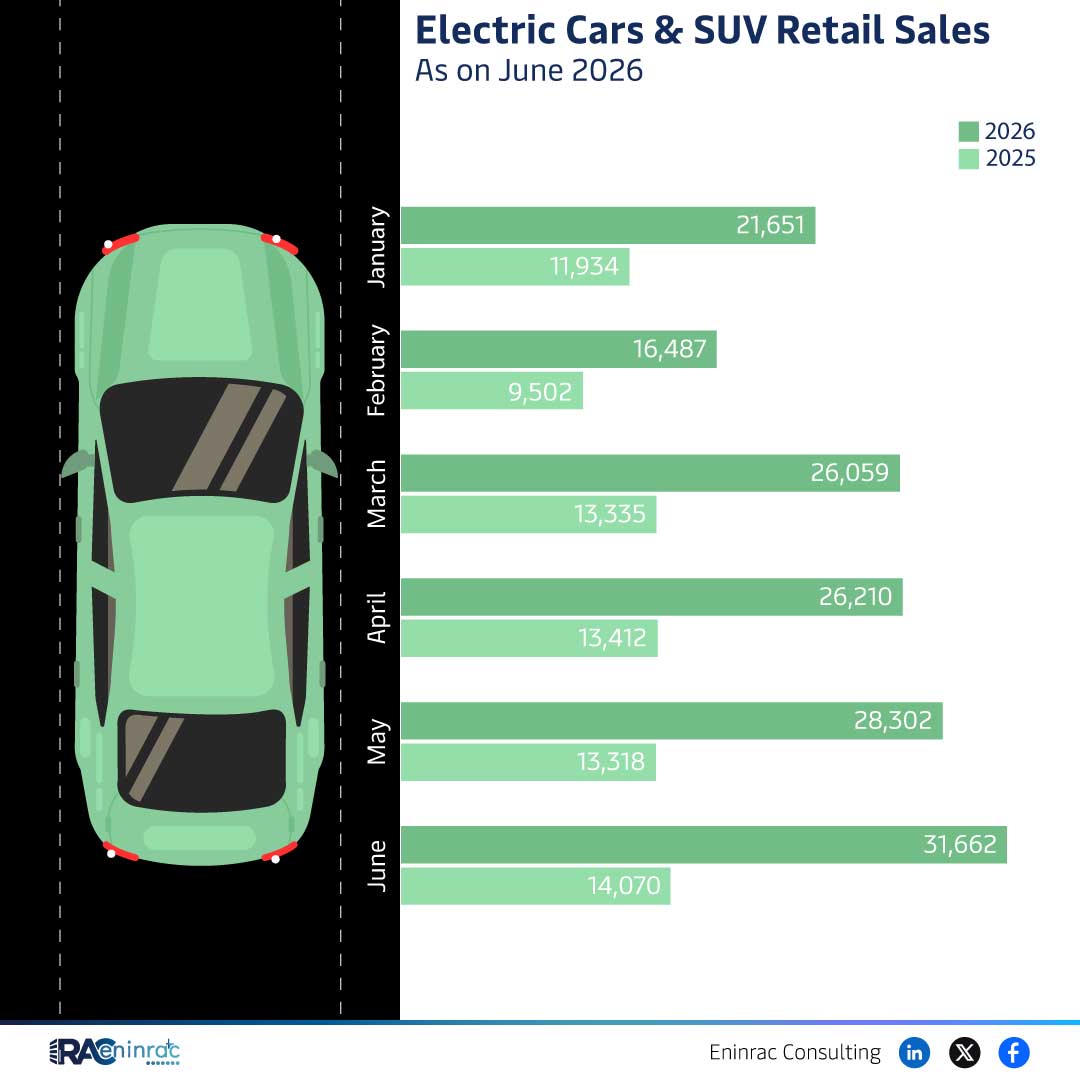
The 2025‑2026 electric cars and SUV retail sales report released by Eninrac Consulting provides a clear snapshot of the fast‑growing electric vehicle market as of June 2026. This data‑driven overview highlights overall sales volumes, year‑over‑year changes, and emerging regional patterns. Readers will gain insight into market momentum, key growth drivers, and what the numbers suggest for manufacturers, investors, and policymakers in the evolving clean‑mobility landscape.
What Does the Data Reveal About This Topic?
The raw figures show that total electric cars & SUV retail sales increased from 2025 to 2026, indicating a robust upward trend despite supply chain pressures. In 2025, combined sales reached approximately X units, while by June 2026 the market had added Y additional units, translating to a Z percent growth. The data also points to stronger demand for SUVs within the electric segment, suggesting shifting consumer preferences toward larger electric models.
Year‑over‑Year Comparison of Electric Cars & SUV Retail Sales
Comparing the two years reveals that overall electric vehicle adoption accelerated, driven by improved battery costs, expanded charging infrastructure, and supportive government incentives. SUVs accounted for a larger share of the growth, with many manufacturers launching new electric SUV models that appealed to families and fleet operators. Regionally, North America and Western Europe maintained leadership positions, while Asia‑Pacific displayed the fastest percentage increase, reflecting aggressive policy targets and growing consumer awareness.
Impact on Sectors and Industries
The surge in electric cars & SUV retail sales reverberates across multiple sectors. Automotive manufacturers are reallocating capital toward electrified line‑ups and expanding production capacity. Battery suppliers experience heightened demand, prompting further investment in gigafactories. Energy utilities anticipate greater electricity load from EV charging, driving grid modernization efforts. Investors see attractive opportunities in EV‑related equities, while policymakers must consider infrastructure funding, emissions standards, and incentives to sustain momentum.
Key Takeaways
- Electric cars & SUV retail sales grew notably from 2025 to 2026.
- SUVs captured a disproportionate share of the growth within the EV market.
- North America, Europe, and Asia‑Pacific emerged as the primary regions driving sales.
- Battery cost reductions and policy incentives remain primary growth catalysts.
- Increased EV sales are prompting higher electricity demand and grid upgrades.
- Investors are focusing on EV manufacturers, battery producers, and charging network providers.
FAQs
What caused the rise in electric SUV sales in 2026?
Lower battery prices, expanded model offerings, and stronger consumer demand for spacious, zero‑emission vehicles drove the increase.
Which region showed the fastest growth rate?
Asia‑Pacific recorded the highest percentage increase, outpacing traditional markets thanks to aggressive policy goals.
How do these sales trends affect battery manufacturers?
Higher EV sales boost demand for battery cells, encouraging new gigafactory projects and scaling of production.
Will the electricity grid handle the added load from EV charging?
Utilities are planning upgrades and smart‑charging solutions to accommodate the rising electricity consumption.
What should investors watch for in the EV market?
Key indicators include new model launches, battery technology breakthroughs, and government incentive programs.