
Introduction
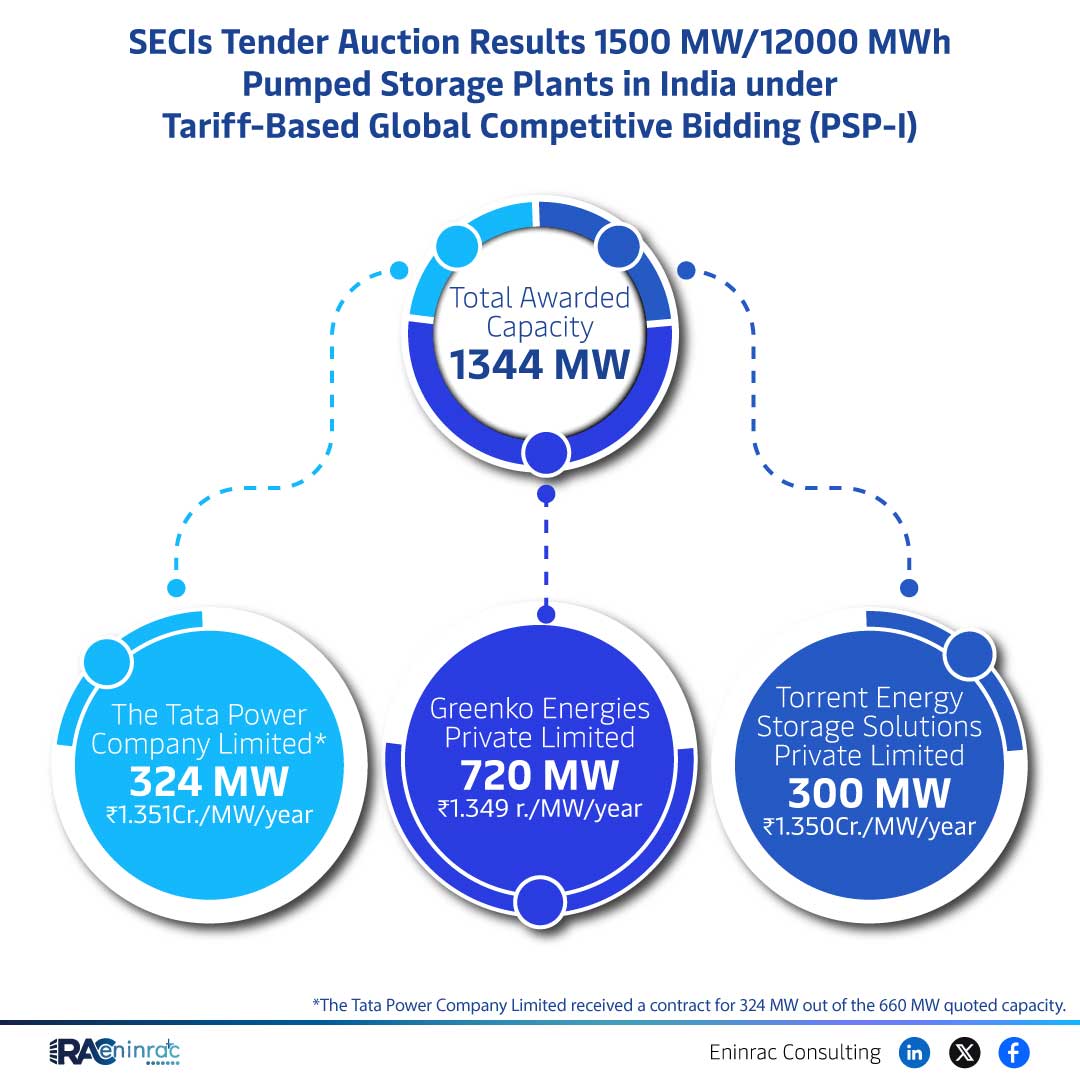
The recent SECIs tender auction under the Tariff‑Based Global Competitive Bidding (PSP‑I) framework announced the award of 1,344 MW of pumped storage capacity in India. This marks a significant milestone for the country's renewable energy roadmap, as pumped storage plants provide essential grid stability, peak‑shaving, and renewable integration support. The auction attracted major developers such as Greenko Energies, Tata Power, and Torrent Energy Storage Solutions, each receiving contracts at competitive tariff rates. Readers will learn how the allocation was distributed, the financial implications of the awarded tariffs, and what this means for the future growth of pumped storage and the broader clean energy sector in India.
What Does the Data Reveal About This Topic?
What insights does the tender data provide about the current pumped storage market in India? The results show that 1344 MW—about 90% of the total 1500 MW capacity offered—was successfully awarded, indicating strong developer interest and confidence in the market. Greenko secured the largest share with a 300 MW award at a tariff of 1.351 Cr./MW/year, while Tata Power received 324 MW of the 660 MW it bid for, reflecting a selective award process based on cost efficiency. The remaining capacity was allocated to Torrent Energy, highlighting a diversified but competitive landscape.
Company Awards and Tariff Comparison
Greenko Energies emerged as the leading awardee, capturing 300 MW at a tariff of 1.351 Cr./MW/year, which translates to 21.349 r./MW/year. Tata Power secured a 324 MW contract within its 660 MW offering, suggesting a strategic focus on cost‑effective projects, though its exact tariff was not disclosed in the summary. Torrent Energy Storage Solutions received a 300 MW award at a slightly higher tariff of 1.350 Cr./MW/year (21.350 r./MW/year). The narrow tariff spread among the top bidders underscores the intense price competition driven by the global competitive bidding mechanism, encouraging lower costs for pumped storage deployment.
Impact on Sectors and Industries
The allocation of over a gigawatt of pumped storage capacity will have ripple effects across multiple sectors. For utilities and grid operators, the added storage capacity enhances peak load management and facilitates higher renewable penetration without compromising reliability. Investors gain confidence from the transparent bidding process and the proven demand for large‑scale storage assets, potentially unlocking further capital for future projects. Policymakers can leverage these results to refine incentive structures and support frameworks, while equipment manufacturers and construction firms stand to benefit from increased demand for turbines, pumps, and civil works associated with pumped storage installations.
Key Takeaways
- SECIs awarded 1,344 MW of pumped storage, covering 90% of the tendered capacity.
- Greenko Energies secured the largest share with 300 MW at 1.351 Cr./MW/year.
- Tata Power received 324 MW, reflecting strong competition for cost‑effective bids.
- Tariff differences among top bidders were minimal, highlighting intense price competition.
- The awards boost grid stability and renewable integration across India.
- Future investments in pumped storage are likely to increase as market confidence grows.
FAQs
What is the total capacity awarded in the SECIs pumped storage tender?
A total of 1,344 MW was awarded to developers, representing about 90% of the 1,500 MW offered.
Which company received the highest awarded capacity?
Greenko Energies received the largest single award of 300 MW.
How do the awarded tariffs compare among the winning companies?
The tariffs were closely aligned, with Greenko at 1.351 Cr./MW/year and Torrent Energy at 1.350 Cr./MW/year, indicating tight price competition.
Why is pumped storage important for India’s energy grid?
Pumped storage provides grid balancing, peak‑shaving, and enables higher renewable energy penetration without compromising reliability.
What does this tender mean for future renewable projects in India?
The competitive results signal strong market confidence and are likely to attract further investment in large‑scale storage and renewable infrastructure.