
Introduction
Large hydro power generation India is a cornerstone of the nation's renewable energy strategy. The May 2026 snapshot provides a clear picture of how capacity is distributed across states, how quickly new capacity is being added, and what this means for the broader power market. Readers will learn which states dominate the hydro landscape, observe monthly trends, and understand the implications for investors, policymakers, and energy consumers.
What Does the Data Reveal About Large Hydro Power Generation in India?
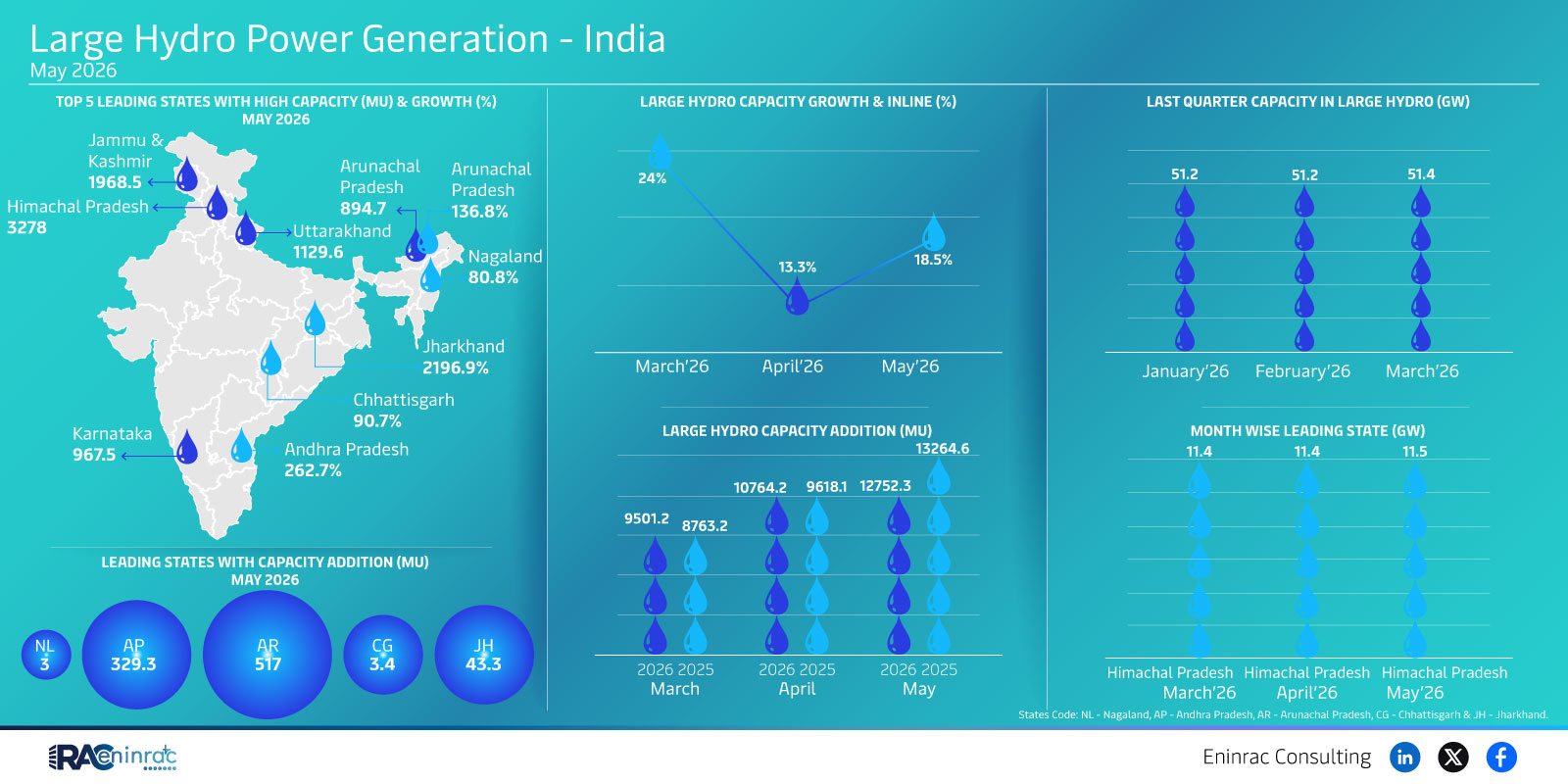
The data highlights that a handful of states contribute the majority of large hydro capacity, with Karnataka leading at roughly 9,675 megawatts (MU) and Arunachal Pradesh following at 1,968.5 MU. Capacity additions remain robust, showing a cumulative increase of over 13,000 MU in the most recent quarter. Monthly reports indicate that Himachal Pradesh consistently posted the highest generation in gigawatts (GW) during January, February and March, underscoring seasonal influences on hydro output. Overall, the figures confirm steady growth and a strong geographic concentration of hydro assets.
State‑wise Capacity and Growth Highlights
When comparing the top performers, Karnataka’s staggering 9,675 MU places it far ahead of other states, reflecting aggressive development projects and favorable topography. Arunachal Pradesh, with 1,968.5 MU, showcases the potential of the northeastern corridor, while Himachal Pradesh’s 894.7 MU and Uttarakhand’s 1,129.6 MU demonstrate the continued importance of the Himalayan region. The quarter‑over‑quarter capacity addition numbers—13,264.6 MU, 10,764.2 MU, 9,618.1 MU, 12,752.3 MU, 9,501.2 MU, 9,763.2 MU—illustrate a healthy pipeline across the country, driven by both state‑led initiatives and central incentives.
Impact on Energy Sectors and Policy
Large hydro power generation India influences several sectors. For utilities, the reliable baseload from hydro reduces reliance on fossil fuels and supports grid stability, especially during peak demand periods. Investors view the steady capacity additions as a signal of long‑term profitability, prompting increased financing for new dam projects and modernization of existing plants. Policymakers can leverage these trends to fine‑tune water‑resource management, develop incentive frameworks, and align hydro expansion with climate‑change mitigation goals. Moreover, the monthly generation spikes in Himachal Pradesh illustrate how seasonal water availability can shape market pricing and supply strategies.
Key Takeaways
- Karnataka leads large hydro capacity with approximately 9,675 MU.
- Arunachal Pradesh emerges as a fast‑growing hub in the northeast.
- Himachal Pradesh consistently generates the highest hydro output during early 2026 months.
- Quarterly capacity additions exceed 13,000 MU, indicating strong pipeline health.
- Hydro growth supports grid stability and reduces fossil fuel dependence.
- Seasonal variations emphasize the need for adaptive water‑resource policies.
FAQs
Which Indian state has the highest large hydro capacity in 2026?
Karnataka tops the list with roughly 9,675 MU of installed large hydro capacity.
How much new hydro capacity was added in the latest quarter?
The latest quarter saw an addition of over 13,000 MU, with several states contributing significant increments.
Why does Himachal Pradesh lead in monthly generation?
Abundant snowmelt and river flow during the early months boost generation, making Himachal Pradesh the top monthly producer.
What impact does hydro growth have on renewable energy goals?
Increasing hydro capacity provides reliable baseload power, helping India meet its renewable energy targets while stabilizing the grid.
Are there policy incentives for new hydro projects?
Yes, the central and state governments offer subsidies, low‑interest loans, and streamlined clearances to encourage hydro development.