
Introduction
India’s bio power sector is gaining momentum in 2026, with several states adding significant capacity to meet renewable energy targets. This report examines the latest capacity figures, growth rates, and monthly performance of the top bio power‑producing states, helping readers understand the current landscape, the drivers behind expansion, and the future outlook for investors and policymakers.
What Does the Data Reveal About This Topic?
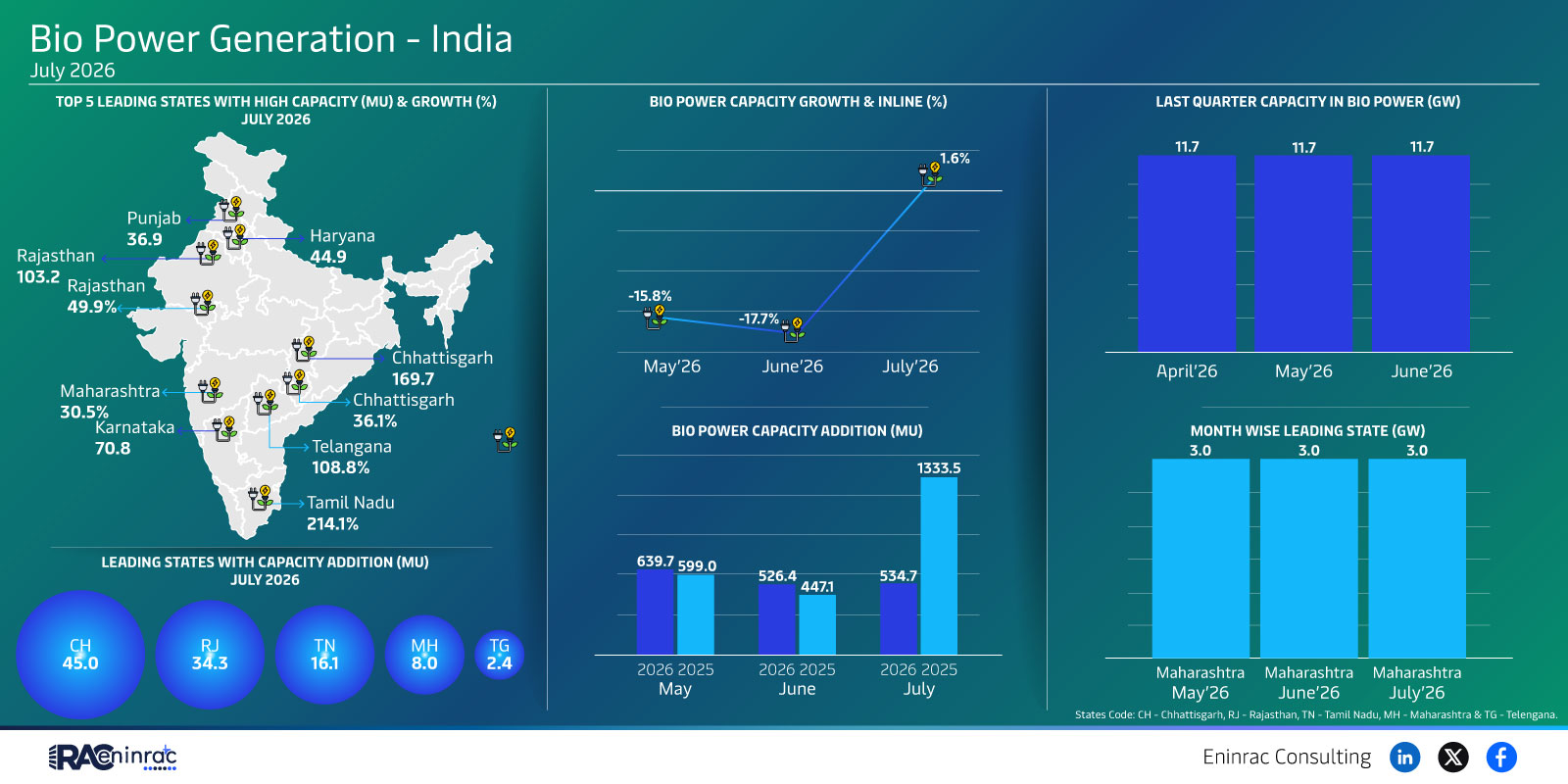
The data shows that Maharashtra consistently leads monthly bio power generation, while Punjab, Haryana, Rajasthan and Karnataka dominate overall capacity. Growth is driven by new installations, with Maharashtra adding over 1333 MW of capacity and other states contributing substantial additions during May, June and July 2026. The figures also indicate a steady quarterly increase, suggesting that the sector is moving beyond pilot projects toward large‑scale commercial operations.
State‑wise Bio Power Capacity and Growth in 2026
Punjab recorded a capacity of 36.9 MW, Haryana 15.8 MW, and Rajasthan posted 49.9 MW, reflecting strong regional commitment to converting agricultural residues into energy. Karnataka and Tamil Nadu also reported notable capacities of 70.8 MW and 108.8 MW respectively, highlighting the geographic spread of bio power projects. Maharashtra topped the list with a massive 214.1 MW, underscoring its role as the primary driver of bio power expansion and its ability to attract both public and private funding. Monthly figures reveal that Maharashtra generated 3.0 GW each in May, June and July, confirming its dominance across consecutive months and illustrating the impact of coordinated state policies and infrastructure readiness.
Impact on Sectors and Industries
The surge in bio power capacity influences multiple sectors. Renewable energy investors see improved risk‑adjusted returns as projects become more bankable, while state governments receive additional clean‑energy credits that support climate commitments and reduce grid reliance on coal. Agricultural waste producers gain new revenue streams by supplying feedstock, encouraging better waste management practices. Equipment manufacturers experience higher demand for boilers, turbines, and emission control systems, fostering a domestic supply chain. Policymakers can leverage the growth trend to design targeted incentives, tax benefits, and streamlined permitting that further accelerate bio‑energy deployment across the country.
Key Takeaways
- Maharashtra leads both monthly generation and total capacity addition in 2026, establishing it as the bio power hub of India.
- Punjab, Haryana, Rajasthan, Karnataka and Tamil Nadu rank among the top five states by installed capacity, showing a diverse regional landscape.
- Overall bio power capacity addition reached approximately 1333 MW, driven by large‑scale state‑level projects and private sector participation.
- Monthly generation remained steady at 3.0 GW for Maharashtra through May‑July 2026, indicating reliable performance and grid integration.
- Growth in bio power supports India’s renewable energy targets, helps reduce carbon emissions, and provides a renewable alternative to fossil fuels.
- Continued policy support, feedstock availability, and financing mechanisms are essential to sustain momentum and attract further private investment.
FAQs
Which state generated the most bio power in May, June and July 2026?
Maharashtra produced 3.0 GW of bio power each month, making it the top generator during this period.
What is the total bio power capacity addition reported for 2026?
The data indicates a combined addition of about 1333 MW across the leading states, reflecting robust expansion.
How does bio power growth affect renewable energy goals?
Increasing bio power capacity contributes directly to India’s renewable energy targets, helping to diversify the energy mix and reduce reliance on coal and oil.
Which states have the highest installed bio power capacity?
Maharashtra, Punjab, Karnataka, Tamil Nadu and Rajasthan lead in installed capacity, showcasing strong state‑level commitment and investment.
What opportunities does bio power present for investors?
Stable growth trajectories, government incentives, and a diversified feedstock base create attractive investment prospects with long‑term revenue potential.