
Introduction
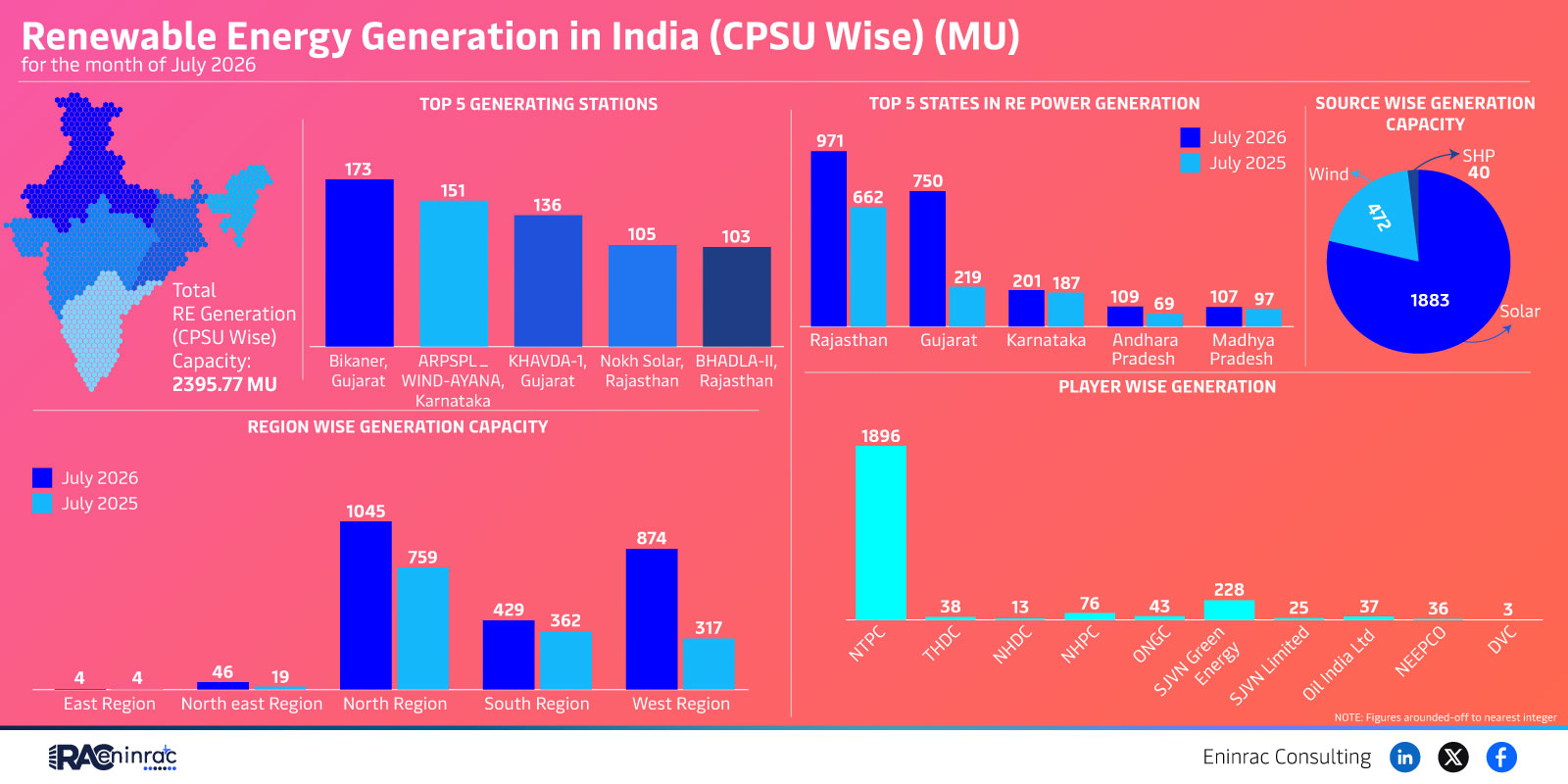
Renewable energy generation India July 2026 provides a snapshot of the nation’s clean power progress for the month of July 2026. The data captures total generation capacity of 2,395.77 million units (MU) across all central public sector utilities (CPSUs). Readers will learn which states and regions lead the surge, the performance of solar and wind assets, and how this month fits into broader national energy targets.
What Does the Data Reveal About This Topic?
The raw figures answer a simple question: which parts of the country delivered the most renewable electricity in July 2026? The answer shows a clear dominance of Rajasthan, Gujarat and Karnataka, each contributing several hundred MU. Wind and solar together account for the bulk of the output, with wind slightly ahead in July 2025 and solar gaining momentum. The data also highlights regional disparities, with the West and South regions posting higher generation than the East and Northeast.
Regional and State Performance Overview
When the numbers are broken down by region, the West and South regions lead with generation well above the national average, driven by strong solar farms in Gujarat and wind corridors in Karnataka. The East and Northeast lag, reflecting fewer large‑scale renewable projects. At the state level, Rajasthan tops the list with approximately 971 MU, followed by Gujarat at 750 MU and Karnataka at 662 MU. These three states together account for more than 70% of the total July 2026 renewable output, underscoring the importance of their policy frameworks and resource endowments.
Impact on Sectors and Industries
The July 2026 renewable generation surge influences multiple stakeholders. Investors see increased confidence in solar and wind assets, encouraging further capital inflows. Policymakers can use the data to fine‑tune state‑level incentives and grid integration plans. Power utilities benefit from a diversified generation mix that enhances grid stability. Consumers ultimately enjoy cleaner electricity and potential cost reductions as renewable penetration rises, aligning with India’s climate commitments.
Key Takeaways
- India generated 2,395.77 MU of renewable electricity in July 2026.
- Rajasthan, Gujarat and Karnataka together contributed over 70% of the total.
- Wind and solar remain the dominant sources, with solar gaining share.
- West and South regions outperformed East and Northeast in renewable output.
- Strong state‑level policies correlate with higher generation figures.
- The data supports ongoing investment and policy focus on clean energy.
FAQs
Which state produced the most renewable energy in July 2026?
Rajasthan led with roughly 971 MU of renewable generation, making it the top contributor for the month.
How does wind generation compare to solar in this period?
Wind slightly outperformed solar in July 2025, but solar’s growth trend suggests it is closing the gap in 2026.
What regions lag behind in renewable generation?
The East and Northeast regions reported lower generation, indicating a need for more project development and grid upgrades.
Why are Rajasthan, Gujarat and Karnataka leading?
These states benefit from abundant solar irradiance, wind corridors, supportive policies and established project pipelines.
How can policymakers use this data?
Insights help refine incentive structures, prioritize grid integration, and target under‑served regions to accelerate nationwide renewable adoption.