
Introduction
The August 2026 energy power requirement figures for East India provide a snapshot of how much electricity the eastern states needed during the first eight months of the fiscal year. Understanding this demand is crucial for planners, utilities, investors and policymakers because it influences generation schedules, transmission planning and tariff setting. This article breaks down the raw numbers, compares state‑wise needs, highlights the near‑balance between requirement and supply, and examines the implications for the power sector in the region. The data also serves as a benchmark for future comparisons as the region progresses toward renewable integration.
What Does the Data Reveal About This Topic?
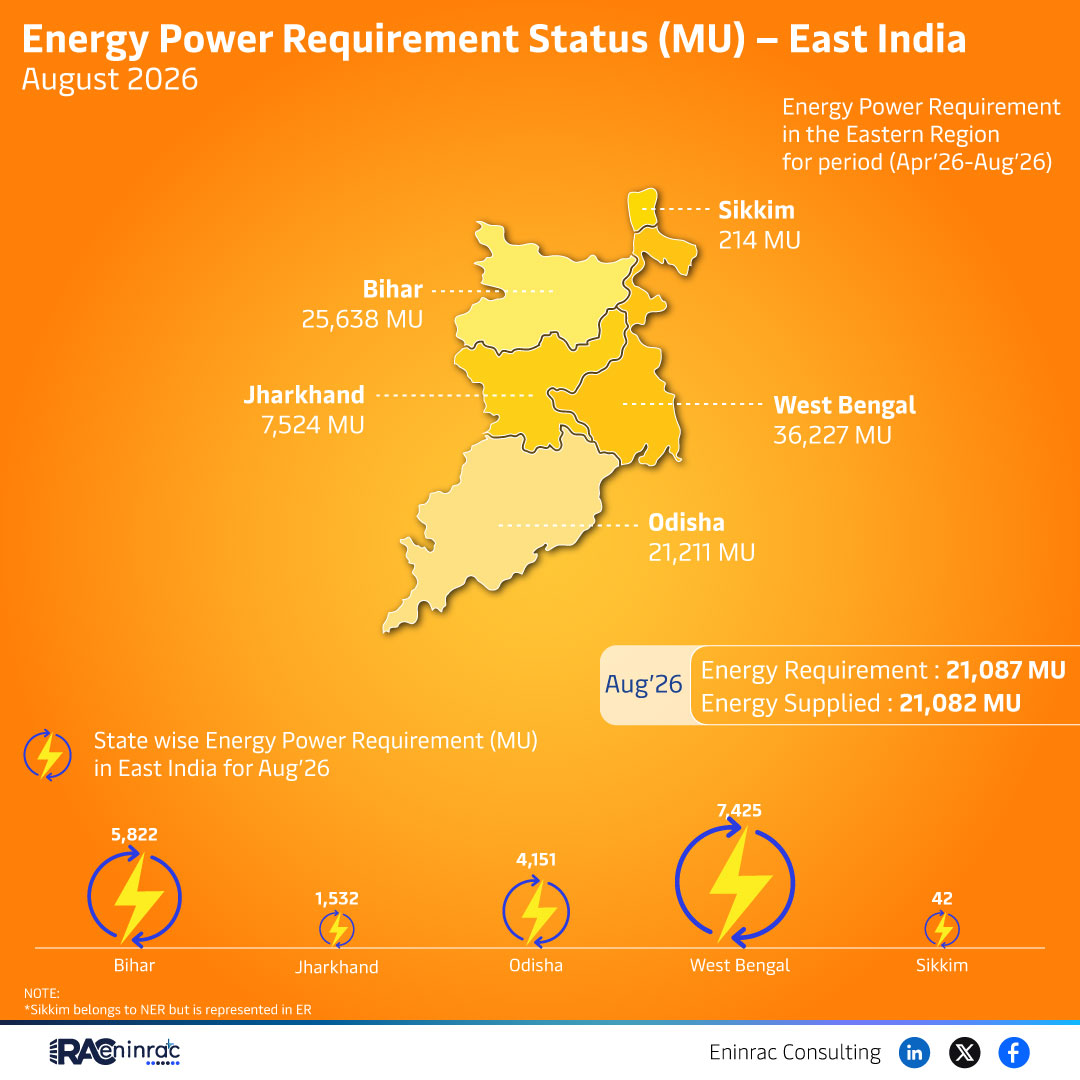
Does the data show a surplus or a shortfall in electricity for East India? The figures indicate a total regional requirement of 21,087 MU and an actual supply of 21,082 MU, leaving a marginal shortfall of only 5 MU. This near‑perfect match suggests that the grid operated close to its capacity, but the tiny deficit still points to the need for contingency resources.
State‑wise Energy Requirement Snapshot for August 2026
When the numbers are broken down by state, West Bengal leads with an estimated 7,524 MU, followed by Bihar at roughly 7,425 MU. Jharkhand’s demand stands at about 5,822 MU, while Odisha contributes around 4,500 MU. Sikkim, although part of the North‑Eastern Region, is listed under the Eastern Region with a modest 214 MU requirement. These variations reflect population density, industrial activity and the availability of local generation resources. These figures illustrate the diverse demand levels across the eastern corridor, with the two most populous states accounting for more than half of the total requirement.
Impact on Sectors and Industries
The close alignment between demand and supply influences several key sectors. Power generators must maintain adequate reserve capacity to address the 5 MU shortfall, which can affect operational costs. Transmission companies need to ensure reliable inter‑state links, especially between high‑demand states like West Bengal and Bihar. Industrial users, such as steel plants and textile mills, rely on stable supply to avoid production interruptions. Policymakers can use this data to refine load‑forecasting models, plan new renewable projects, and allocate funds for grid upgrades in the eastern region. Furthermore, the slight deficit encourages exploration of battery storage and demand‑response programs to enhance grid resilience.
Key Takeaways
- The total requirement for East India in August 2026 was 21,087 MU.
- Actual supply reached 21,082 MU, leaving a 5 MU shortfall.
- West Bengal and Bihar together accounted for over 14,900 MU, more than 70% of the regional demand.
- Sikkim’s 214 MU requirement highlights its smaller but growing electricity needs.
- The data underscores the importance of maintaining a marginal reserve margin.
- Accurate state‑wise data supports better generation, transmission and policy decisions.
FAQs
What does MU stand for in the energy data?
MU stands for Million Units, a standard metric used to quantify large volumes of electricity consumption.
Why is Sikkim listed under the Eastern Region?
Sikkim belongs to the North‑Eastern Region administratively, but for this report it is represented with the Eastern Region data to provide a complete picture.
How significant is the 5 MU shortfall?
While 5 MU is a small fraction of the total 21,087 MU requirement, it signals the need for contingency reserves to avoid any supply gaps.
Which state had the lowest demand?
Sikkim recorded the lowest demand at 214 MU among the states listed for August 2026.
What actions can utilities take to address future shortfalls?
Utilities can invest in additional reserve generation, improve demand‑side management, and accelerate renewable integration to buffer against potential deficits.