
Introduction
The North India August 2026 energy power requirement data provides a snapshot of electricity demand across the region at the end of the fiscal quarter. Understanding this data is crucial for policymakers, utility planners, investors, and anyone interested in the balance between power generation and consumption in the northern states. This article explains the key figures, compares state‑wise demand, highlights trends, and outlines the implications for the power sector and related industries.
What Does the Data Reveal About This Topic?
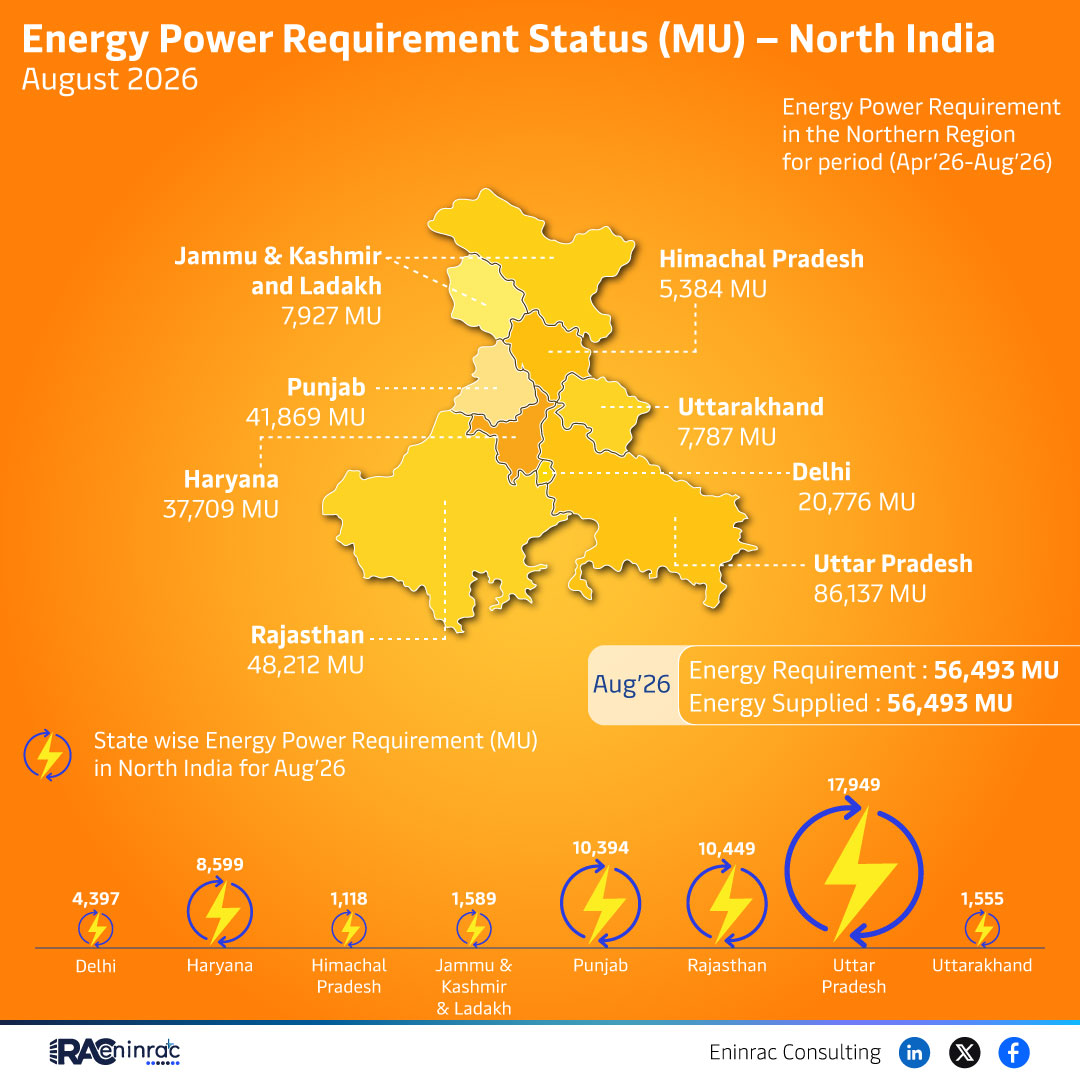
What does the August 2026 data tell us about power needs in North India? The figures show a total regional requirement of 56,493 MU, which matches the supplied volume, indicating that the grid met the demand for that period. Uttar Pradesh leads with the highest requirement, while smaller states such as Ladakh and Himachal Pradesh report modest demand. The balanced supply‑demand outcome suggests effective short‑term grid management, but the underlying distribution varies sharply between states.
State‑wise Energy Demand Snapshot
When we break down the numbers, Uttar Pradesh accounts for roughly 86,137 MU of requirement, far exceeding any other state. Haryana follows with 37,709 MU, while Delhi’s demand sits at 17,949 MU. Jammu & Kashmir and Ladakh together need 7,927 MU, and Himachal Pradesh records about 869 MU. Punjab and Haryana combined show a demand of 20,776 MU. These disparities illustrate how industrial activity, population density, and climate influence power consumption across the northern belt.
Impact on Sectors and Industries
The power requirement pattern affects multiple sectors. Heavy‑industry hubs in Uttar Pradesh and Haryana rely on reliable supply for manufacturing, steel, and cement production. Agricultural regions depend on irrigation‑driven electricity, especially during peak summer months. Urban centers like Delhi experience heightened residential and commercial load, influencing demand‑side management strategies. For investors, the data signals where new generation capacity or transmission upgrades may be needed, while regulators can assess tariff adjustments and renewable integration targets based on state‑level needs.
Key Takeaways
- North India’s total power requirement for August 2026 was 56,493 MU, fully met by supply.
- Uttar Pradesh dominates regional demand, contributing over 86,000 MU.
- Haryana and Delhi are the next largest consumers, reflecting industrial and urban loads.
- Smaller states like Ladakh and Himachal Pradesh have relatively low demand, highlighting regional diversity.
- Balanced supply‑demand indicates effective short‑term grid management but long‑term capacity planning remains essential.
- Policy focus should target capacity expansion in high‑demand states while supporting renewable integration in lower‑demand regions.
FAQs
What is the total power requirement for North India in August 2026?
The total requirement is 56,493 MU, which was completely supplied during the same period.
Which state has the highest energy demand?
Uttar Pradesh, with an estimated requirement of 86,137 MU, leads the region.
Did the supply meet the demand in August 2026?
Yes, the supplied volume matched the total requirement of 56,493 MU.
How does Delhi’s demand compare to other states?
Delhi’s demand of 17,949 MU places it behind Uttar Pradesh and Haryana but ahead of most smaller states.
What are the implications for renewable energy planning?
The varied demand across states suggests focusing renewable projects in high‑demand areas while using smaller‑scale installations in low‑demand regions to balance the grid.