
Introduction
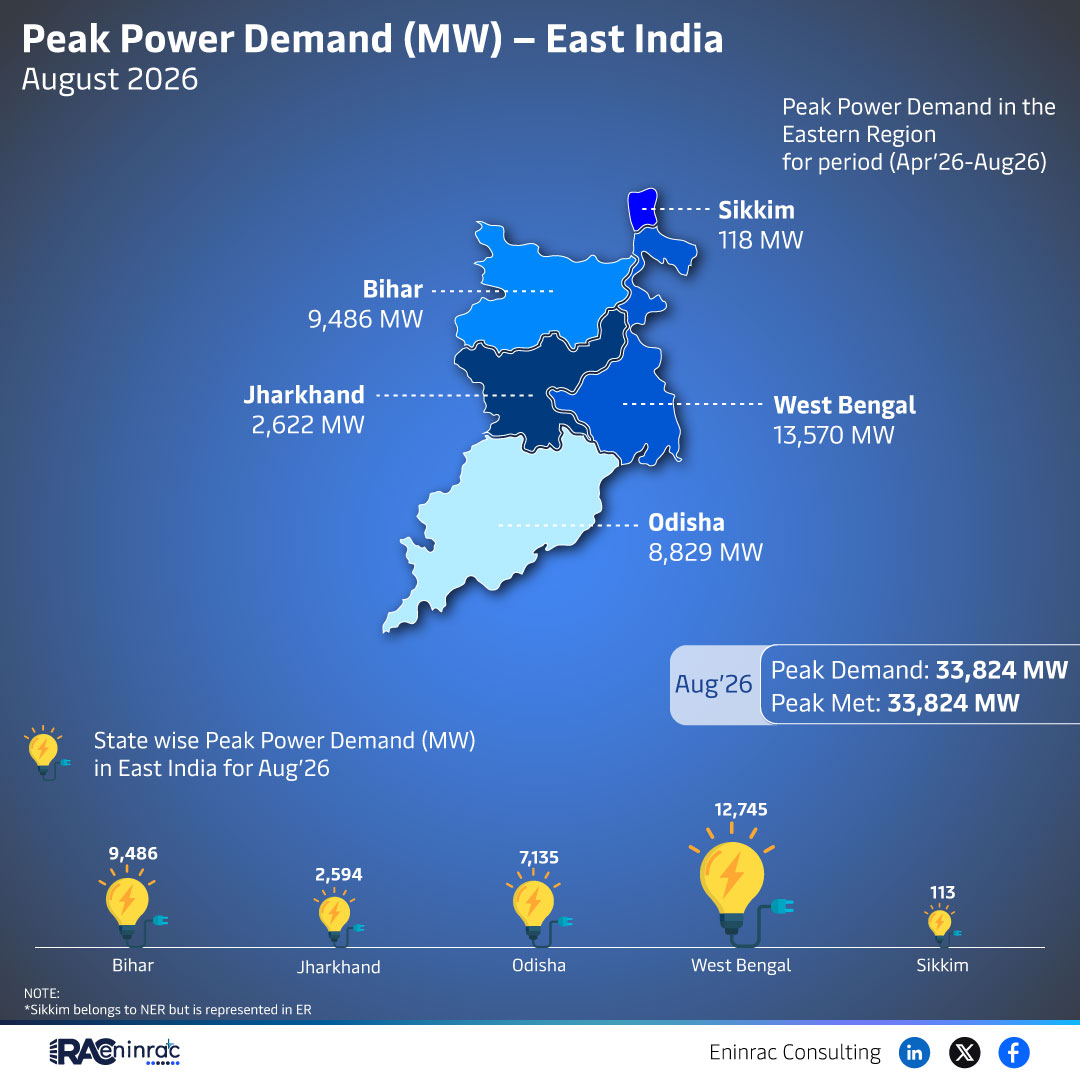
Understanding the peak power demand in East India for August 2026 is essential for utilities, policymakers, and investors. The region’s demand reached 33,824 megawatts, reflecting seasonal load spikes and regional growth patterns. This data breaks down statewise contributions, highlighting Bihar’s 9,486 MW, West Bengal’s 13,570 MW, Odisha’s 8,829 MW, Jharkhand’s 2,622 MW, and Sikkim’s 118 MW despite its classification in the North‑Eastern Region. Analyzing these figures helps anticipate grid stress, plan generation capacity, and optimize distribution networks across the Eastern Region.
What Does the Data Reveal About This Topic?
The data reveals that West Bengal contributed the largest share of the August peak, accounting for roughly 40 % of the total 33,824 MW demand. Bihar followed with about 28 %, while Odisha supplied nearly 26 %. Jharkhand and Sikkim together provided less than 8 % combined. This distribution indicates that the densely populated and industrialised states drive the majority of peak load, whereas smaller or less‑industrialised regions have a modest impact on the overall Eastern Region demand.
Statewise Comparison of Peak Demand in August 2026
Comparing the statewise figures shows a clear hierarchy of demand. West Bengal’s 13,570 MW stands out as the top performer, followed by Bihar’s 9,486 MW and Odisha’s 8,829 MW. Jharkhand’s 2,622 MW and Sikkim’s modest 118 MW lag significantly behind. The gap between the leading state and the lowest reflects differences in population density, industrial activity, and grid connectivity. Such contrasts are crucial for targeted infrastructure upgrades and resource allocation. Policymakers can use these insights to balance supply with regional consumption patterns.
Impact on Sectors and Industries
The August peak demand influences several sectors. Power generation companies must ensure sufficient thermal, hydro and renewable output to meet the 33,824 MW requirement, especially in West Bengal and Bihar. Transmission operators face heightened stress on inter‑state lines, prompting upgrades to prevent bottlenecks. Distribution utilities in high‑demand states need to manage load shedding risks and invest in smart grid technologies. The East India peak power demand of August 2026 serves as a benchmark for future planning. Investors watch these trends to gauge profitability of new capacity projects, while policymakers design demand‑side management programs to curb peak consumption.
Key Takeaways
- West Bengal leads with 13,570 MW, the highest state contribution.
- Bihar and Odisha together supply over half of the total peak demand.
- Jharkhand and Sikkim have minimal impact on the overall load.
- Population density and industrial activity drive peak demand differences.
- Grid operators must prioritize transmission upgrades in high‑demand corridors.
- Investors can target generation projects in West Bengal, Bihar and Odisha.
FAQs
What was the total peak power demand in East India for August 2026?
The total peak demand reached 33,824 MW across the Eastern Region.
Which state had the highest peak demand?
West Bengal recorded the highest peak demand at 13,570 MW.
How does Bihar’s demand compare to Odisha’s?
Bihar’s demand was 9,486 MW, slightly higher than Odisha’s 8,829 MW.
Why is Sikkim’s demand so low?
Sikkim’s lower demand reflects its smaller population and limited industrial activity.
What implications does this data have for power generation planning?
Generators must ensure adequate capacity, especially in West Bengal, Bihar and Odisha, to meet peak loads and avoid shortages.