
Introduction
The North India peak power demand August 2026 reached a record level, marking the highest electricity consumption of the year. Understanding the distribution of this demand across states such as Uttar Pradesh, Haryana, Rajasthan, and the union territories provides valuable insight for planners, utilities, and investors. This page presents the raw figures, analyzes the patterns, and explains why this information matters for energy policy, market strategies, and infrastructure development.
What Does the Data Reveal About This Topic?
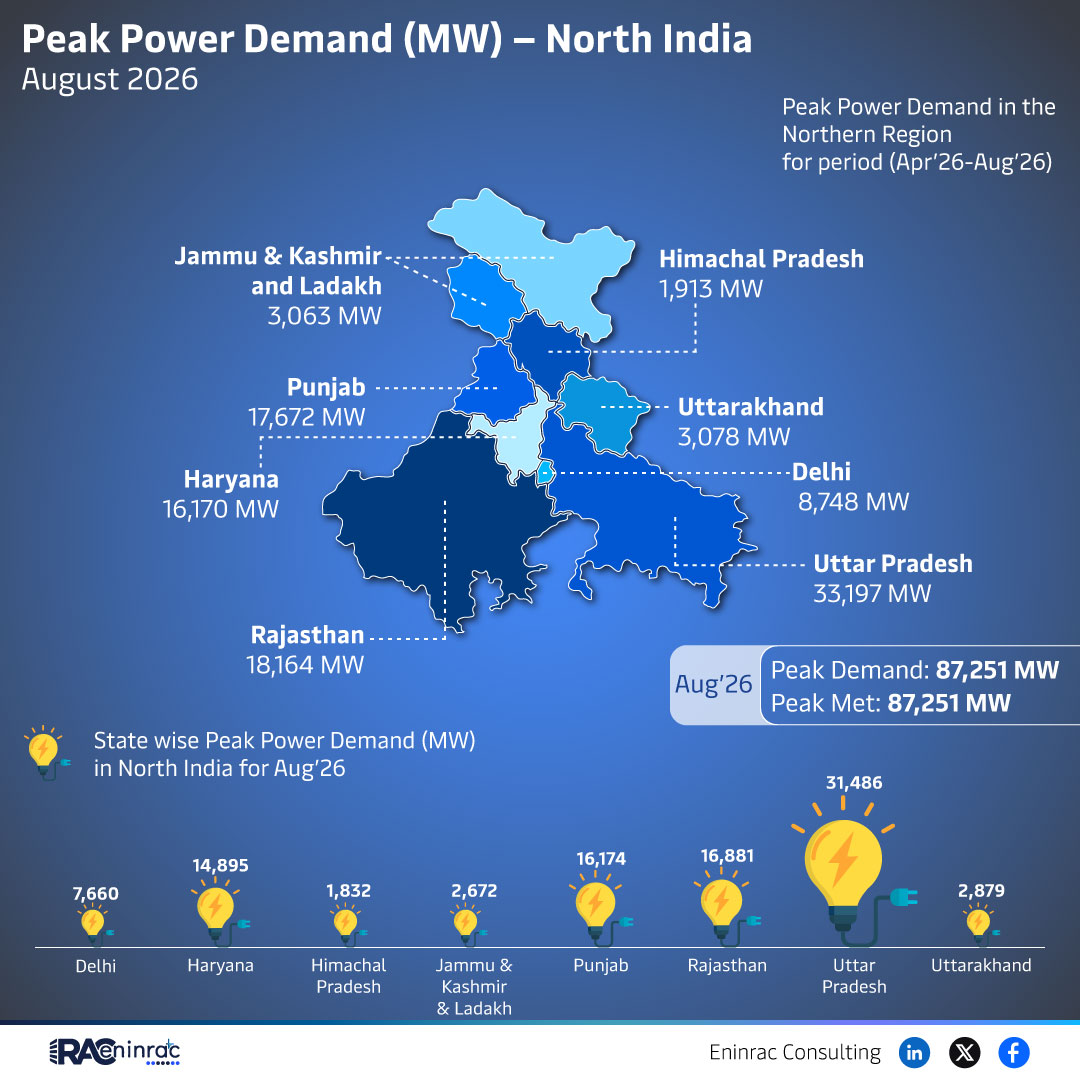
What is the total peak power demand for North India in August 2026? The compiled data shows a combined peak load of 87,251 MW across the region, with individual state contributions ranging from a modest 1,913 MW in Himachal Pradesh to a massive 33,197 MW in Uttar Pradesh. The numbers highlight significant regional imbalances and identify the states that drive the bulk of electricity usage during peak summer conditions.
Statewise Comparison of August 2026 Peak Demand
A closer look at the statewise breakdown reveals that Uttar Pradesh alone accounts for roughly 38 % of the total northern demand, followed by Haryana with 16,170 MW and Rajasthan with 18,164 MW. Smaller states such as Himachal Pradesh and Jammu & Kashmir & Ladakh contribute less than 2 % each. This hierarchy reflects population density, industrial activity, and climatic stress. For example, Haryana’s extensive agrarian and manufacturing sectors, combined with high summer temperatures, push its peak load well above the national average. In contrast, the mountainous terrain of Himachal Pradesh moderates demand despite its own energy needs.
Impact on Sectors and Industries
The surge in North India peak power demand influences several key sectors. Power generators must ensure sufficient capacity and reserve margins to avoid blackouts, prompting investments in both thermal and renewable assets. Transmission operators face heightened stress on high‑voltage corridors linking resource‑rich western states to load‑heavy eastern regions. Distribution companies in Uttar Pradesh, Haryana, and Rajasthan must manage demand‑side response programs, promote energy efficiency, and upgrade substations. Industries such as steel, cement, and chemicals, which are concentrated in Haryana and Rajasthan, experience higher operating costs during peak periods, affecting competitiveness and profit margins. Consumers, especially in rural and semi‑urban areas, may see increased tariffs or load‑shedding if supply does not keep pace with demand.
Key Takeaways
- North India’s total August 2026 peak demand reached 87,251 MW.
- Uttar Pradesh contributed the largest share at 33,197 MW.
- Haryana and Rajasthan each exceeded 16,000 MW, underscoring their industrial load.
- Mountainous states like Himachal Pradesh and Jammu & Kashmir & Ladakh recorded the lowest peaks.
- High demand places pressure on generation, transmission, and distribution infrastructure.
- Policymakers need targeted demand‑side measures and capacity additions in the top‑demand states.
FAQs
Why is August the peak month for power demand in North India?
Summer temperatures in August drive extensive use of cooling equipment, irrigation pumps, and industrial processes, leading to the highest hourly loads on the grid.
How does Uttar Pradesh’s demand compare to other northern states?
With 33,197 MW, Uttar Pradesh accounts for about 38 % of the region’s total, far outpacing the next largest state, Rajasthan, which records 18,164 MW.
What role do renewable energy sources play in meeting this peak demand?
Renewables such as solar and wind provide supplementary capacity, but their variable output requires careful integration with storage and flexible thermal plants to cover peak hours.
Can demand‑side management reduce the August peak?
Yes, programs that shift industrial loads, promote efficient appliances, and encourage consumer awareness can lower the maximum system load and defer costly infrastructure upgrades.
What are the implications for investors in the power sector?
Investors may target high‑demand states for generation projects, transmission upgrades, and smart‑grid solutions, as these regions offer attractive returns driven by sustained peak loads.