
Introduction
The August 2026 peak power demand figures for North East India provide a clear snapshot of electricity consumption across the eight northeastern states. Understanding these values is essential for grid operators, policymakers, investors, and anyone interested in regional energy dynamics. This article breaks down the state‑wise demand, highlights the leading contributors, and explains the implications for future planning, renewable integration, and market stability.
What Does the Data Reveal About This Topic?
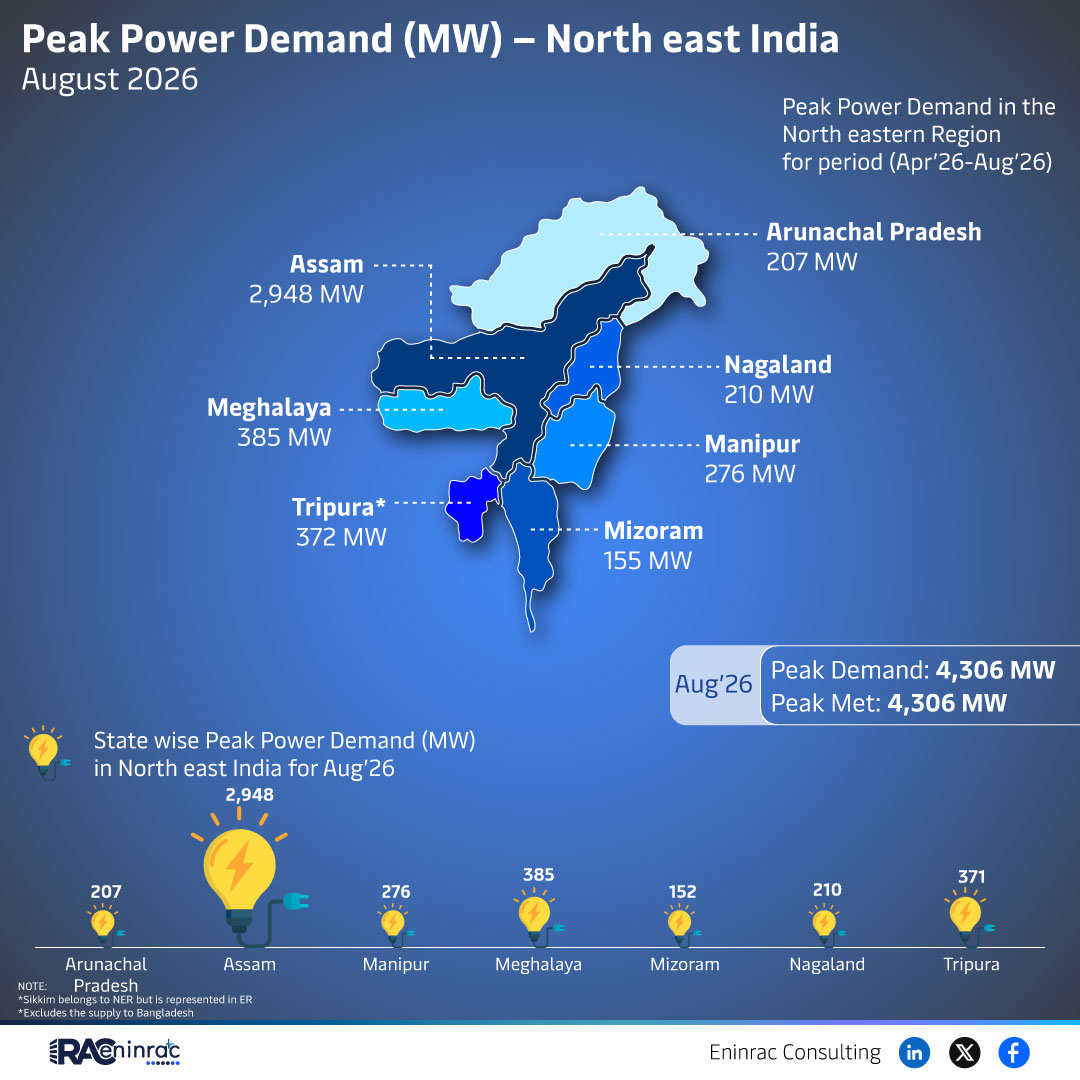
The data shows that the total peak demand for the region in August 2026 reached 4,306 MW. Assam dominated the landscape with a staggering 2,948 MW, while the remaining states contributed smaller but still significant loads. The figures answer a key question: which states are driving the highest electricity peaks and how do their demands compare during the summer months?
State‑wise Peak Power Demand Trends in August 2026
Examining each state reveals distinct consumption patterns. Arunachal Pradesh recorded 207 MW, reflecting its relatively lower industrial base and dispersed population. Meghalaya posted 385 MW, driven by tourism and small‑scale manufacturing. Manipur’s demand stood at 276 MW, while Mizoram contributed 155 MW, the lowest among the group. Nagaland reached 371 MW and Tripura 372 MW, indicating comparable usage levels in these two states. Assam’s 2,948 MW dwarfs the others, underscoring its larger population, extensive commercial activity, and higher reliance on conventional generation sources. The contrast between Assam and the smaller states highlights the need for targeted capacity upgrades and demand‑side management in the region.
Impact on Sectors and Industries
The peak demand profile influences multiple sectors. Power utilities must ensure sufficient generation and transmission capacity to avoid shortages during peak periods. Investors can identify opportunities for new renewable projects, especially in states where demand is growing but supply remains constrained. Policymakers can use the data to design demand‑response programs, promote energy efficiency, and prioritize infrastructure investments. For industrial users, understanding peak load timing helps in scheduling operations to reduce costs. Consumers benefit from a more reliable grid as utilities plan upgrades based on accurate, state‑specific demand forecasts.
Key Takeaways
- North East India’s total peak demand in August 2026 was 4,306 MW.
- Assam accounted for nearly 69% of the regional peak load.
- Arunachal Pradesh, Meghalaya, Manipur, Mizoram, Nagaland, and Tripura together contributed the remaining 31%.
- States with lower demand still face reliability challenges due to limited infrastructure.
- Renewable integration can help balance peak loads, especially in high‑demand states.
- Accurate state‑wise data supports better investment and policy decisions.
FAQs
What was the total peak power demand in North East India in August 2026?
The region’s total peak demand reached 4,306 MW during August 2026.
Which state had the highest peak demand?
Assam led the region with a peak demand of 2,948 MW.
How does Arunachal Pradesh’s demand compare to other states?
Arunachal Pradesh recorded 207 MW, the lowest among the eight northeastern states.
Why is state‑wise demand data important?
It helps utilities plan capacity, investors target projects, and policymakers design effective energy measures.
Can renewable energy reduce peak demand pressures?
Yes, integrating solar, wind, and hydro can smooth peaks and improve grid resilience across the region.