
Introduction
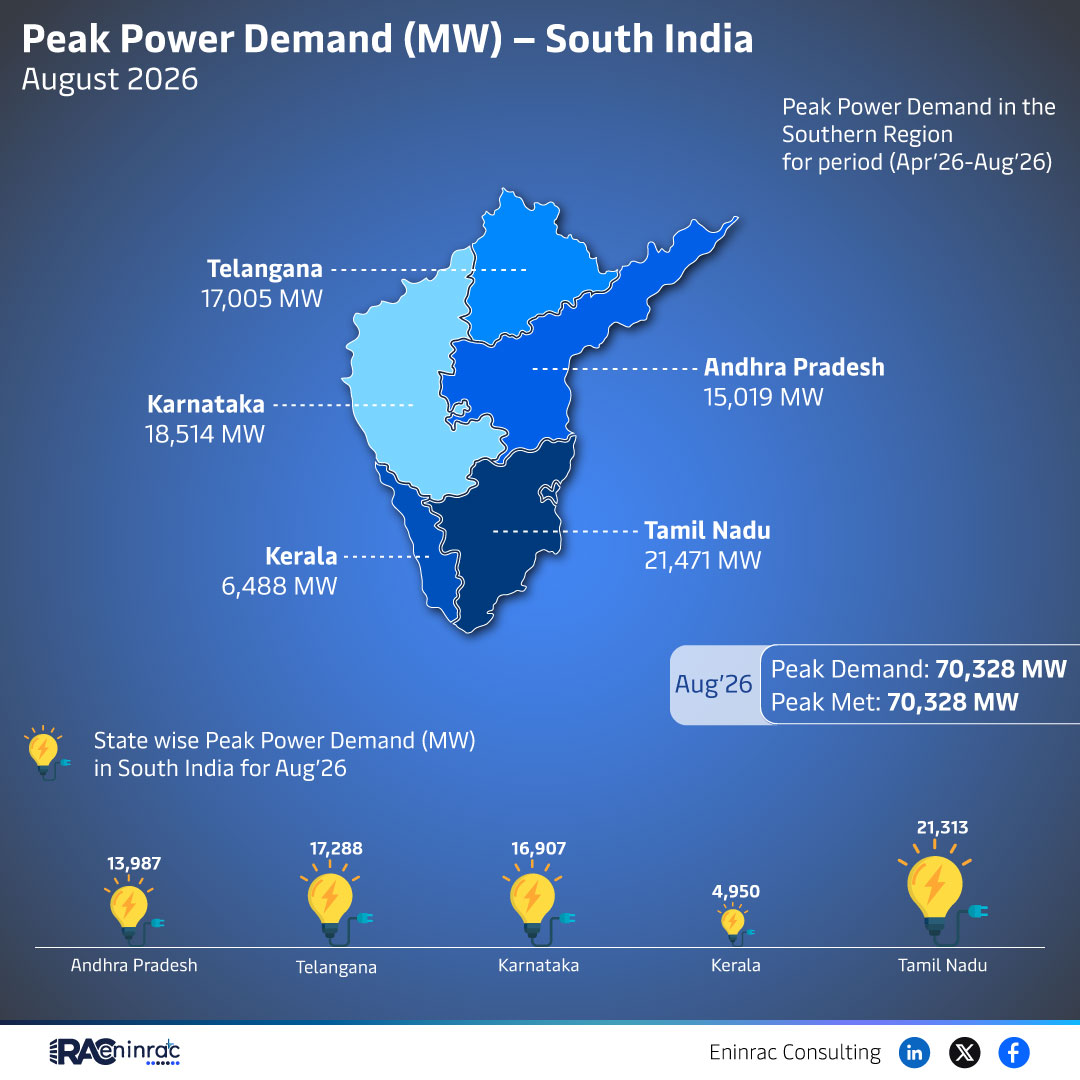
South India’s electricity grid experienced a historic surge in August 2026, reaching a combined peak power demand of 70,328 megawatts (MW). Understanding this peak power demand South India figure is essential for utilities, policymakers, investors, and consumers who rely on a stable supply of electricity. This article breaks down the state‑wise demand, highlights leading contributors, examines the implications for the power sector, and offers actionable insights for stakeholders.
What Does the Data Reveal About This Topic?
The data shows that Tamil Nadu recorded the highest single‑state peak at 21,471 MW, followed by Karnataka with 18,514 MW, Telangana at 17,005 MW, Andhra Pradesh at 15,019 MW, and Kerala contributing the smallest share of 6,488 MW. Together, these figures sum to the regional total of 70,328 MW, confirming that the southern region approached an unprecedented load level during the late‑summer period.
State‑wise Comparison of August 2026 Peak Demand
A comparative view reveals a clear hierarchy. Tamil Nadu’s demand exceeds the next state by nearly 3,000 MW, driven by industrial activity, high‑temperature cooling loads, and extensive urban consumption. Karnataka’s demand reflects rapid growth in manufacturing and information‑technology hubs. Telangana’s performance is buoyed by expanding commercial districts and increased agricultural pump operations. Andhra Pradesh, while slightly lower, still shows significant demand due to its mixed agrarian‑industrial economy. Kerala’s lower figure aligns with its smaller industrial base and higher reliance on renewable micro‑grids.
Impact on Sectors and Industries
The surge in peak power demand influences multiple sectors. Power generators must schedule additional capacity, often invoking reserve plants or importing power from neighboring grids, which can affect electricity prices. Transmission operators face heightened stress on inter‑state lines, prompting temporary upgrades or re‑routing to avoid overloads. Distribution companies in each state need to enhance demand‑response programs and encourage energy‑efficiency measures among residential and commercial customers. For investors, the data signals opportunities in gas‑fired peaking plants, battery storage, and smart‑grid technologies that can mitigate volatility.
Key Takeaways
- South India’s total peak demand reached 70,328 MW in August 2026, a record for the region.
- Tamil Nadu led the chart with 21,471 MW, outpacing Karnataka by over 3,000 MW.
- Karnataka, Telangana, and Andhra Pradesh each contributed between 15,000 MW and 18,500 MW.
- Kerala’s demand remained the lowest at 6,488 MW, reflecting its smaller industrial footprint.
- High demand pressures generation assets, transmission corridors, and distribution networks alike.
- Opportunities arise for renewable integration, storage solutions, and demand‑side management to smooth future peaks.
FAQs
Why did Tamil Nadu record the highest peak demand?
Intensive industrial activity, dense urban populations, and extreme summer temperatures drive cooling loads, pushing Tamil Nadu’s consumption above other states.
How does peak demand affect electricity prices?
When demand spikes, generators may need to dispatch higher‑cost peaking units or purchase power from other regions, which can raise wholesale and retail rates.
What role does renewable energy play in managing peak loads?
Renewables such as solar and wind can offset some demand if paired with storage, but their intermittent nature often requires backup from flexible generation.
Can consumers reduce their contribution to peak demand?
Yes, by shifting high‑energy activities to off‑peak hours, using energy‑efficient appliances, and participating in demand‑response programs.
What infrastructure upgrades are expected after such a peak?
Transmission operators may reinforce key inter‑state corridors, and distribution utilities often invest in smart‑metering and grid‑automation to improve load management.