
Introduction
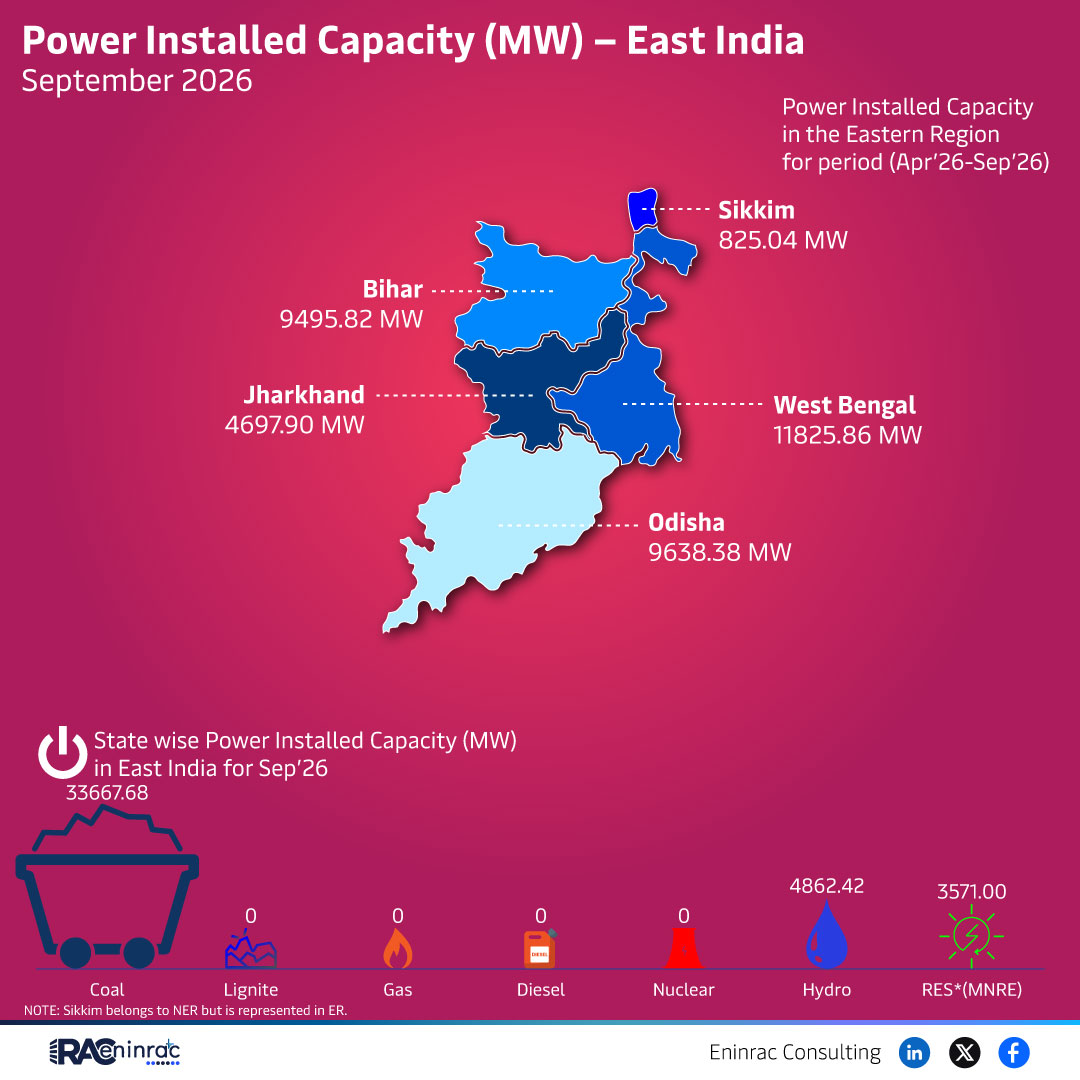
In September 2026 the Eastern Region of India reported a detailed snapshot of its power installed capacity across several states. The data covers the period from April 2026 to September 2026 and breaks down capacity by fuel type and by state, including Sikkim, Jharkhand, West Bengal and the broader East India aggregate. Understanding these figures is essential for policymakers, investors, and industry analysts because they highlight regional growth trends, the balance between conventional and renewable sources, and the readiness of the grid to meet rising demand. This article examines the key numbers, compares state performances, and discusses the implications for energy planning in East India.
What Does the Data Reveal About This Topic?
The data shows that East India’s total installed capacity reached approximately 33,667 MW by September 2026, with significant contributions from coal, gas, and renewable energy sources. Sikkim, despite being a small state, added 825 MW largely from hydro and renewable projects, while Jharkhand contributed nearly 9,596 MW driven by coal and lignite plants. West Bengal remains the largest single‑state contributor with close to 9,790 MW, split between thermal and renewable generation. The mix indicates that traditional thermal power still dominates, but renewable sources such as hydro and solar are gaining a noticeable share, reflecting national targets for cleaner energy.
Statewise Capacity Comparison in East India
When the statewise figures are placed side by side, clear patterns emerge. West Bengal’s 9,790 MW outstrips the combined capacity of Sikkim and Jharkhand, positioning it as the regional leader in power generation. Jharkhand’s 9,596 MW is largely coal‑based, indicating reliance on fossil fuels, whereas Sikkim’s 825 MW is predominantly hydro and other renewable sources, showcasing a cleaner energy profile. The aggregate East India capacity of 33,667 MW includes sizeable contributions from other states not listed explicitly in the raw excerpt, suggesting a diversified energy landscape. Fuel‑type distribution reveals coal and lignite together accounting for roughly half of the total, gas and diesel providing supplemental capacity, and renewable energy (hydro, solar, wind) slowly increasing its share.
Impact on Sectors and Industries
The composition of installed capacity influences multiple sectors. A heavy coal share sustains mining, transportation, and heavy‑industry operations, while rising renewable capacity creates opportunities for solar panel manufacturers, wind turbine suppliers, and hydro‑project developers. Grid operators must adapt to variable renewable output, prompting investments in transmission upgrades and storage solutions. Investors looking at the East India market can gauge risk based on the fuel mix; regions with higher renewable penetration may align better with ESG criteria. Policymakers can use these insights to fine‑tune subsidy allocations, encourage green financing, and plan for future demand growth while meeting national climate commitments.
Key Takeaways
- East India’s total installed capacity reached roughly 33,667 MW by September 2026.
- West Bengal remains the top contributor with about 9,790 MW of capacity.
- Jharkhand’s capacity is mainly coal‑driven, accounting for nearly 9,600 MW.
- Sikkim contributes 825 MW, primarily from hydro and renewable sources.
- Coal and lignite together still represent about half of the regional power mix.
- Renewable sources are expanding, offering growth potential for clean‑energy investors.
FAQs
What was the total power installed capacity in East India in September 2026?
Approximately 33,667 MW was installed across the Eastern Region by the end of September 2026.
Which state had the highest installed capacity?
West Bengal recorded the highest capacity, close to 9,790 MW.
How much renewable capacity did Sikkim add?
Sikkim added about 825 MW, mainly from hydro and other renewable projects.
Is coal still the dominant fuel source in East India?
Yes, coal and lignite together account for roughly half of the region’s total capacity.
What implications does the capacity mix have for investors?
Investors can expect strong demand for coal‑related assets but also growing opportunities in renewable energy, storage, and grid modernization.