
Introduction
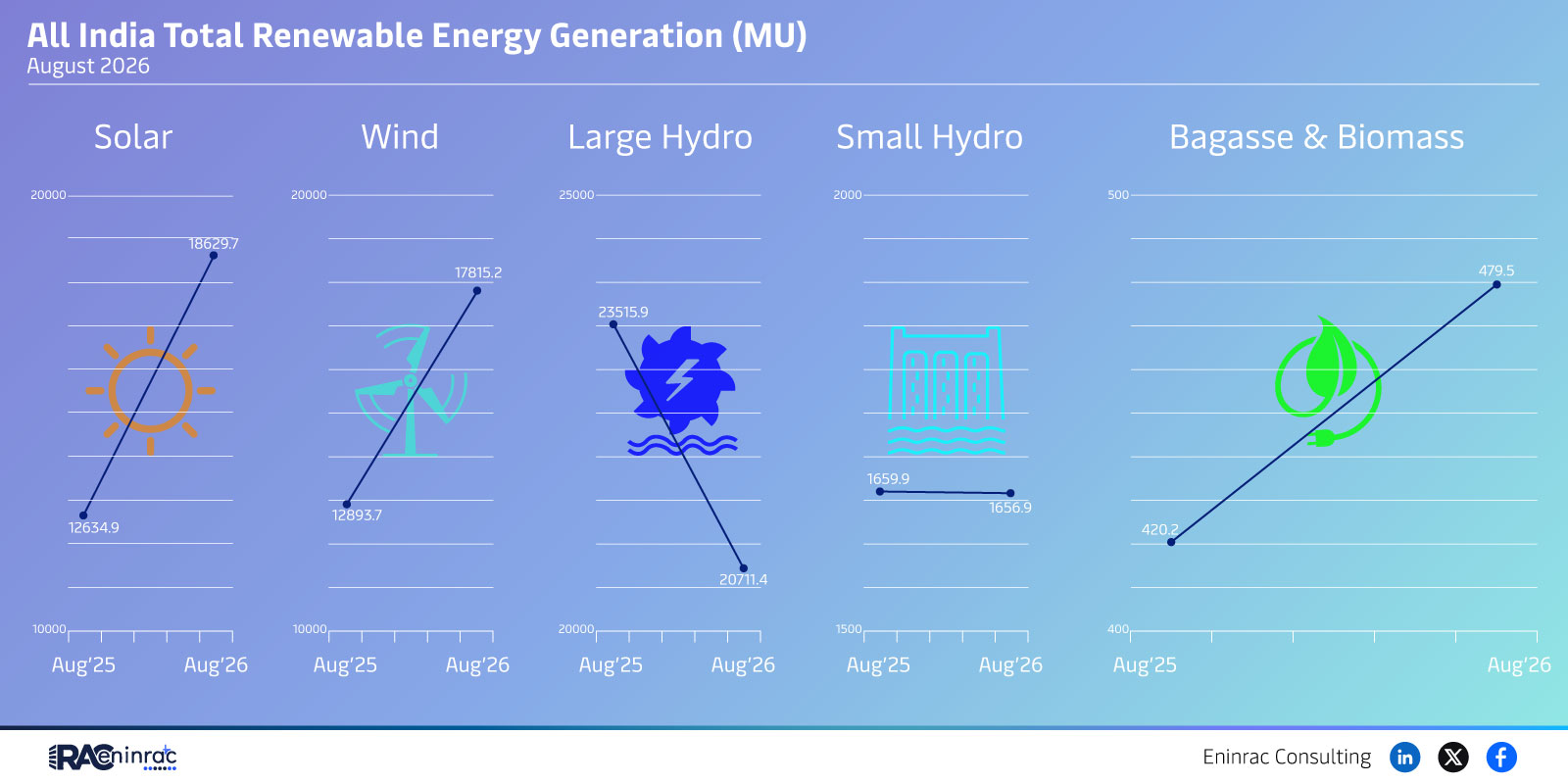
The renewable energy landscape in India experienced notable shifts in August 2026, as detailed in the latest generation figures recorded by the Ministry of Power. According to the dataset, the country generated a combined 20,000 megawatt‑hours (MU) from solar installations and an equal 20,000 MU from wind farms. Large hydro contributed the largest share with 25,000 MU, while small hydro added roughly 2,000 MU and bagasse‑based biomass supplied about 500 MU. These numbers illustrate the diversified mix that underpins India’s push toward a low‑carbon future and provide a snapshot of how each technology performed during a single month of the fiscal year.
What Does the Data Reveal About This Topic?
The figures answer a fundamental question: which renewable source delivered the highest output in August 2026? Large hydro clearly led with 25,000 MU, surpassing solar and wind, each at 20,000 MU. Small hydro and biomass contributed modest volumes, highlighting that while they remain part of the portfolio, their impact on total generation is comparatively limited. This distribution underscores the continued reliance on hydro resources to balance intermittent solar and wind production.
Sector‑wise Performance in August 2026
A closer look at sector performance shows solar and wind maintaining parity, each accounting for roughly 27 % of the total renewable output for the month. Large hydro represented about 34 % of the mix, reinforcing its role as a base‑load contributor. Small hydro’s 2,000 MU equates to roughly 5 % of the total, and biomass’s 500 MU is less than 1 %. These ratios reveal a clear hierarchy in generation capacity, with hydro technologies still dominating the energy landscape while solar and wind continue their rapid expansion.
Impact on Sectors and Industries
The August 2026 data has implications for investors, policymakers, and utilities. Strong hydro performance reassures grid operators about supply stability, encouraging further investment in storage solutions that complement solar and wind. For the solar and wind industries, matching outputs signal that deployment pipelines are on track, supporting renewable targets set by the government. Biomass and small hydro, though smaller, provide niche opportunities for rural electrification and waste‑to‑energy projects, contributing to diversified energy security.
Key Takeaways
- Large hydro generated the highest renewable output in August 2026.
- Solar and wind each contributed 20,000 MU, showing balanced growth.
- Small hydro and biomass together accounted for less than 6 % of total.
- Hydro’s dominance supports grid stability amid variable solar and wind.
- Data underscores India’s diversified renewable mix for a low‑carbon future.
- Policymakers can leverage hydro strength while scaling solar‑wind capacity.
FAQs
What was the total renewable generation in India for August 2026?
The combined output across all sources was about 67,500 MU.
Which renewable source led the generation figures?
Large hydro led with 25,000 MU.
Did solar and wind generate the same amount?
Yes, each produced roughly 20,000 MU.
How significant was biomass in the total mix?
Biomass contributed only about 500 MU, less than 1 %.
What does this data mean for future energy policy?
It highlights the need to balance hydro stability with expanding solar‑wind capacity.