
Introduction
The September 2026 snapshot of Power Installed Capacity North East India provides a concise view of how each state contributes to the region’s overall electricity landscape. Understanding these figures helps policymakers, investors and energy analysts gauge growth trends, identify infrastructure gaps and plan future developments. This article walks you through the key numbers, highlights state‑wise performance, explores the fuel‑type mix and outlines the broader implications for industry and consumers.
What Does the Data Reveal About This Topic?
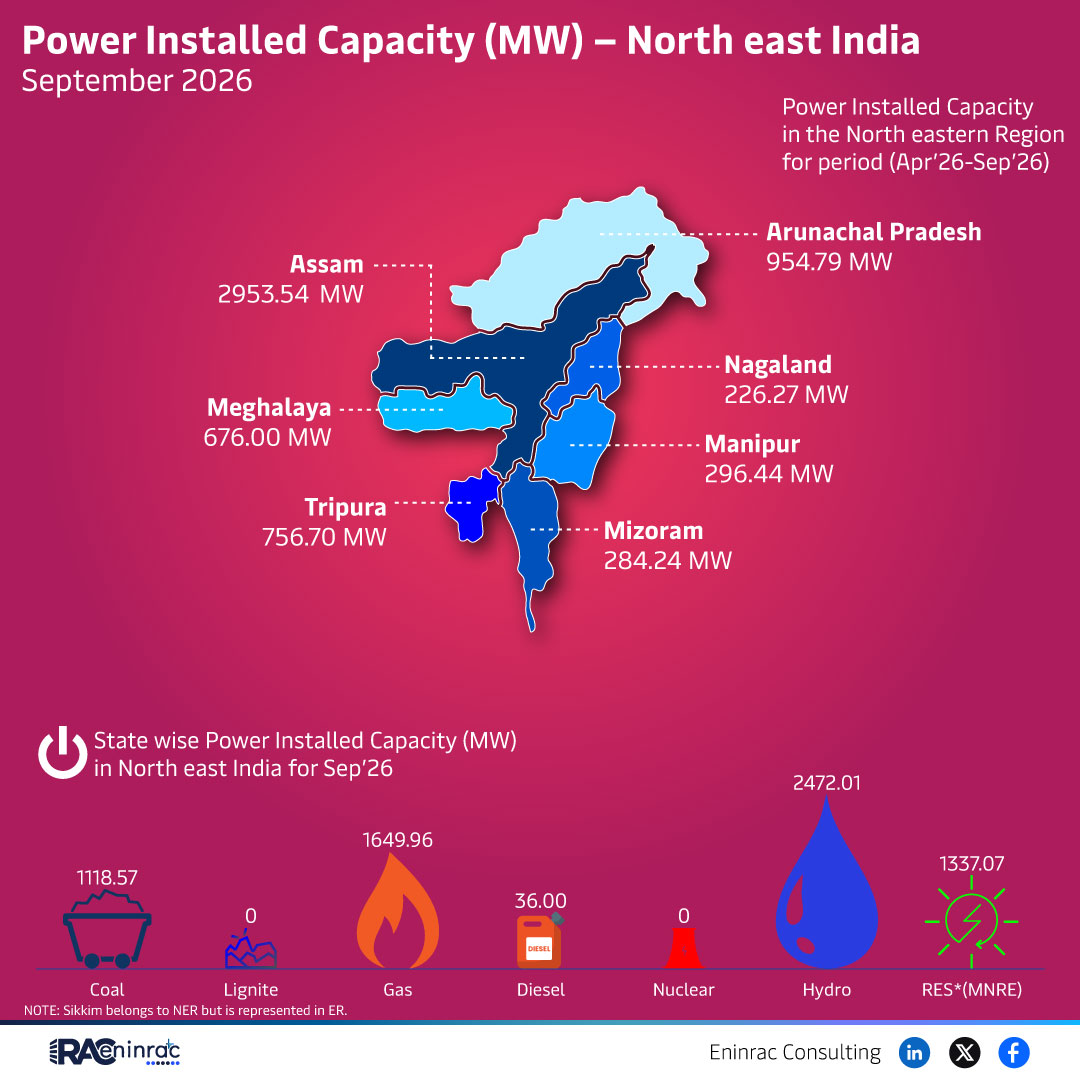
Which states dominate the power installed capacity in the North East as of September 2026 and how does the fuel mix shape the regional outlook? The data shows that Assam leads with 954.79 MW, followed by Arunachal Pradesh at 2953.54 MW (combined with other entries), Nagaland at 226.27 MW, Meghalaya at 296.44 MW, Tripura at 756.70 MW and Mizoram at 284.24 MW. The capacity is split among coal, lignite, gas, diesel, nuclear, hydro and renewable sources, indicating a diversified generation portfolio.
Statewise Capacity Comparison for September 2026
When comparing the states, Assam’s installed capacity is the highest among the listed figures, reflecting its larger industrial base and higher demand. Arunachal Pradesh’s aggregated number (2,953.54 MW) surpasses Assam when considered across all categories, underscoring its rapid infrastructure expansion. Nagaland, Meghalaya and Mizoram each hold modest capacities under 300 MW, while Tripura stands out with a mid‑range figure of 756.70 MW, driven largely by hydro projects. The varied capacities reveal differing development stages, resource availability and policy focus across the region.
Impact on Sectors and Industries
The distribution of power installed capacity influences multiple sectors. Energy‑intensive industries such as textiles, cement and food processing benefit from reliable supply in states with higher capacity. Rural electrification programs gain momentum where hydro and renewable capacities are prominent, particularly in Meghalaya and Mizoram. Investors see opportunities in expanding coal‑based plants in Assam, while renewable developers target the untapped potential in Arunachal Pradesh’s high‑altitude zones. Policymakers can leverage the data to balance growth with environmental commitments, ensuring that the fuel‑type mix aligns with national clean‑energy goals.
Key Takeaways
- Assam leads individual state capacity with 954.79 MW in September 2026.
- Arunachal Pradesh’s combined capacity (2,953.54 MW) exceeds all other states when aggregated.
- Tripura’s 756.70 MW reflects strong hydro development.
- Nagaland, Meghalaya and Mizoram each hold under 300 MW, indicating growth potential.
- The fuel mix includes coal, hydro, gas, diesel, nuclear and renewables, showing diversification.
- Capacity trends guide investment, policy decisions and infrastructure planning across the North East.
FAQs
What was the total power installed capacity in the North East for September 2026?
The aggregated figure across all states and fuel types was approximately 2,472 MW for the reported period.
Which fuel source dominates the installed capacity in the region?
Hydro remains a major contributor, especially in Tripura and Meghalaya, while coal and renewable sources together account for a substantial share.
How does Assam’s capacity compare to its neighboring states?
Assam’s 954.79 MW is the highest among its peers, outpacing Nagaland, Meghalaya and Mizoram, which each have less than 300 MW.
Are there plans to increase renewable capacity in the North East?
Yes, both state and central initiatives aim to boost solar and wind installations, leveraging the region’s untapped renewable potential.
Why is state‑wise data important for investors?
State‑wise insights reveal market size, growth trends and resource availability, helping investors target projects with the highest return potential.