
Introduction
The renewable power capacity landscape in East India for July 2026 offers a detailed snapshot of how states are advancing their clean energy ambitions. Understanding this data helps policymakers, investors, and industry professionals gauge progress, identify growth hotspots, and plan future projects that align with national sustainability goals.
What Does the Data Reveal About This Topic?
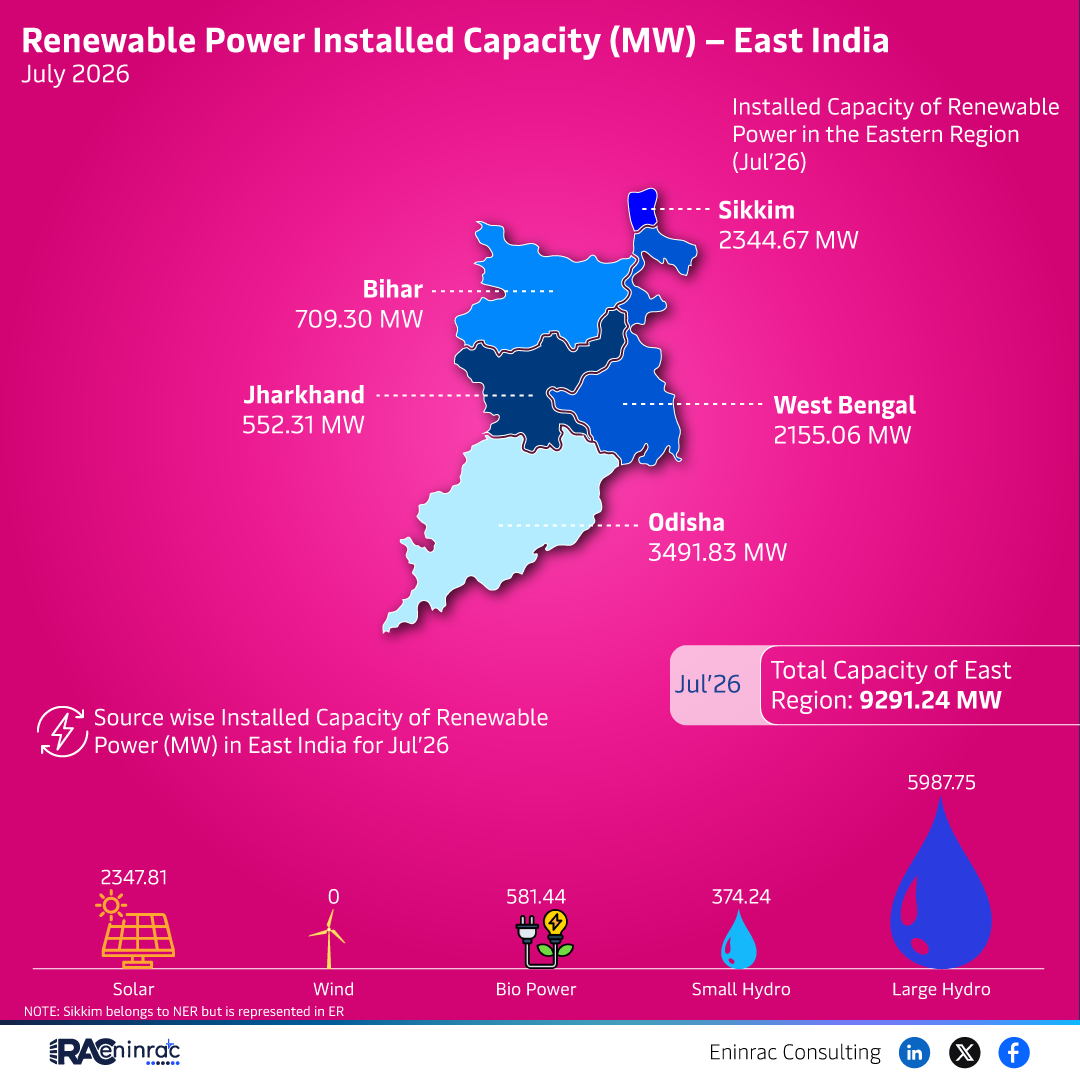
The July 2026 figures show a total installed renewable power capacity of approximately 598,775 MW across the Eastern region. State‑wise contributions highlight Sikkim with 2,344.67 MW, West Bengal with 2,155.06 MW, and Jharkhand with 552.31 MW. Source‑wise, solar leads at 2,347.81 MW, followed by wind at 581.44 MW, bio‑power at 374.24 MW, and both small and large hydro adding substantial capacity. This mix indicates a diversified energy portfolio that reduces reliance on any single technology.
Statewise and Source‑wise Comparative Analysis
When comparing states, Sikkim emerges as a standout performer despite its smaller geographic size, driven largely by aggressive solar and small hydro projects. West Bengal’s capacity is bolstered by a balanced blend of solar and wind farms, reflecting its broader industrial base and coastal wind corridors. Jharkhand’s relatively modest figure is anchored by bio‑power and emerging hydro initiatives, suggesting untapped potential in its forest and river resources. On the technology front, solar dominates the capacity chart, accounting for nearly 40 % of the region’s total renewable mix, while wind and bio‑power together contribute just over 15 %. Hydro, split between small and large installations, provides stability and complements intermittent sources.
Impact on Sectors and Industries
The expanding renewable power capacity in East India influences several key sectors. The power generation industry benefits from reduced fuel costs and increased grid stability as diversified clean sources come online. Manufacturing firms gain access to greener electricity, supporting sustainability certifications and reducing carbon footprints. Financial institutions see new investment opportunities in project financing, green bonds, and ESG‑focused funds. For policymakers, the data underscores the effectiveness of state‑level incentives and the need for continued transmission upgrades to accommodate variable generation. Consumers ultimately enjoy more reliable and potentially lower‑cost electricity as the renewable mix strengthens.
Key Takeaways
- Sikkim leads the Eastern region with 2,344.67 MW of renewable capacity, driven by solar and small hydro.
- West Bengal follows with a balanced portfolio of solar and wind, reaching 2,155.06 MW.
- Overall renewable capacity in East India totals approximately 598,775 MW as of July 2026.
- Solar power represents the largest share, highlighting the region’s high solar irradiance.
- Hydro, both small and large, plays a critical role in providing base‑load support.
- Continued growth will require investment in grid infrastructure and supportive policies.
FAQs
What is the total renewable power capacity in East India for July 2026?
It stands at roughly 598,775 MW, encompassing solar, wind, bio‑power, and hydro sources.
Which state has the highest renewable capacity in the region?
Sikkim leads with about 2,344.67 MW of installed renewable capacity.
How does solar capacity compare to other sources?
Solar accounts for the largest portion, roughly 40 % of the total renewable mix, surpassing wind, bio‑power, and hydro combined.
What role does hydro power play in East India’s energy mix?
Hydro, split between small and large installations, provides essential base‑load power and helps balance intermittent solar and wind generation.
Why is this data important for investors?
It highlights growth hotspots, technology diversification, and policy effectiveness, guiding investment decisions in clean energy projects.