
Introduction
The recent auction for the Pugal Solar Park in Bikaner, Rajasthan, has drawn significant attention from the Indian renewable energy community. The tender, covering a total of 2,450 MW of solar capacity and an additional 1,600 MW of battery energy storage (6400 MWh), aims to bolster the nation’s clean‑energy goals while encouraging competitive pricing. This article breaks down the auction outcomes, highlights the winning developers, examines price points, and explores the broader implications for the solar and storage sectors in India.
What Does the Data Reveal About This Topic?
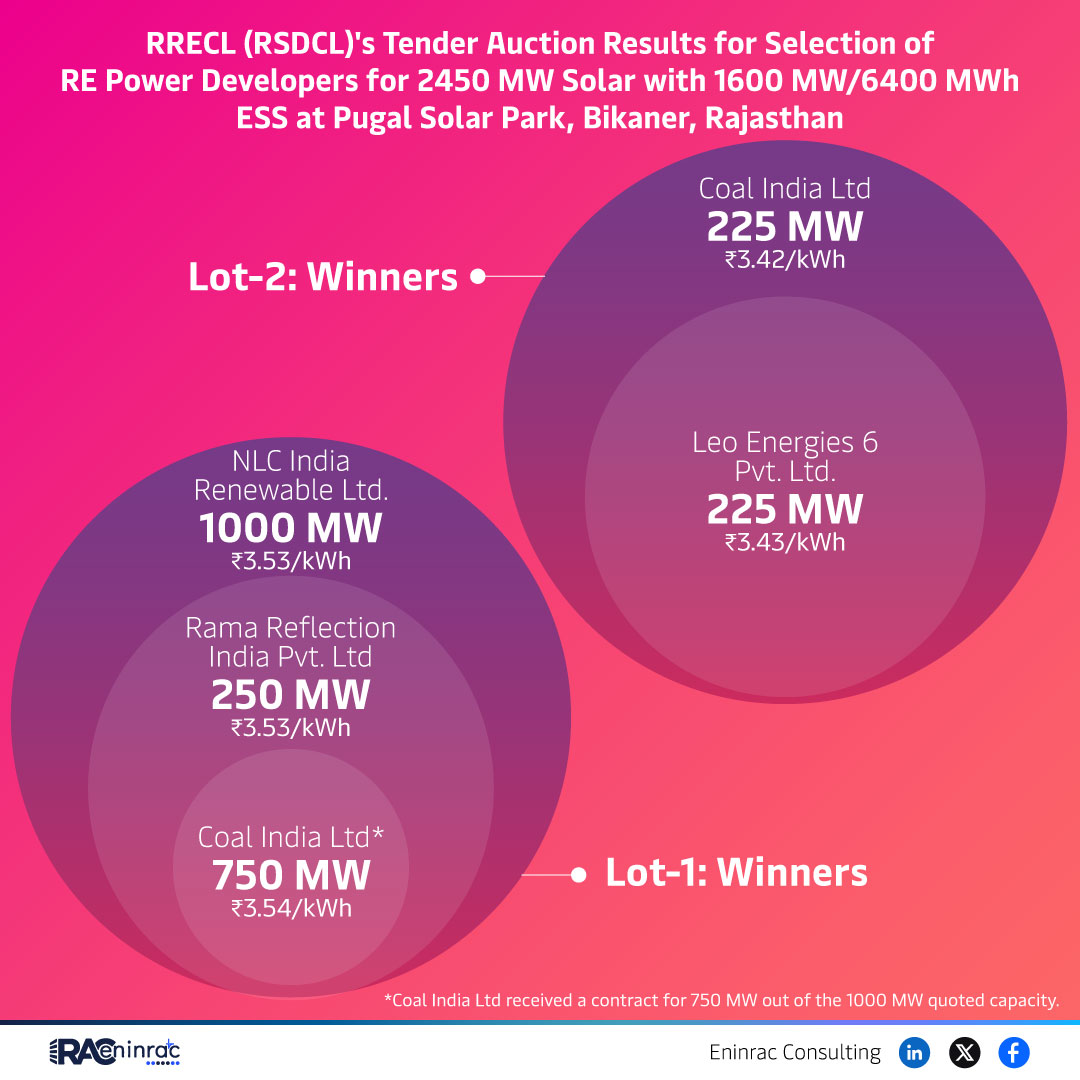
What does the auction data tell us about capacity allocation and pricing? The results show that multiple developers secured portions of the 2,450 MW solar target, with Coal India Ltd winning a 750 MW contract out of a quoted 1,000 MW capacity. The quoted tariffs ranged from Rs 3.42/kWh for Coal India Ltd to Rs 3.54/kWh for other bidders, indicating a tight price band and strong competition among traditional and renewable‑focused firms.
Allocation of Solar Capacity and Energy Storage
A closer look at the numbers reveals a diversified distribution of projects. Lot‑1 awarded 250 MW to Rama Reflection India Pvt. Ltd, while Lot‑2 saw NLC India and other renewable companies compete for the remaining 1,000 MW. The storage component, 1,600 MW of capacity delivering 6,400 MWh, was bundled with the solar awards, reflecting a policy shift toward hybrid projects that combine generation with grid‑level storage. The tariff spread of just 0.12 Rs/kWh between the lowest (Rs 3.42/kWh) and highest (Rs 3.54/kWh) bids underscores the maturing cost‑competitiveness of solar‑plus‑storage offerings in the region.
Impact on Sectors and Industries
The outcomes of the Pugal Solar Park tender have several ripple effects. For the power generation sector, the infusion of over 2 GW of solar capacity accelerates India’s renewable target of 450 GW by 2030. Energy storage developers gain a foothold in a market that previously focused solely on generation, encouraging further investment in battery technology and grid‑balancing services. Investors see reduced risk as traditional players like Coal India Ltd diversify into renewable assets, while policymakers receive evidence that competitive auctions can deliver low‑cost clean power. Consumers ultimately benefit from lower electricity tariffs and increased grid reliability.
Key Takeaways
- Coal India Ltd secured a 750 MW solar contract at Rs 3.42/kWh, marking a notable entry into renewable generation.
- The auction covered 2,450 MW of solar and 1,600 MW of storage, emphasizing integrated hybrid projects.
- Tariff variation was narrow, ranging only Rs 0.12/kWh between the highest and lowest bids.
- Multiple developers, including NLC India and Rama Reflection India Pvt. Ltd, won capacity across different lots.
- The results support India’s aggressive renewable energy targets and grid‑modernisation plans.
- Hybrid solar‑storage projects are becoming a standard component of large‑scale power auctions.
FAQs
What total capacity was offered in the Pugal Solar Park tender?
The tender offered 2,450 MW of solar capacity along with 1,600 MW of battery storage delivering 6,400 MWh.
Which company won the largest solar contract?
Coal India Ltd won the largest single contract, receiving 750 MW of the quoted 1,000 MW capacity.
What were the tariff ranges for the winning bids?
Winning tariffs ranged from Rs 3.42/kWh to Rs 3.54/kWh, indicating a tight competitive band.
How does the storage component affect the auction?
Including 1,600 MW of storage encourages hybrid projects that improve grid stability and enable higher renewable penetration.
What does this tender mean for India's renewable energy goals?
The award of over 2 GW of solar and significant storage capacity accelerates India’s target of 450 GW renewable capacity by 2030 and demonstrates the effectiveness of competitive auctions.