
Introduction
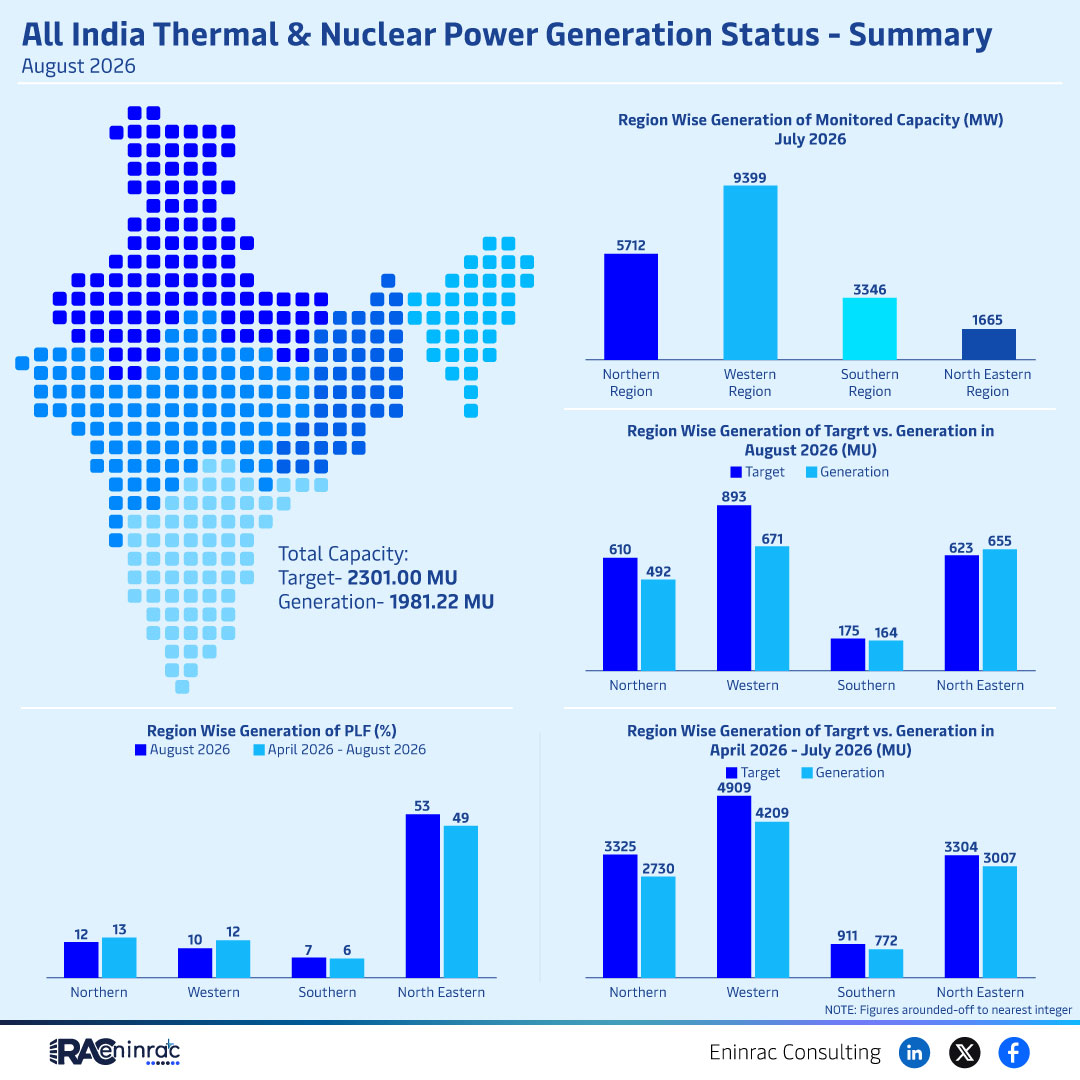
India’s thermal and nuclear power generation data for August 2026 provides a concise snapshot of the nation’s electricity landscape. The report highlights total generation capacity, actual output, and regional performance against predefined targets. Understanding these figures is essential for policymakers, investors, and industry analysts who track energy security and growth. Readers will learn how the country’s power mix is evolving, which regions are leading production, and how close the sector is to meeting its August 2026 objectives. The dataset also reflects the ongoing transition toward cleaner energy sources, as nuclear contributions complement traditional coal‑based thermal plants. Analysts can compare these numbers with previous months to gauge seasonal variations and the impact of policy measures.
What Does the Data Reveal About This Topic?
The August 2026 figures show that India generated 1,981.22 million units (MU) against a target of 2,301.00 MU, indicating a shortfall of roughly 14 percent. Northern India contributed the highest output, followed by the Western and Southern regions, while the North‑Eastern zone lagged behind. The data suggests that while overall capacity remains robust, certain regions are struggling to meet their generation goals, highlighting potential supply‑side constraints or maintenance schedules affecting performance. The gap underscores the need for accelerated commissioning of new units and improved plant efficiency to bridge the shortfall before the fiscal year ends.
Regional Performance of Power Generation in August 2026
According to the monitored capacity numbers, the Northern region produced 9,399 MW, the Western zone delivered 5,712 MW, Southern plants contributed 3,346 MW, and the North‑Eastern area generated 1,665 MW. When comparing target versus actual generation, Northern and Western regions were closest to their goals, while the Southern and North‑Eastern regions fell further behind. This contrast underscores the importance of region‑specific strategies to boost output, improve plant availability, and align infrastructure investments with local demand patterns. The lower performance in the South aligns with recent reports of fuel supply bottlenecks and scheduled overhauls at several coal‑fired stations, which are expected to resume full output by Q4.
Impact on Sectors and Industries
The generation shortfall influences several key sectors. Utilities may need to import additional power or activate reserve capacity, affecting cost structures and pricing for residential and commercial consumers. Investors in renewable and nuclear projects can gauge market gaps and potential incentives, while policymakers must address regional disparities through targeted upgrades, fuel supply optimization, and regulatory support. Moreover, the data informs energy traders about supply dynamics, helping them manage risk and capitalize on price differentials across regions. Additionally, the shortfall may accelerate investments in renewable energy and storage solutions as the grid seeks resilience against seasonal demand spikes.
Key Takeaways
- India generated 1,981.22 MU, missing the 2,301 MU target.
- Northern region delivered the highest MW output in August.
- Western region closely matched its generation target.
- Southern and North‑Eastern zones lagged behind expectations.
- Regional gaps highlight need for localized investment plans.
- Generation shortfall impacts utility costs and market pricing.
FAQs
What was India’s total power generation in August 2026?
The country produced about 1,981 million units, below the 2,301 MU target.
Which region generated the most electricity?
Northern India reported the highest output at roughly 9,399 MW.
Why did southern regions fall short of targets?
Factors include plant maintenance schedules, fuel supply constraints, and lower demand.
How does the shortfall affect electricity prices?
Utilities may raise tariffs or buy power from the market, leading to higher consumer rates.
What actions can policymakers take?
They can prioritize grid upgrades, improve fuel logistics, and incentivize renewable projects in lagging regions.