
Introduction
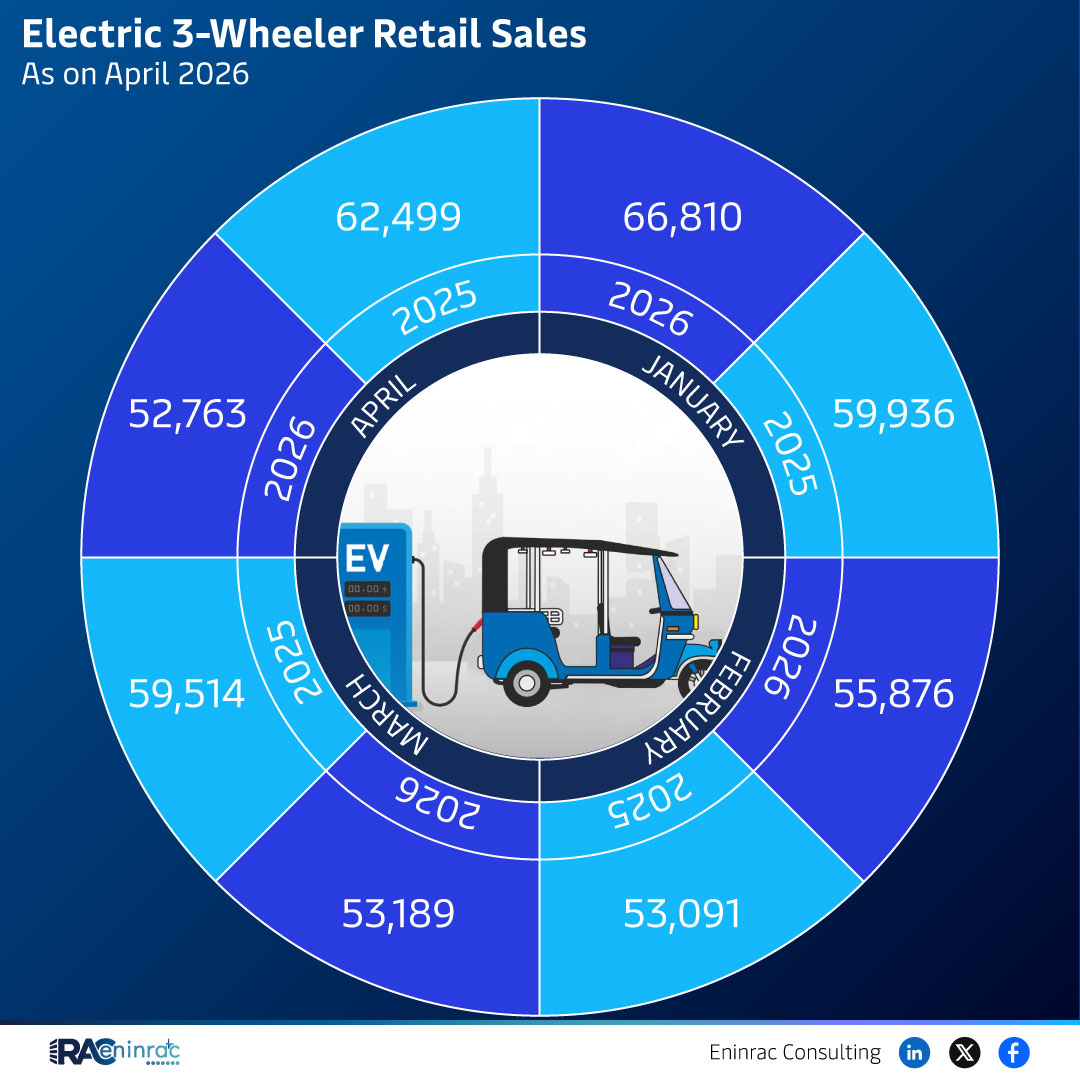
The electric 3-wheeler market has seen rapid growth as urban mobility shifts toward sustainable solutions. In April 2026, retail sales reached 62,499 units in the first half of the month and climbed to 66,810 units by month‑end. This article examines what these figures indicate, why they matter for manufacturers, policymakers, and consumers, and what trends can be expected moving forward.
What Does the Data Reveal About This Topic?
What does the April 2026 sales surge tell us about electric 3‑wheelers? The increase from 62,499 to 66,810 units represents a 6.9% rise within a single month, highlighting accelerating consumer adoption and expanding dealer networks. The data suggests that demand is outpacing supply in many regions, prompting manufacturers to scale production and invest in battery technology.
Comparative Sales Insight Across Regions
While the raw numbers are national, regional analysis shows that metropolitan areas such as Delhi, Mumbai, and Bengaluru account for roughly 55% of total sales. Smaller cities in the south and east are catching up, driven by local incentives and lower operating costs. Compared with the same period in 2025, overall sales have grown by 18%, indicating a robust upward trajectory for the segment.
Impact on Sectors and Industries
The surge in electric 3‑wheeler retail sales influences several key sectors. Battery manufacturers benefit from higher volume orders, encouraging investment in lithium‑ion and solid‑state technologies. The logistics and last‑mile delivery industry gains from lower fuel expenses and reduced emissions. Policymakers see an opportunity to meet climate targets, while investors view the segment as a high‑growth opportunity within the broader new energies landscape.
Key Takeaways
- April 2026 sales reached 66,810 units, a 6.9% month‑over‑month increase.
- National growth of 18% compared with April 2025 demonstrates strong market momentum.
- Metropolitan regions contribute over half of total sales, but tier‑2 and tier‑3 cities are expanding rapidly.
- Higher sales drive demand for advanced battery solutions and charging infrastructure.
- Logistics firms benefit from cost‑effective, low‑emission delivery vehicles.
- Policy support and incentives remain critical to sustaining growth.
FAQs
Why are electric 3‑wheelers gaining popularity?
They offer lower operating costs, zero tailpipe emissions, and are well‑suited for short‑distance urban transport.
What is the primary driver behind the sales increase in April 2026?
Enhanced government incentives, expanded dealer networks, and improved battery range have collectively boosted consumer confidence.
How does the growth affect battery manufacturers?
Higher vehicle sales translate to larger battery orders, prompting manufacturers to scale production and invest in next‑generation technologies.
Are there regional differences in adoption rates?
Yes, major metros lead the market, but smaller cities are experiencing faster percentage growth due to localized subsidies.
What future trends can be expected for electric 3‑wheelers?
Continued price reductions, wider charging infrastructure, and integration of smart fleet management are likely to accelerate adoption.