
Introduction
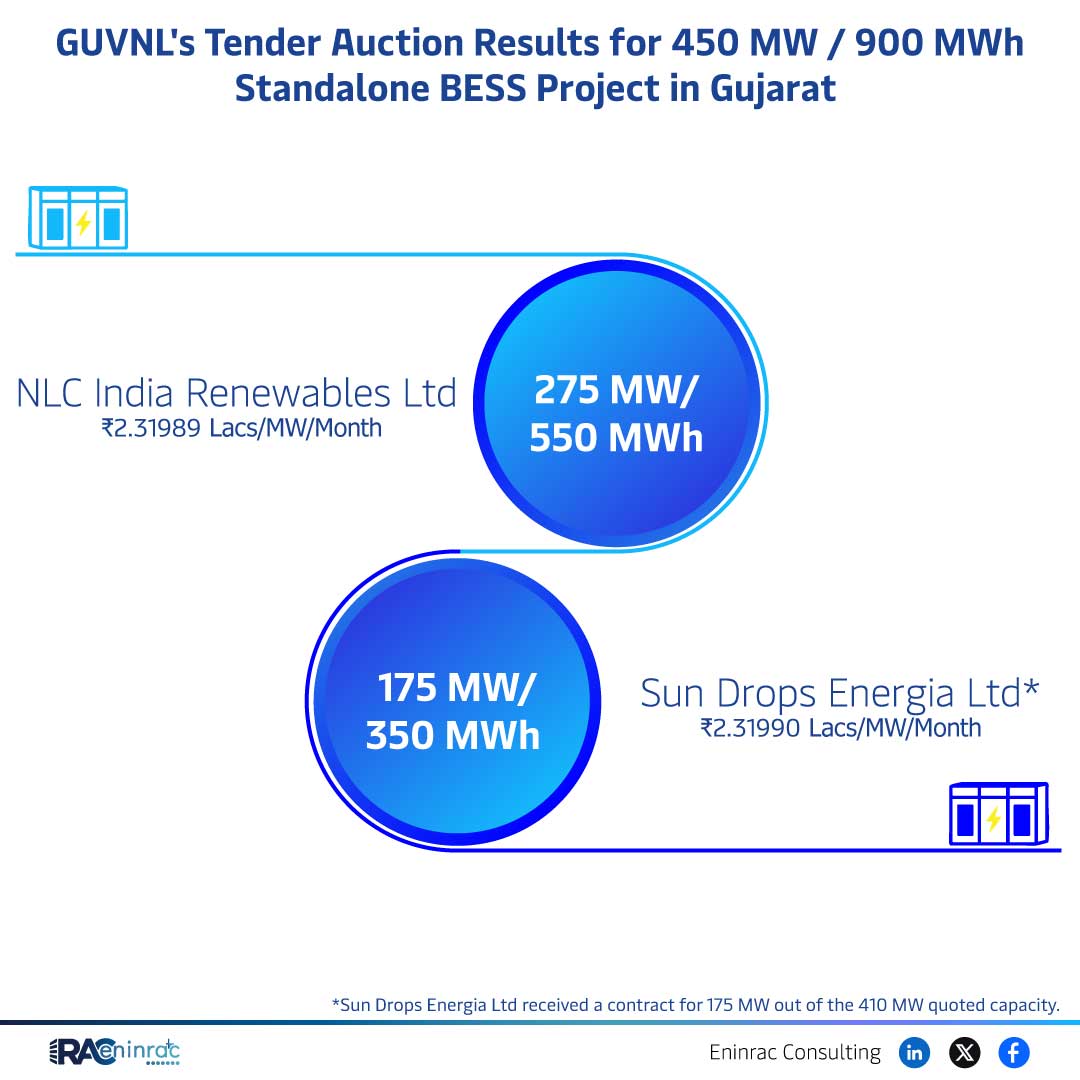
In August 2024 Gujarat Energy Transmission Corporation (GUVNL) released the results of its first standalone battery energy storage system (BESS) auction. The tender covered a total capacity of 450 MW (equivalent to 900 MWh) and attracted bids from several renewable players. Prices were reported at 2.31989 Lacs per MW per month for NLC India Renewables and 2.31990 Lacs per MW per month for Sun Drops Energia. Sun Drops Energia secured a 175 MW contract out of its 410 MW quoted capacity. Understanding these figures is essential for investors, policymakers, and industry observers who track the evolution of energy storage in India’s power mix. The tender outcome also signals the growing confidence of private developers in deploying large‑scale storage solutions to complement intermittent solar and wind generation. It provides a benchmark for future auctions and helps shape the financial models used by banks and project developers.
What Does the Data Reveal About This Topic?
What does the data reveal about the Gujarat BESS tender? The disclosed pricing shows a remarkably tight spread of just one rupee per MW‑month between the two winning bids, indicating intense competition. NLC India Renewables and Sun Drops Energia emerged as the primary winners, with the latter receiving a substantial portion of its bid capacity. The allocation of 175 MW to Sun Drops Energia demonstrates that bidders were able to secure contracts well below their total quoted volumes, reflecting both supply‑side caution and demand‑driven pricing pressure. Overall, the results suggest that the market is moving toward cost‑effective, scalable storage solutions that can be integrated with the state’s expanding renewable portfolio.
Tender Pricing and Allocation for Gujarat BESS Projects
The pricing of 2.31989‑2.31990 Lacs per MW per month indicates a competitive market where cost efficiency is paramount. While both bidders offered almost identical rates, Sun Drops Energia secured a larger share of its quoted capacity, highlighting its stronger positioning or more attractive project proposals. NLC India Renewables, despite a marginally lower price, received a smaller allocation, which may point to strategic considerations such as project readiness, financial strength, or regional preferences. The overall allocation pattern underscores the importance of precise bid sizing and the willingness of GUVNL to distribute contracts among multiple players to mitigate risk and encourage market depth.
Impact on Sectors and Industries
The Gujarat BESS tender has several ramifications. For the renewable energy sector, the availability of affordable storage enhances grid stability and reduces curtailment of solar and wind power. Financial institutions gain clearer risk metrics for storage projects, potentially unlocking more funding. Policy makers can use the tender outcomes to calibrate future incentives and capacity targets. Equipment manufacturers see a steady demand for battery cells, inverters, and control systems, while downstream service providers anticipate growth in operation and maintenance contracts. Overall, the tender signals a maturing energy storage ecosystem that supports India’s clean energy ambitions.
Key Takeaways
- GUVNL auctioned 450 MW of standalone BESS capacity at a narrow price band.
- Winning bids were 2.31989 and 2.31990 Lacs per MW‑month.
- Sun Drops Energia secured 175 MW, reflecting strong competitive positioning.
- NLC India Renewables participated with a marginally lower price but received a smaller share.
- The results demonstrate growing confidence in large‑scale battery storage in Gujarat.
- Affordable storage will bolster renewable integration and attract further investment.
FAQs
What is the total capacity offered in the Gujarat BESS tender?
The tender offered 450 MW, equivalent to 900 MWh of storage.
Which companies won contracts in this auction?
NLC India Renewables and Sun Drops Energia were the primary winners.
What were the quoted prices per MW‑month?
The prices were 2.31989 Lacs for NLC India Renewables and 2.31990 Lacs for Sun Drops Energia.
How much capacity did Sun Drops Energia receive?
Sun Drops Energia was allocated 175 MW of the total capacity.
Why is this tender important for the energy market?
It sets a cost benchmark for storage, encourages private investment, and supports renewable integration in Gujarat.