
Introduction
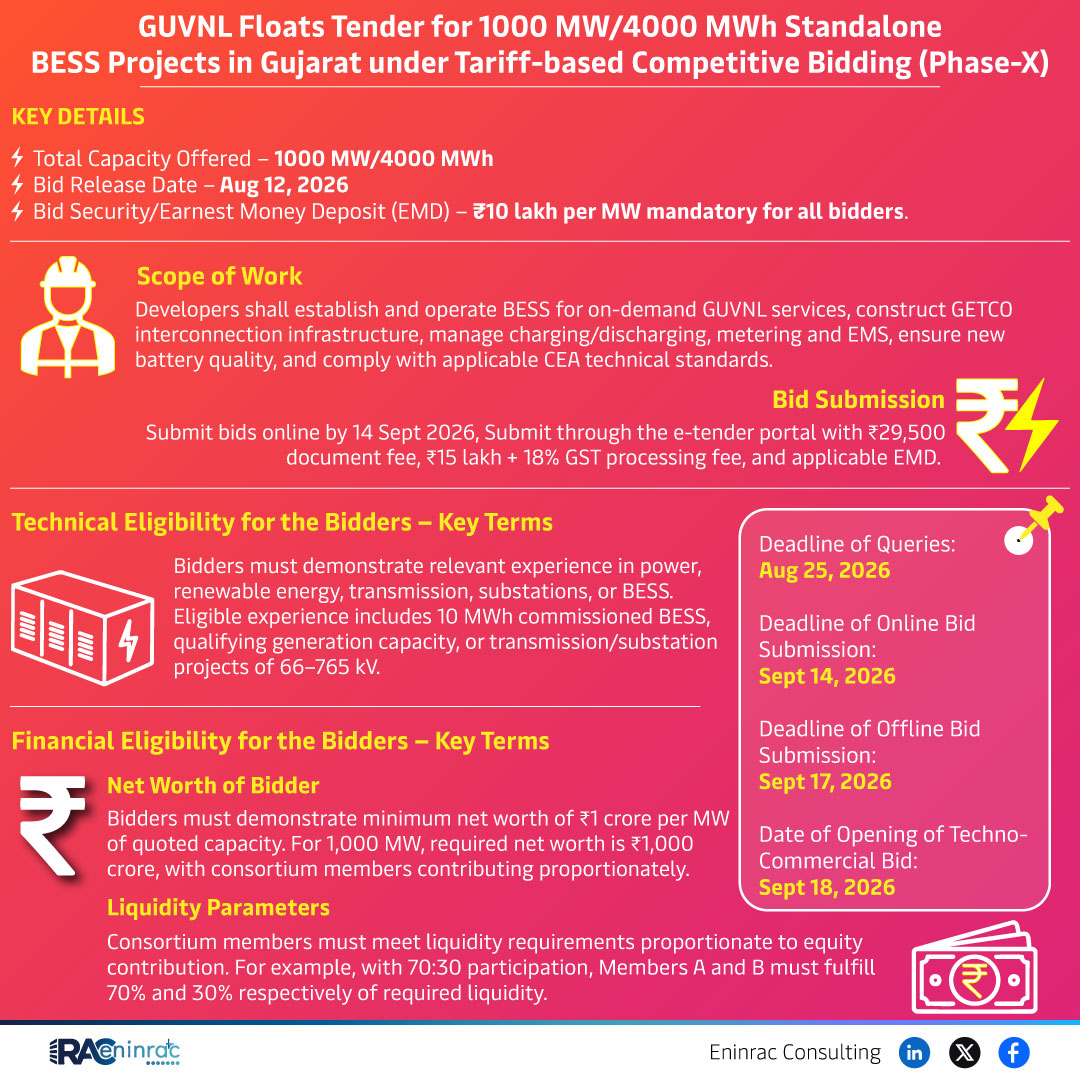
The Gujarat Electricity Board (GUVNL) has issued a competitive tender for a 1000 MW/4000 MWh standalone Battery Energy Storage System (BESS). This tender is crucial for enhancing grid reliability, enabling renewable integration, and supporting Gujarat’s ambitious clean‑energy targets. In this article we unpack the tender scope, eligibility criteria, key dates, financial obligations, and what participants need to know to submit a successful bid.
What Does the Data Reveal About This Topic?
How does the GUVNL 1000 MW BESS tender shape the energy storage landscape? The data shows a clear focus on large‑scale, on‑demand storage with strict technical and financial thresholds. Bidders must demonstrate prior experience with at least 10 MWh of commissioned storage, possess a net‑worth of 1 crore per MW, and provide a hefty Earnest Money Deposit of 10 lakh per MW. These requirements aim to ensure that only financially robust and technically qualified developers undertake the project.
Tender Timeline and Financial Commitments
The tender follows a structured timeline: the bid release occurs on 12 August 2026, with the online submission deadline set for 14 September 2026. After the online phase, an offline submission is required by 17 September 2026, and the techno‑commercial bids open on 18 September 2026. Financially, bidders face a document fee of 29,500 rupees, a GST‑inclusive processing fee of 715 lakh, and the mandatory EMD of 10 lakh per MW. Liquidity must align with equity participation, for example a 70:30 consortium must meet 70 % and 30 % of the required liquidity respectively.
Impact on Sectors and Industries
The GUVNL BESS tender influences multiple stakeholders. Power generators gain access to flexible storage that can smooth intermittent renewable output. Transmission operators benefit from improved grid stability and reduced curtailment. Investors see a sizable market opportunity in battery technology and ancillary services. Policymakers receive a tool to meet state‑level renewable targets, while technology providers can showcase their latest battery chemistries and EMS solutions. The tender also sets a benchmark for future storage projects across India.
Key Takeaways
- GUVNL offers 1000 MW of standalone BESS capacity under a tariff‑based competitive bidding process.
- Bid security requires a minimum of 10 lakh per MW, translating to a total EMD of 1 crore for the full capacity.
- Technical eligibility demands at least 10 MWh of previously commissioned BESS projects and experience with high‑voltage transmission.
- Financial eligibility mandates a net‑worth of 1 crore per MW, amounting to 71,000 crore for the entire tender.
- Liquidity must be proportionate to each consortium member’s equity share, ensuring balanced financial responsibility.
- Key dates: bid release on 12 Aug 2026, online submission by 14 Sept 2026, offline submission by 17 Sept 2026, and bid opening on 18 Sept 2026.
FAQs
What is the total capacity offered in the GUVNL BESS tender?
The tender covers 1000 MW of power capacity and 4000 MWh of energy storage.
When must the Earnest Money Deposit be submitted?
The EMD of 10 lakh per MW must be paid at the time of online bid submission before 14 September 2026.
What technical experience is required for bidders?
Bidders need documented experience with at least 10 MWh of commissioned BESS or comparable generation, transmission, or substation projects.
How is the liquidity requirement calculated for consortium members?
Liquidity must match the percentage of equity contributed; for a 70:30 split, members provide 70 % and 30 % of the required liquidity respectively.
Can international firms participate in this tender?
Yes, provided they meet the net‑worth, liquidity, and technical experience criteria outlined in the tender documents.