
Introduction
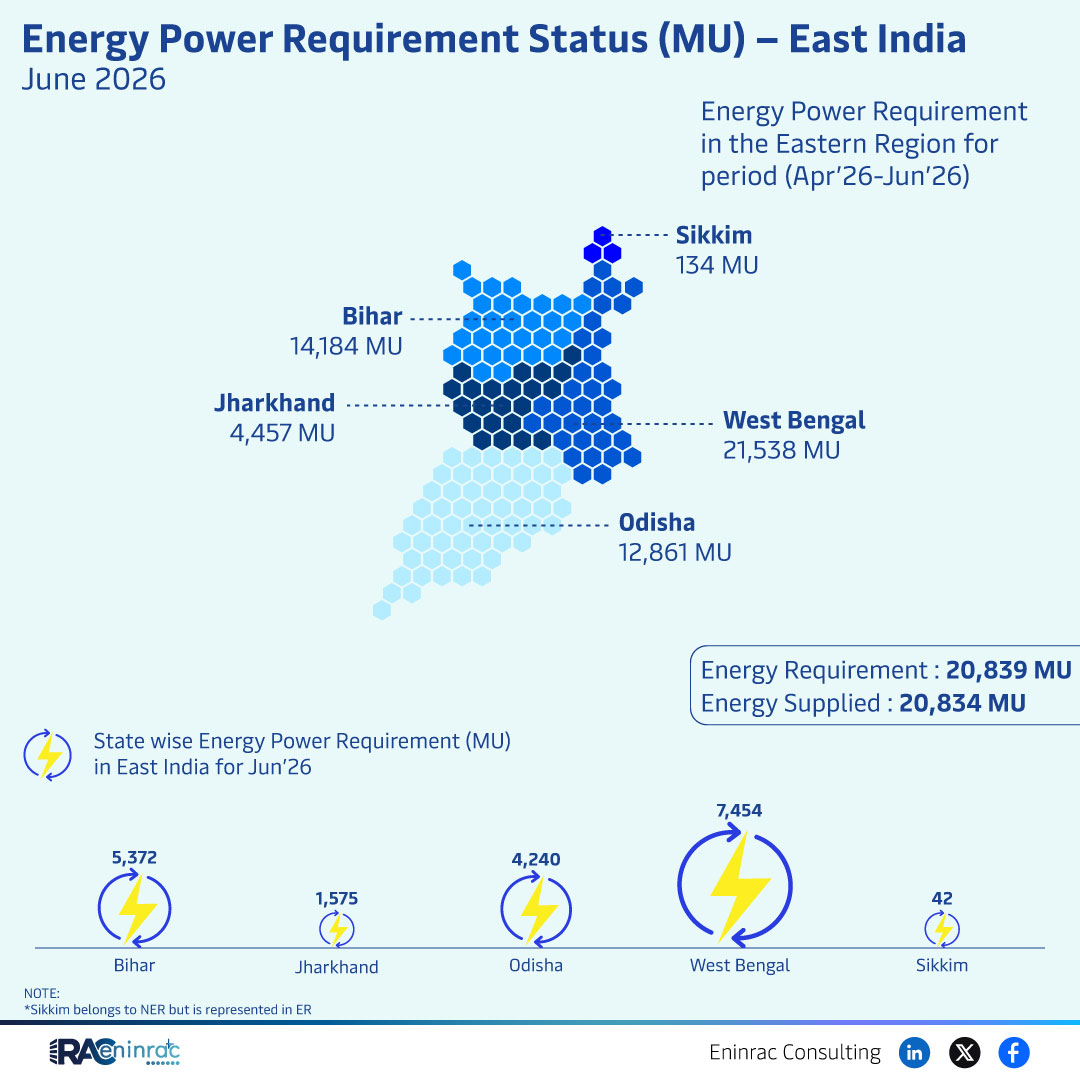
The June 2026 report for East India provides a detailed snapshot of the region’s electricity demand and supply balance. With a total power requirement of 20,839 million units (MU) and an almost matching supply of 20,834 MU, the data highlights a marginal shortfall that policymakers and industry stakeholders must monitor. This overview explains the statewise distribution of demand, compares the figures to national targets, and outlines the implications for the power sector, investors, and consumers across the eastern states.
What Does the Data Reveal About This Topic?
The key insight from the raw data is that East India’s overall power requirement is essentially met, but the narrow 5 MU gap underscores the fragility of supply‑demand equilibrium. The information also shows considerable variation among states, with West Bengal reporting the highest demand at 21,538 MU, while smaller states like Sikkim contribute a modest 134 MU. Understanding these disparities helps answer why some states experience tighter margins than others.
Statewise Power Demand Comparison in East India
When the figures are broken down, West Bengal leads with 21,538 MU, followed by Odisha at 12,861 MU, Bihar at 14,184 MU, and Jharkhand with 7,454 MU. Sikkim’s demand, though minimal at 134 MU, is noteworthy because the state is classified under North Eastern Region but appears in the eastern data set. This comparative view reveals that while West Bengal’s demand exceeds the region’s overall requirement, other states like Jharkhand and Sikkim operate well within the supply capacity, creating a diverse landscape of energy pressure across East India.
Impact on Sectors and Industries
The near‑balance between requirement and supply influences several sectors. Power‑intensive industries such as steel, cement, and textiles in West Bengal and Odisha must plan for potential contingency measures if the shortfall widens. Rural electrification projects in Bihar and Jharkhand benefit from the modest surplus, allowing faster rollout of distribution networks. Policymakers can use this data to prioritize grid reinforcement in high‑demand zones while encouraging renewable integration in states with excess capacity.
Key Takeaways
- East India’s total power requirement for June 2026 is 20,839 MU, nearly matched by supply.
- West Bengal records the highest individual state demand at 21,538 MU.
- The region faces a minor shortfall of 5 MU, highlighting supply sensitivity.
- Jharkhand and Sikkim operate well below the regional demand pressure.
- Industrial planners should consider backup strategies in high‑demand states.
- Policymakers can focus renewable investments where supply exceeds demand.
FAQs
What is the overall power shortfall in East India for June 2026?
The shortfall is 5 million units, with demand at 20,839 MU and supply at 20,834 MU.
Which state has the highest electricity demand?
West Bengal, with a reported demand of 21,538 MU.
How does Sikkim’s demand compare to other states?
Sikkim’s demand is very low at 134 MU, reflecting its smaller population and industrial base.
Why is the supply‑demand gap important for investors?
A narrow gap signals a stable market but also indicates risk if supply disruptions occur, influencing investment decisions in generation and transmission assets.
What actions can policymakers take to address the shortfall?
They can accelerate renewable project approvals, enhance grid interconnectivity, and provide targeted support to high‑demand states.