
Introduction
India’s wind power sector continues to expand rapidly, and the latest May 2026 dataset offers a clear view of how individual states are contributing to the nation’s renewable energy targets. Understanding which regions lead in installed capacity, how quarterly additions shift the overall landscape, and what growth trends emerge is essential for investors, policymakers, and energy professionals. This article breaks down the key figures, highlights the top-performing states, and explores the broader implications for the Indian power market.
What Does the Data Reveal About This Topic?
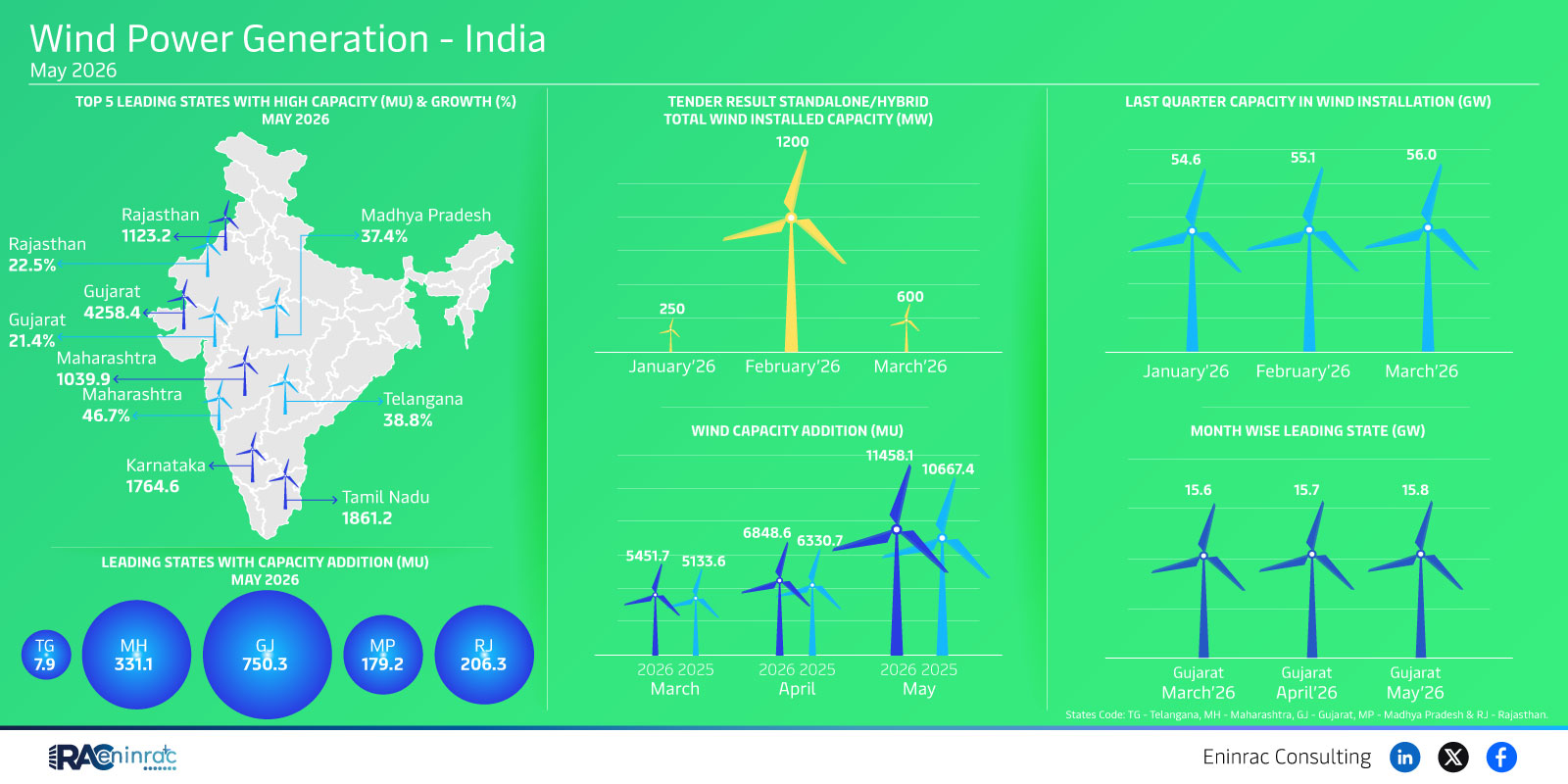
The data shows that Rajasthan, Gujarat and Maharashtra dominate wind power capacity in India, with Rajasthan listing 1,123.2 MW and Gujarat contributing 4,258.4 MW. Quarterly capacity additions in the first quarter of 2026 total 5.5 GW, indicating a strong upward trajectory. The figures also illustrate regional disparities, as states like Karnataka and Tamil Nadu register lower but still significant capacity levels. Overall, the nation’s total installed wind capacity now exceeds 12 GW.
State‑wise Capacity and Growth Highlights
When comparing state performance, Gujarat leads with a massive 4,258.4 MW installed, followed by Rajasthan at 1,123.2 MW and Maharashtra with 1,039.9 MW. Madhya Pradesh shows modest growth at 1123.2 MW, while Karnataka and Tamil Nadu each hold around 1,764.6 MW and 1,861.2 MW respectively. Quarterly additions vary: Gujarat added 15.6 GW in March 2026, whereas Rajasthan contributed 5.8 GW in the same period. These differences underscore the importance of localized wind resource assessment and state‑level policy support.
Impact on Sectors and Industries
The surge in wind capacity influences several sectors. For utilities, higher wind generation reduces reliance on fossil fuels and improves grid stability. Equipment manufacturers benefit from increased demand for turbines, blades, and related components. Financial investors see new opportunities in wind projects, especially in high‑growth states. Meanwhile, policymakers can leverage this momentum to meet renewable targets, incentivize hybrid projects, and address transmission bottlenecks that may arise from expanded generation.
Key Takeaways
- Gujarat remains the top wind power state with over 4 GW installed.
- Rajasthan and Maharashtra together account for nearly one‑third of national capacity.
- Quarterly additions in early 2026 total 5.5 GW, marking a robust growth phase.
- State‑level capacity gaps highlight the need for tailored policy measures.
- Investor interest is likely to rise as capacity expansion continues.
- Enhanced wind generation supports India’s broader renewable energy commitments.
FAQs
Which Indian state has the highest wind power capacity?
Gujarat leads with more than 4 GW of installed wind capacity as of May 2026.
How much wind capacity was added in the first quarter of 2026?
Quarterly additions reached approximately 5.5 GW across all leading states.
What are the growth trends for wind power in India?
The sector shows rapid growth, with major states adding significant capacity each quarter and total installed capacity surpassing 12 GW.
How does wind power affect India's renewable energy goals?
Increasing wind generation helps India meet its targets for clean energy, reduces carbon emissions, and diversifies the energy mix.
Are there investment opportunities in Indian wind energy?
Yes, the expanding capacity and supportive policies create attractive prospects for investors in wind projects and related technologies.