
Introduction
The Power Management Scheme (PMSG) data for February 2026 shows how many households in the Northeast states of India have benefited from the program. Understanding these numbers helps policymakers, investors, and citizens gauge the reach of rural electrification and energy access initiatives across the region.
What Does the Data Reveal About This Topic?
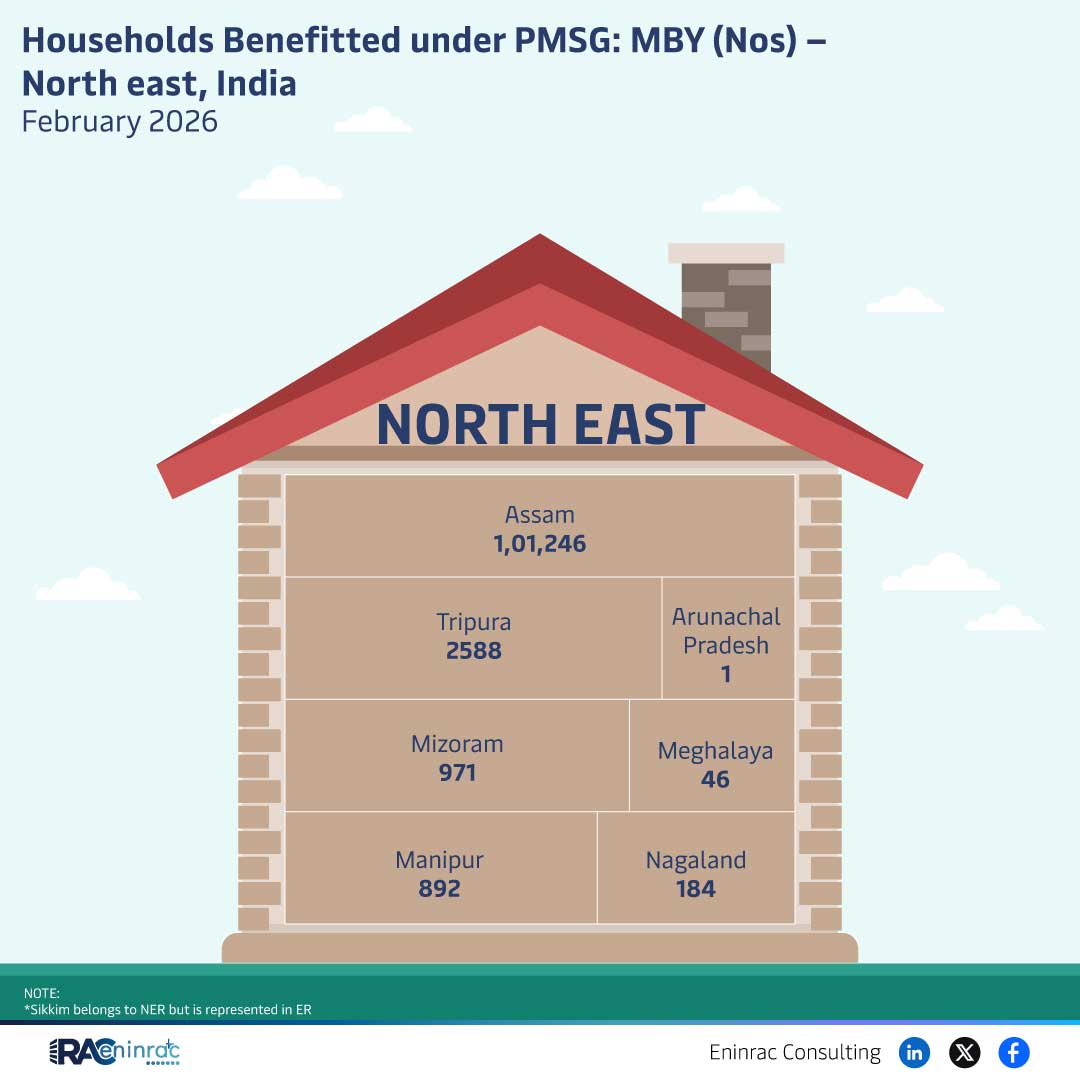
The data indicates that Assam leads with over one hundred thousand households connected, while smaller states like Tripura and Arunachal Pradesh show modest figures. This contrast highlights varying implementation speeds and infrastructure challenges across the Northeast.
Regional Comparison of Household Connectivity
Assam records 1,01,246 households benefitted, far surpassing Tripura and Arunachal Pradesh, which together account for just 2,588 households. Mizoram and Meghalaya each report around 971 households, while Manipur and Nagaland show 892 and 184 households respectively. The disparity reflects differences in population density, terrain, and state-level funding allocations.
Impact on Sectors and Industries
Improved electricity access fuels growth in agriculture, small‑scale manufacturing, and digital services. Rural entrepreneurs can adopt electric tools, schools gain reliable power for digital learning, and health centers can operate essential equipment. For investors, the data signals where infrastructure projects may still be needed, guiding future funding and partnership opportunities.
Key Takeaways
- Assam dominates household connectivity with over 100,000 homes benefitted.
- Tripura and Arunachal Pradesh together account for less than 3,000 households.
- Mizoram and Meghalaya each have under 1,000 households connected.
- Manipur shows moderate progress with 892 households, while Nagaland lags at 184.
- Geographic and logistical challenges influence the uneven distribution of benefits.
- Enhanced electricity access supports economic diversification and social development across the Northeast.
FAQs
Which Northeast state has the highest number of households benefitted under PMSG?
Assam, with 1,01,246 households, leads the region.
Why do Tripura and Arunachal Pradesh have low connectivity numbers?
Both states face rugged terrain and limited infrastructure, slowing program rollout.
How does increased electricity access affect local economies?
It enables new businesses, improves agricultural productivity, and supports education and health services.
What opportunities exist for investors in the Northeast energy sector?
Investors can target underserved states like Nagaland and Arunachal Pradesh for grid expansion and renewable projects.
How can policymakers improve household connectivity in lagging states?
By allocating targeted funds, simplifying permitting processes, and leveraging local partnerships for last‑mile delivery.