
Introduction
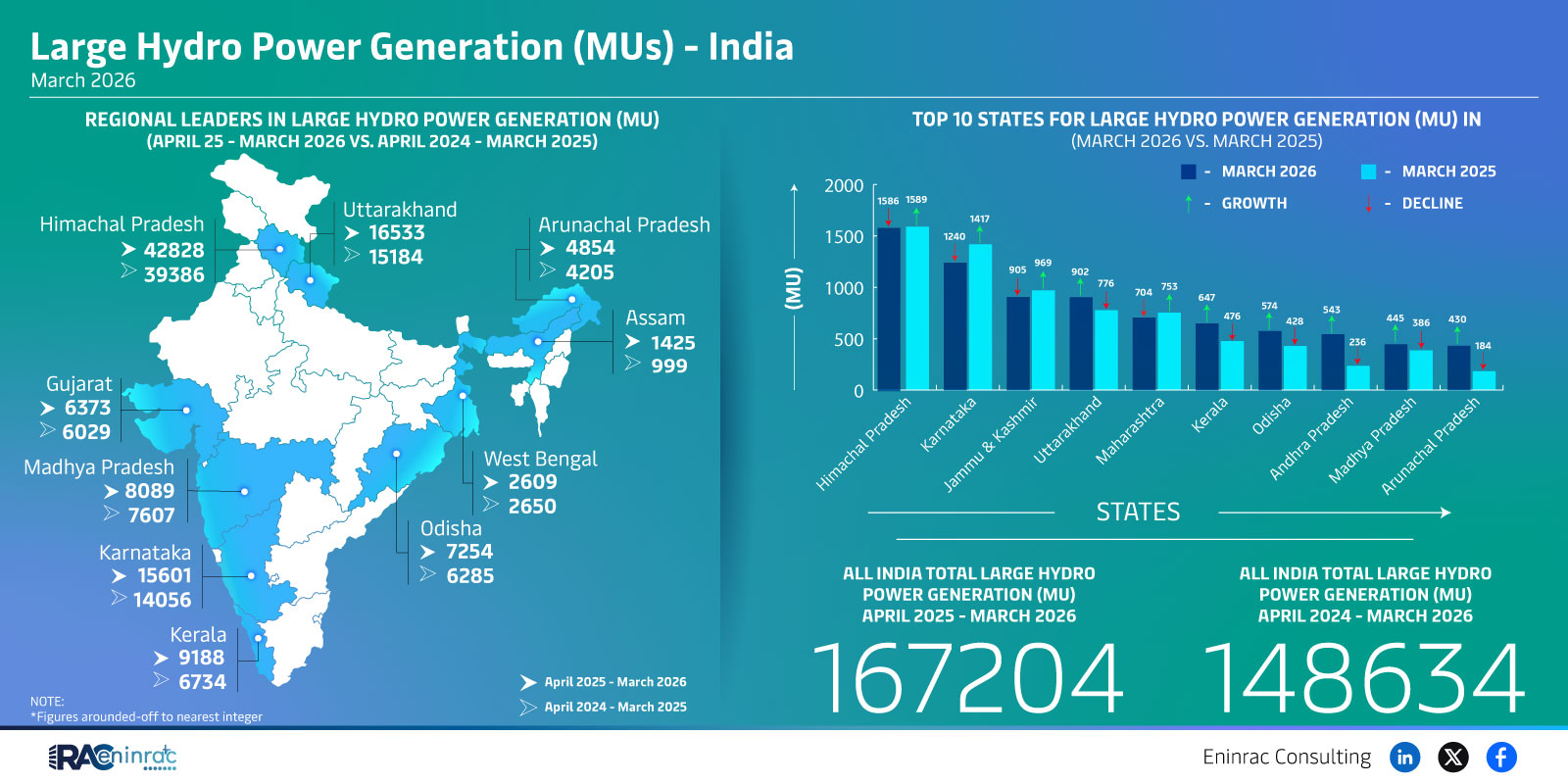
India’s large hydro power generation landscape for the period April 2025 to March 2026 is presented with state‑wise megawatt‑unit (MU) figures. Understanding which states lead in hydro output helps policymakers, investors and energy analysts gauge regional performance, plan infrastructure upgrades and assess future growth potential.
What Does the Data Reveal About This Topic?
The data shows a clear shift in hydro generation capacity, with several states increasing output compared with the previous fiscal year. The overall national total rose to 1,672,04 MU, up from 1,486,354 MU in the prior year, indicating a robust expansion of hydro resources across the country.
State‑Level Performance and Growth Trends
Among the top contributors, Uttarakhand and Himachal Pradesh remain dominant, posting 16,533 MU and 42,828 MU respectively. Karnataka, West Bengal, Madhya Pradesh and Odisha also feature prominently, each delivering between 6,000 and 14,000 MU. Notably, Karnataka’s hydro generation climbed to 14,056 MU, reflecting significant investment in new projects. The comparative chart highlights that while some states maintained stable output, others such as Karnataka and Odisha recorded notable increases, underscoring regional diversification of hydro resources.
Impact on Sectors and Industries
Higher hydro generation supports the renewable energy mix, reduces reliance on fossil fuels and enhances grid stability. For the power distribution sector, increased hydro supply can lower tariffs and improve reliability. Investors see stronger returns in states with rising output, prompting further financing of dam construction and turbine upgrades. Policymakers can leverage these trends to allocate funds, streamline clearances and encourage private participation in under‑served regions.
Key Takeaways
- National large hydro generation grew to 1,672,04 MU, a rise of over 12% year‑on‑year.
- Uttarakhand and Himachal Pradesh continue to lead, together accounting for more than one‑third of total output.
- Karnataka showed the strongest growth, surpassing 14,000 MU.
- Six states contributed more than 6,000 MU each, indicating broader geographic participation.
- Increased hydro capacity supports India’s renewable energy targets and grid resilience.
- Growth trends attract investment and guide policy focus toward high‑potential regions.
FAQs
Which states generated the most large hydro power in March 2026?
Himachal Pradesh (42,828 MU) and Uttarakhand (16,533 MU) were the top generators, followed by Karnataka and West Bengal.
How much did India’s total large hydro generation increase compared to the previous year?
The total rose from 1,486,354 MU to 1,672,04 MU, an increase of roughly 12%.
What factors contributed to Karnataka’s hydro growth?
New dam projects, upgraded turbine technology and favorable monsoon patterns boosted Karnataka’s output to 14,056 MU.
Why is hydro power important for India’s energy mix?
Hydro provides flexible, low‑carbon electricity, supports peak load management and complements solar and wind generation.
How can investors use this data?
Investors can target states with rising output for project financing, joint ventures and equipment supply opportunities.