
Introduction
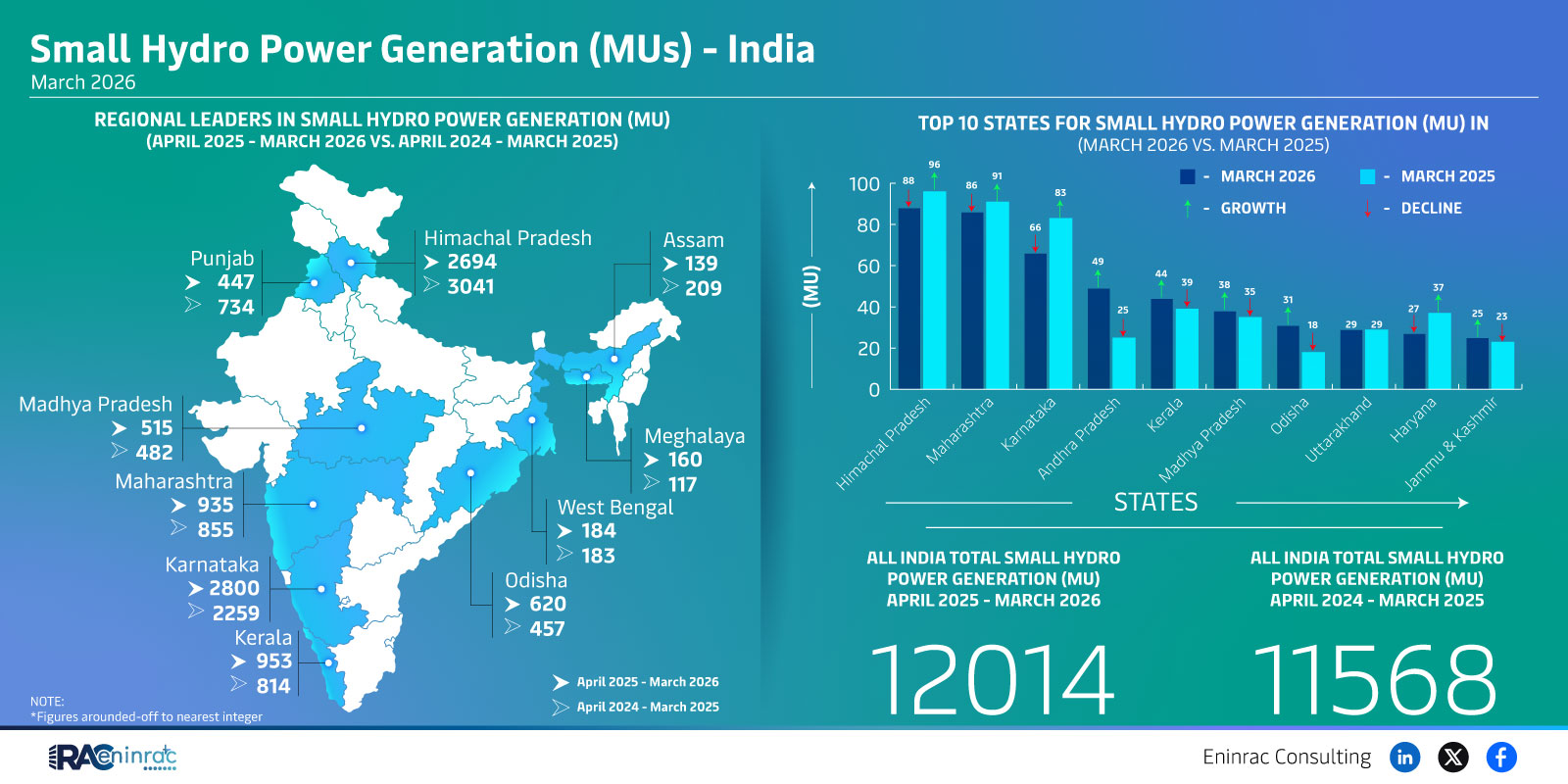
Small hydro power generation is a critical component of India's renewable energy mix, offering low‑impact, locally sourced electricity. The latest data for the period April 2025 – March 2026 highlights which states are leading in megawatt units (MU) and how the sector is evolving compared with the previous year.
What Does the Data Reveal About This Topic?
The data shows a clear concentration of small hydro capacity in a handful of states, with Maharashtra, Karnataka and Odisha topping the list. It also indicates overall growth in the sector, as total national generation rose from 11,214 MU to 12,014 MU, a gain of roughly 7 percent.
State‑wise Performance and Year‑on‑Year Changes
Maharashtra recorded the highest output at 935 MU, followed by Karnataka with 855 MU and Odisha with 2,259 MU, which together account for more than half of the country’s small hydro generation. Compared with the previous year, Maharashtra and Karnataka saw modest increases, while Odisha experienced a significant jump, reflecting new project commissions and upgraded facilities. Smaller contributors such as Meghalaya (160 MU) and Punjab (209 MU) still play a role but lag behind the leading trio.
Impact on Sectors and Industries
Growth in small hydro influences several sectors. Power utilities gain reliable baseload capacity that complements intermittent solar and wind. Rural electrification projects benefit from the decentralized nature of small hydro, reducing transmission losses. Investors see lower risk profiles compared with large‑scale hydro, encouraging financing for community‑owned schemes. Policymakers can leverage the data to target incentives toward lagging states, balancing regional development.
Key Takeaways
- India’s total small hydro generation reached 12,014 MU in March 2026, up 7 % from the previous year.
- Maharashtra, Karnataka and Odisha together contribute over 50 % of national output.
- Odisha showed the strongest year‑on‑year growth, indicating successful project roll‑outs.
- Smaller states like Meghalaya and Punjab remain under‑utilized despite renewable potential.
- The sector’s expansion supports rural electrification and reduces reliance on fossil fuels.
- Targeted policy support could accelerate growth in lower‑performing states.
FAQs
Which Indian state leads small hydro generation?
Maharashtra leads with 935 MU, but Odisha has the highest growth rate.
How much did total small hydro capacity increase year over year?
National generation rose from 11,214 MU to 12,014 MU, a rise of about 7 %.
Why is small hydro important for rural areas?
It provides localized, low‑impact power that reduces transmission costs and supports off‑grid communities.
What are the main challenges for low‑performing states?
Limited financing, inadequate water flow data, and slower regulatory approvals hinder expansion.
How can investors benefit from small hydro projects?
They offer stable returns, lower environmental risk, and eligibility for green financing incentives.