
Introduction
India’s off‑river pumped storage capacity has become a cornerstone of the country’s renewable energy strategy as of June 2026. By storing excess electricity during low‑demand periods and releasing it when demand spikes, these facilities help balance the grid, reduce reliance on fossil fuels, and support ambitious climate targets. This article examines the state‑wise distribution of installed capacity, highlights the largest projects, and explains the implications for investors, policymakers, and energy consumers.
What Does the Data Reveal About This Topic?
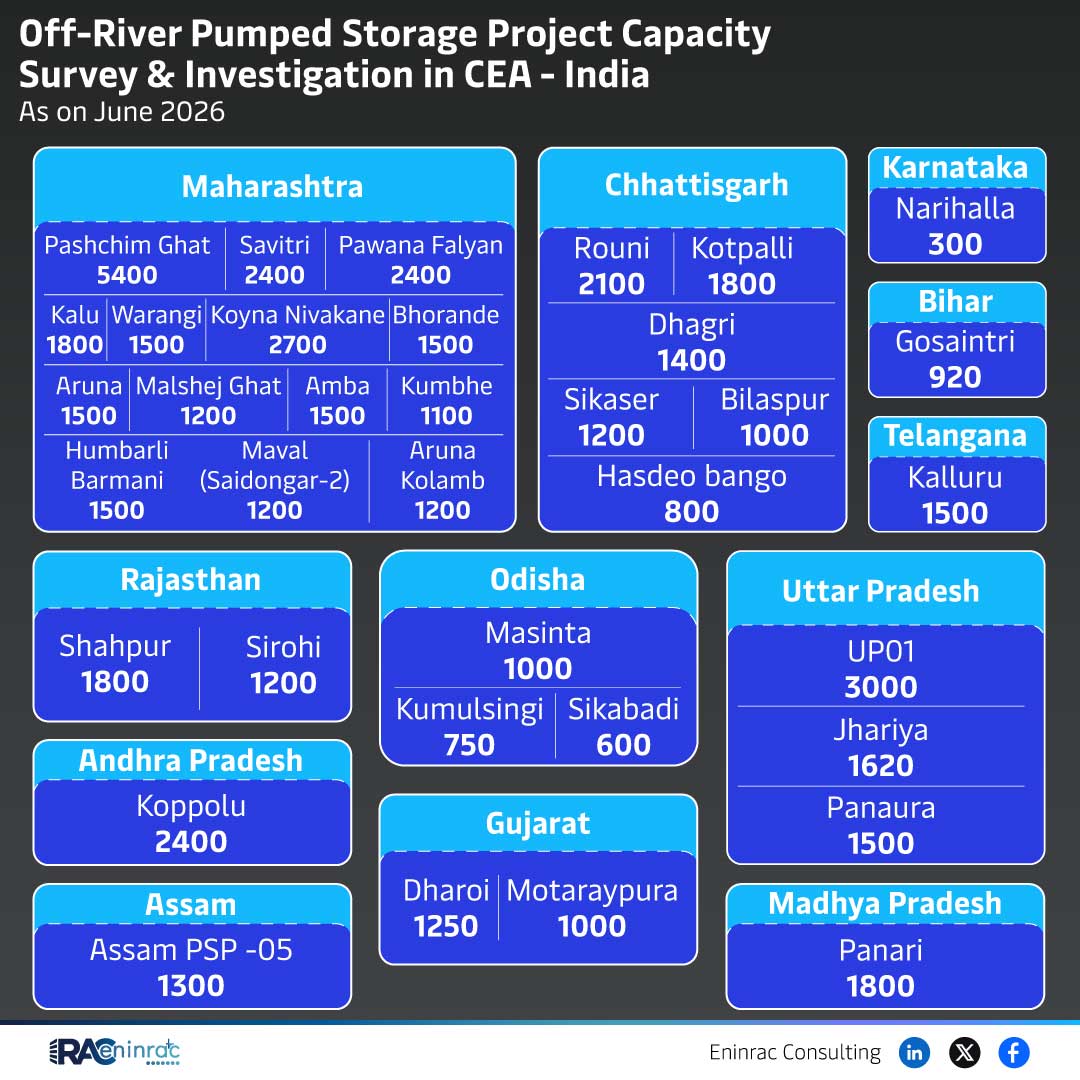
The raw data shows a varied landscape of off‑river pumped storage capacity across Indian states. Maharashtra leads with multiple sites—Pashchim Ghat, Savitri, Pawana, Falyan, Rouni, and Kotpalli—collectively exceeding 5,400 MW. Chhattisgarh follows with several projects totaling around 2,400 MW. Other notable contributions come from Karnataka’s Koyna (1,800 MW), Bihar’s Dhagri (1,500 MW), and Gujarat’s Kolamb (1,500 MW). The figures illustrate that a handful of states dominate capacity, while many others host smaller, emerging installations.
Regional Capacity Distribution and Project Highlights
A closer look at the numbers reveals clear regional trends. Western and central states such as Maharashtra, Karnataka, and Gujarat host the largest installations, driven by favorable topography, water availability, and supportive state policies. In contrast, eastern states like Odisha and West Bengal report modest capacities, often below 1,200 MW, reflecting both geographic constraints and later project rollout. The data also highlights several high‑impact projects: Kalu Warangi (1,800 MW) in Maharashtra, Koyna in Karnataka, and the upcoming Barmani (Saidongar‑2) in Telangana, each poised to enhance grid reliability. Smaller facilities in Andhra Pradesh, Madhya Pradesh, and Rajasthan contribute incremental capacity but signal growing interest in diversifying energy storage solutions.
Impact on Sectors and Industries
Off‑river pumped storage capacity influences multiple sectors. For the power generation industry, these projects provide a flexible reserve that can be dispatched quickly, supporting renewable integration from solar and wind farms. Transmission operators benefit from reduced peak‑load stresses, while distribution networks experience smoother voltage profiles. Investors see a stable, long‑term revenue stream backed by government incentives, and policymakers gain a concrete tool to meet India’s 2030 renewable energy targets. Additionally, the construction and engineering sectors experience job creation, especially in regions hosting large reservoirs and tunneling works.
Key Takeaways
- Maharashtra dominates with over 5,400 MW of off‑river pumped storage capacity.
- Karnataka’s Koyna project remains the single largest installation at 1,800 MW.
- Western and central states contribute the bulk of capacity, while eastern states lag behind.
- New projects in Telangana, Andhra Pradesh, and Rajasthan are expanding the geographic footprint.
- Off‑river pumped storage enhances grid stability, supports renewable integration, and attracts investment.
- State policies and water resource management are critical drivers of future capacity growth.
FAQs
What is off‑river pumped storage?
It is a form of hydroelectric energy storage where water is pumped to an elevated reservoir during low demand and released to generate electricity during peak demand.
Why does Maharashtra have the highest capacity?
The state’s varied terrain, abundant water sources, and proactive renewable policies have attracted multiple large‑scale projects.
How does pumped storage support renewable energy goals?
By storing excess solar or wind power, pumped storage smooths supply fluctuations and reduces the need for fossil‑fuel backup.
Are there any environmental concerns?
Off‑river projects minimize river ecosystem disruption but still require careful land use planning and water management.
What is the outlook for new projects after 2026?
Policy incentives and declining technology costs suggest continued growth, especially in under‑served regions like Odisha and Assam.