
Introduction
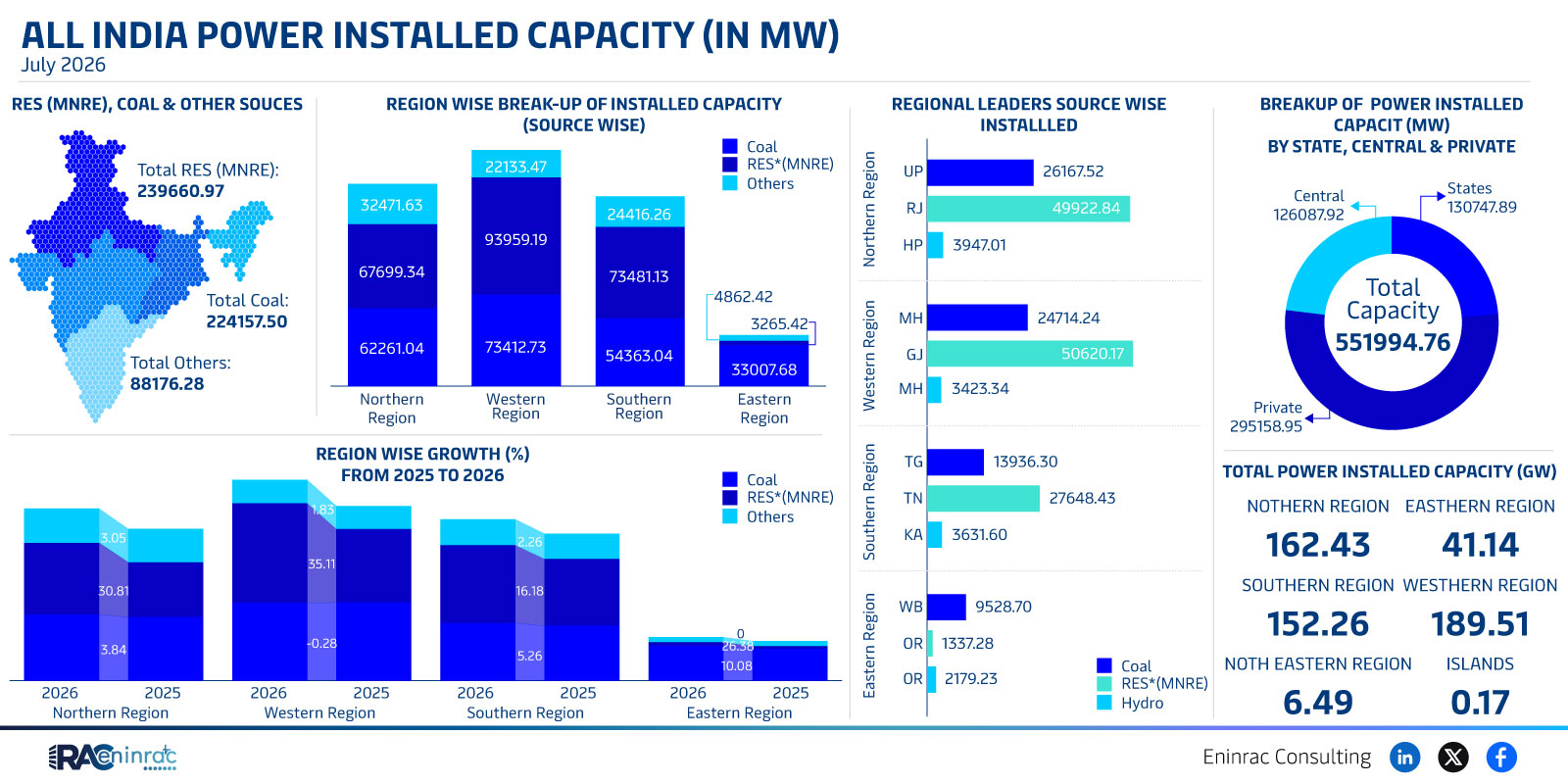
India power installed capacity reached a recorded 551,995 MW in July 2026, according to the latest MNRE and industry reports. This massive figure combines renewable sources, coal, and other generation types across all states, central entities and private operators. Understanding how this capacity is distributed helps policymakers, investors and analysts gauge the health of the power sector, track progress toward energy security goals, and identify emerging regional strengths. In the sections that follow, readers will learn about the regional breakdown, growth patterns from 2025 to 2026, and the broader implications for the Indian energy landscape.
What Does the Data Reveal About India’s Power Installed Capacity?
The data shows a total installed capacity of 551,995 MW, with renewable energy (RES) accounting for 239,661 MW and coal‑based generation contributing 224,158 MW. Other sources such as hydro and miscellaneous plants fill the remaining capacity. Compared with 2025, the overall capacity increased, driven primarily by a surge in renewable installations and modest growth in coal capacity. The figures also highlight a significant private sector contribution of 295,159 MW, underscoring the role of independent power producers in expanding the grid.
Regional Capacity Comparison for July 2026
The north‑western and southern regions dominate the installed capacity landscape. The northern region holds 162.43 GW, while the western region leads with 189.51 GW. The southern region follows closely at 152.26 GW, and the eastern region contributes 41.14 GW. Island territories add a small but notable 0.17 GW. State‑level data shows Maharashtra (MH) at 24,714 MW, Rajasthan (RJ) at 49,923 MW, and Karnataka (KA) at 3,632 MW, among others. Growth from 2025 to 2026 is most pronounced in the western and northern zones, reflecting targeted investments in both coal and renewable projects in these areas.
Impact on Energy Sectors and Policy
The expanded capacity influences multiple sectors. For utilities, a larger generation base improves grid reliability and reduces the need for emergency imports. Investors see heightened opportunities in renewable projects, especially solar and wind, as the RES share continues to rise. Policymakers can leverage the regional data to design region‑specific incentives, balancing coal phase‑out plans with renewable integration. Consumers benefit from a more resilient supply, potentially lowering tariffs over time. Moreover, the strong private sector presence encourages competition, fostering efficiency and innovation across the power value chain.
Key Takeaways
- Total installed capacity reached 551,995 MW in July 2026.
- Renewables contributed 239,661 MW, surpassing coal in growth.
- Western region leads with 189.51 GW of capacity.
- Private sector accounts for over 295,000 MW of capacity.
- Significant capacity growth observed from 2025 to 2026.
- Regional disparities highlight targeted investment needs.
FAQs
What was India’s total power installed capacity in July 2026?
It was 551,995 MW, combining renewable, coal, and other generation sources.
Which region had the highest installed capacity?
The western region, with 189.51 GW, held the largest share.
How much capacity did renewable energy sources add?
Renewable energy sources contributed 239,661 MW, showing strong growth.
What role does the private sector play?
Private operators added 295,159 MW, demonstrating a crucial part in expanding the grid.
Are there any notable trends from 2025 to 2026?
Both renewable and coal capacities grew, with the western and northern regions seeing the highest increases.