
Introduction
The July 2026 snapshot of East India power installed capacity provides a clear picture of how each state contributes to the region’s energy landscape. Understanding this data is crucial for investors, policymakers, and industry analysts who need to assess supply adequacy, plan infrastructure upgrades, and identify growth opportunities. In this article we break down the installed capacity figures for Bihar, West Bengal, Odisha, and Sikkim, discuss the trends revealed by the numbers, and explore the broader implications for the power sector across East India.
What Does the Data Reveal About This Topic?
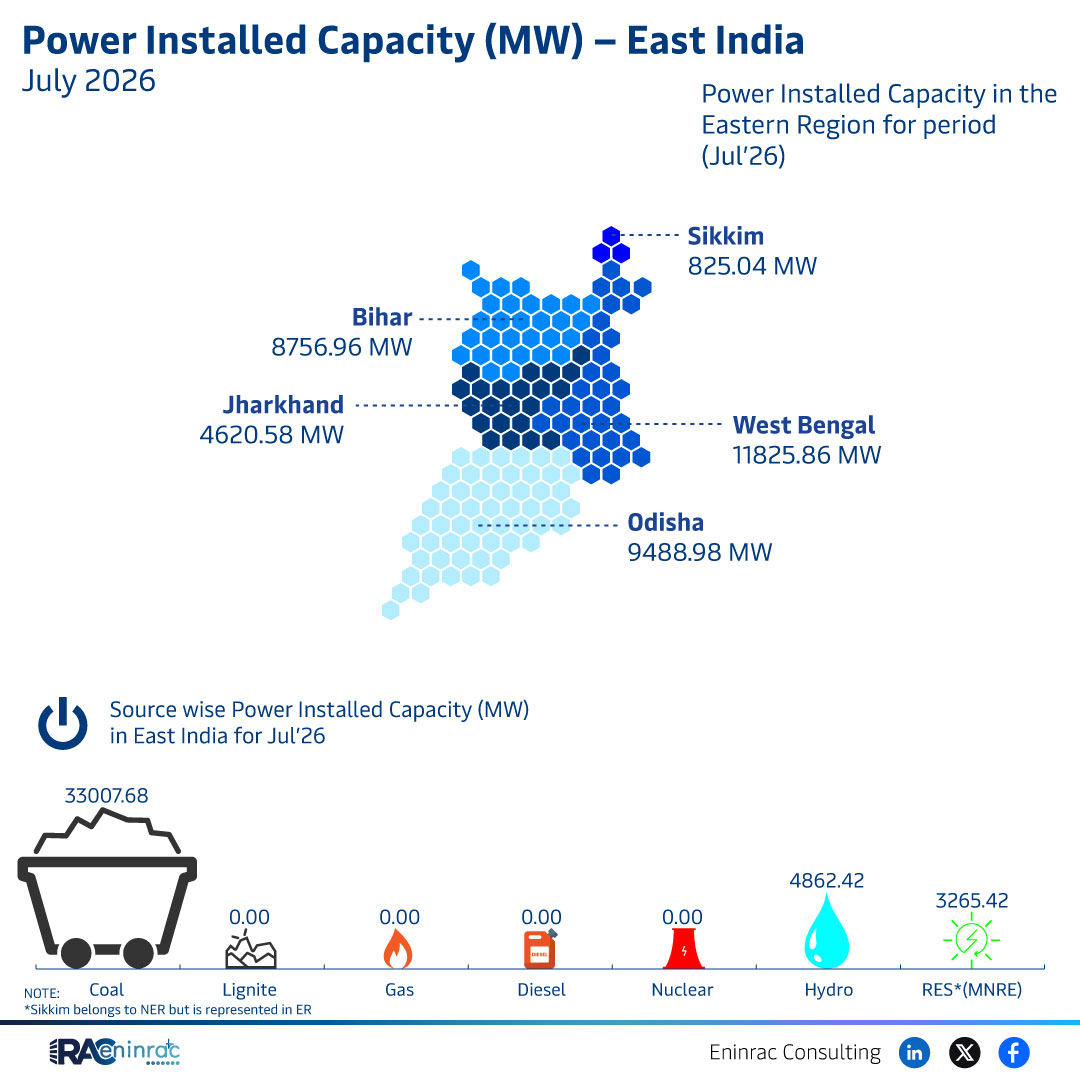
What does the July 2026 data tell us about power availability in East India? The numbers show that West Bengal leads with 11,825.86 MW, followed closely by Odisha at 9,488.98 MW and Bihar at 8,756.96 MW. Sikkim, while much smaller at 825.04 MW, still adds valuable capacity in the North‑Eastern region. The total installed capacity for the region reaches roughly 33,008 MW, highlighting a strong reliance on conventional thermal sources complemented by renewable contributions.
Statewise Capacity Comparison in East India
When we compare the states, West Bengal’s capacity stands out as the highest, indicating a more diversified generation mix that includes coal, gas, and emerging renewables. Odisha’s figures reflect its strategic investments in both thermal and hydro projects, while Bihar’s capacity growth signals ongoing efforts to meet rising demand in a densely populated area. Sikkim’s modest capacity is largely hydro‑based, showcasing the state’s focus on clean energy despite its limited scale. These differences illustrate how local resource endowments, policy priorities, and infrastructure development shape the overall capacity profile.
Impact on Sectors and Industries
The distribution of installed capacity influences several key sectors. Power‑intensive industries such as steel, cement, and chemicals rely on reliable electricity, making West Bengal’s robust capacity essential for regional manufacturing. Agricultural processing in Bihar benefits from increased generation, while Odisha’s mix supports mining and port activities. Renewable‑focused initiatives in Sikkim attract eco‑tourism and green investments. For investors, the capacity breakdown signals where future projects may be most viable, and policymakers can use these insights to prioritize grid reinforcement, transmission upgrades, and incentivize renewable integration.
Key Takeaways
- West Bengal holds the highest installed capacity in East India with 11,825.86 MW.
- Odisha and Bihar each contribute significant capacity, nearing 9,500 MW and 8,800 MW respectively.
- Sikkim’s 825.04 MW reflects a focus on hydro‑based renewable energy.
- The region’s total capacity approaches 33,008 MW, underscoring a strong reliance on thermal generation.
- Capacity variations are driven by resource availability, policy support, and industrial demand.
- Understanding these figures helps investors target growth areas and guides policymakers in infrastructure planning.
FAQs
Which East India state has the highest power installed capacity in July 2026?
West Bengal leads with 11,825.86 MW of installed capacity.
How does Bihar’s capacity compare to Odisha’s?
Bihar has 8,756.96 MW, while Odisha slightly exceeds it with 9,488.98 MW.
What type of energy predominates in Sikkim’s capacity?
Sikkim’s capacity is primarily hydro‑based, reflecting its renewable energy focus.
Why is the total East India capacity important for investors?
The total figure of roughly 33,008 MW highlights market size, growth potential, and areas where new generation projects could be profitable.
What sector benefits most from West Bengal’s high capacity?
Manufacturing and heavy‑industry sectors benefit significantly from West Bengal’s robust power supply.