
Introduction
The power sector in India's North Eastern region has seen notable growth as of July 2026. This data‑driven overview captures the installed capacity measured in megawatts (MW) for each state, providing a clear snapshot of the region’s energy landscape. Understanding state‑wise capacity helps stakeholders evaluate infrastructure development, regional demand‑supply balance, and the role of various fuel sources. Readers will learn which states lead in generation, how renewable and hydro resources compare, and what the figures imply for future planning and investment decisions. By examining the raw numbers, policymakers, investors, and industry analysts can make informed choices that support sustainable growth across the Northeast.
What Does the Data Reveal About This Topic?
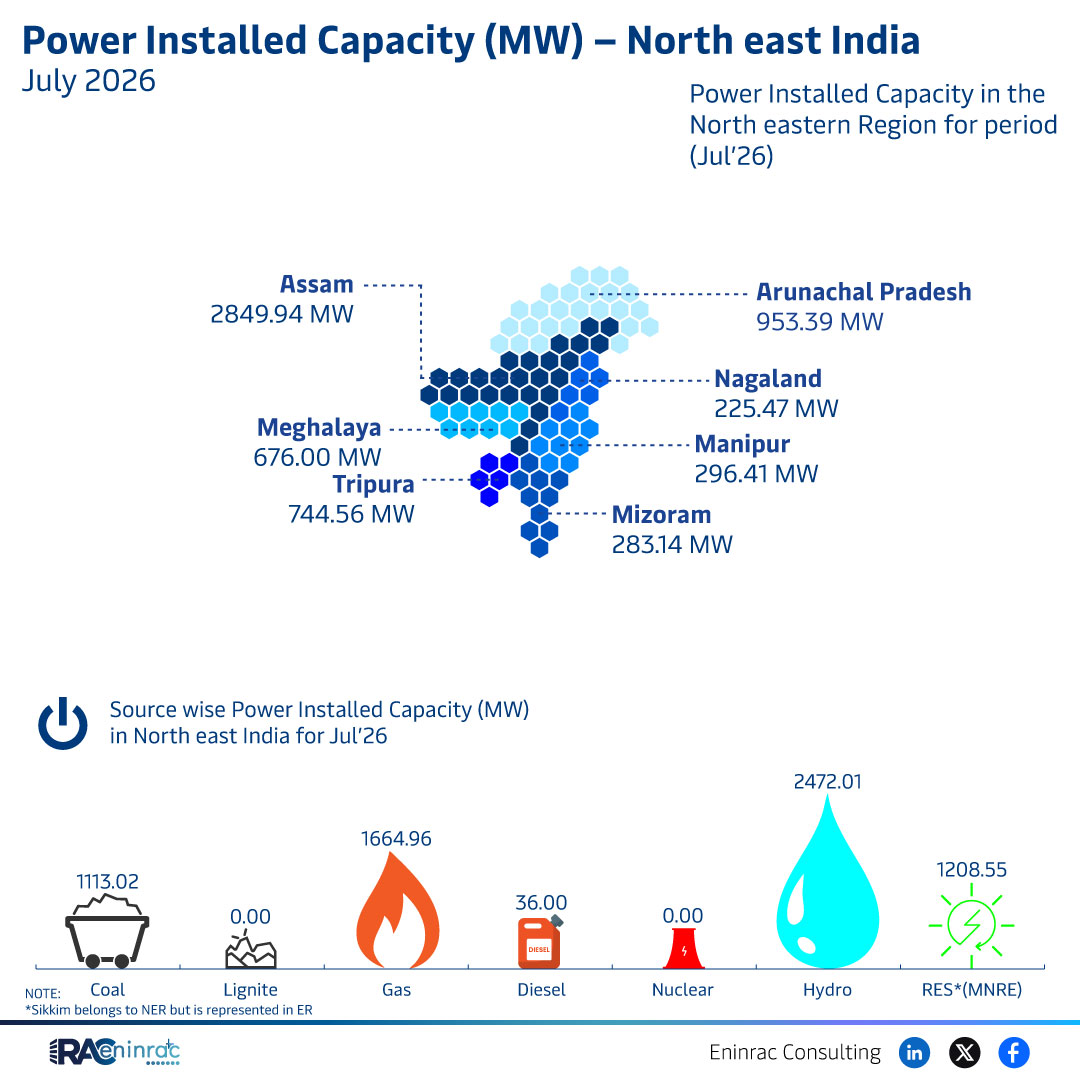
What does the July 2026 data reveal about power installed capacity in North East India? The figures show Assam as the clear leader with 2,849.94 MW, followed by Mizoram at 744.56 MW and Meghalaya at 676.00 MW. Smaller states such as Nagaland, Tripura and Arunachal Pradesh contribute 225.47 MW, 296.41 MW and 953.39 MW respectively. The distribution highlights a concentration of capacity in the larger states while indicating emerging potential in the smaller ones, especially where hydro and renewable projects are being commissioned.
State‑wise Capacity Comparison in North East India
Comparing the states reveals distinct patterns. Assam dominates with nearly three gigawatts of installed capacity, reflecting its larger population and industrial base. Mizoram and Meghalaya show strong hydro‑driven growth, each surpassing 600 MW. Arunachal Pradesh, despite its challenging terrain, contributes close to one gigawatt, suggesting significant hydro projects. The modest figures for Nagaland and Tripura indicate limited infrastructure but also room for expansion, particularly in renewable energy sources. Overall, the data underscores a trend toward leveraging the region’s abundant water resources while gradually incorporating solar and other renewables.
Impact on Sectors and Industries
The installed capacity landscape influences several sectors. Energy utilities can plan grid upgrades and transmission corridors to accommodate the growing generation mix. Investors see opportunities in hydro and renewable projects, especially in states with untapped potential. Policymakers gain insight into where subsidies or incentives may be needed to balance regional disparities. Industries that rely on reliable power, such as manufacturing and tourism, benefit from the increased capacity, while consumers experience improved electricity availability and potentially lower tariffs as the supply base expands.
Key Takeaways
- Assam leads the North East with 2,849.94 MW, accounting for the largest share of regional capacity.
- Hydro power remains the dominant source, especially in Mizoram, Meghalaya and Arunachal Pradesh.
- Smaller states like Nagaland and Tripura have capacity below 300 MW, highlighting growth opportunities.
- Renewable energy, particularly solar, is emerging but still represents a minor share of total capacity.
- The data signals a need for enhanced transmission networks to connect dispersed generation sites.
- Policymakers can use these insights to target investments and incentives for balanced regional development.
FAQs
What is the total installed power capacity in North East India for July 2026?
The combined installed capacity across the eight North Eastern states amounts to approximately 6,070 MW.
Which state has the highest installed capacity?
Assam leads the region with 2,849.94 MW of installed capacity.
How significant is hydro power in the region's capacity mix?
Hydro power contributes the majority of capacity, especially in Mizoram, Meghalaya and Arunachal Pradesh, driven by the region’s abundant water resources.
Are renewable sources like solar growing in the North East?
Renewable capacity is increasing, but it still represents a small portion of the total installed capacity compared with hydro.
What implications does this data have for investors?
Investors can target high‑growth areas such as hydro projects in Arunachal Pradesh and emerging solar initiatives in smaller states, while also considering grid infrastructure investments.