
Introduction
Small hydro power generation India is a rapidly evolving segment of the country’s renewable energy mix. In July 2026, the latest industry snapshot reveals how individual states are adding capacity, which regions are leading, and what trends are shaping future development. Understanding these numbers helps investors, policymakers, and energy planners gauge market momentum and make informed decisions. This article unpacks the key figures, compares state performance, and discusses the broader implications for the Indian power sector. By the end of this guide, readers will have a clear picture of the current landscape and future outlook for small hydro projects across India's states.
What Does the Data Reveal About This Topic?
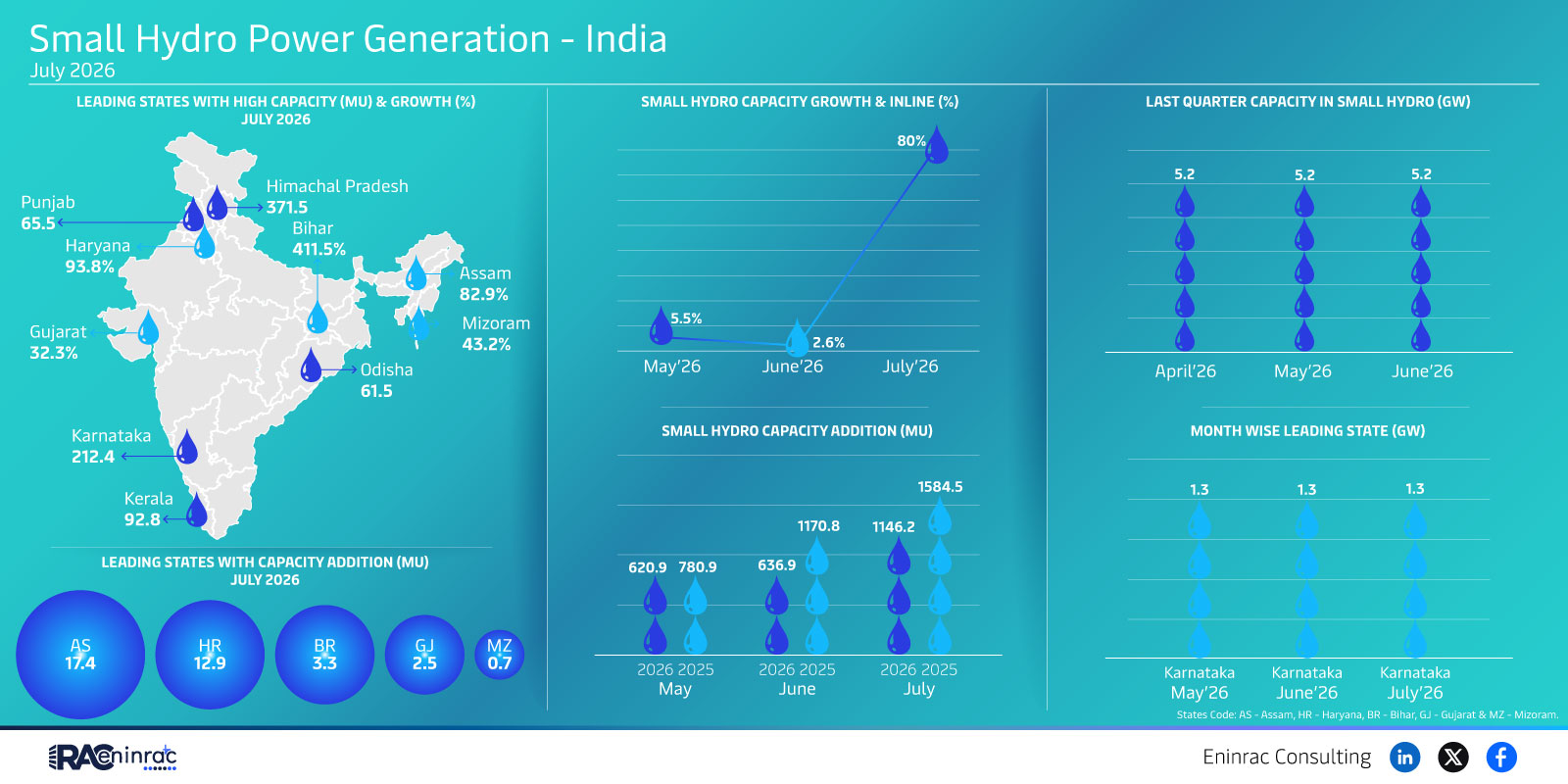
The data shows that Karnataka remains the top contributor with a cumulative capacity of over 2,100 megawatts, while Himachal Pradesh and Bihar also feature prominently with significant additions during the quarter. Capacity growth in May, June and July 2026 reached 1,584.5 megawatts nationally, reflecting a strong upward trajectory. Leading states such as Karnataka recorded consistent monthly additions, underscoring the state’s aggressive development pipeline for small hydro projects. These figures also reflect policy incentives introduced earlier in the year, such as accelerated clearances and favorable tariffs, which have spurred developers to accelerate project execution.
State‑wise Capacity and Growth Highlights
When we compare the leading states, Karnataka’s 2,122.4 MW capacity dwarfs Bihar’s 411.5 MW and Assam’s 82.9 MW, illustrating a stark concentration of small hydro assets in the south‑western region. Himachal Pradesh, despite a smaller base, posted a notable increase of 43.2 MW, signaling growth potential in hilly terrains. Mizoram’s modest 43.2 MW addition highlights emerging opportunities in the northeastern corridor, while Gujarat and Haryana contribute modestly. The month‑wise trend shows a steady rise from April through July, with each month adding roughly 600 MW, confirming a sustained investment flow across the country. Furthermore, the data indicates that states with supportive water resource policies tend to outperform peers, suggesting that regulatory frameworks are a key driver of capacity addition.
Impact on Sectors and Industries
The expansion of small hydro power generation India influences several downstream sectors. Grid operators benefit from diversified supply, reducing reliance on thermal plants and enhancing resilience. Equipment manufacturers see rising demand for turbines, control systems, and civil works, driving local industrial growth. Financial institutions gain new project pipelines for green financing, while state governments can meet renewable targets and attract central incentives. For consumers, increased hydro capacity can translate into lower electricity tariffs and improved reliability, especially in remote and mountainous regions where transmission costs are high. Additionally, the rise in small hydro aligns with India's broader climate commitments, offering a low‑emission alternative that supports the nation’s goal of achieving net‑zero emissions by 2070.
Key Takeaways
- Karnataka leads with over 2,100 MW capacity.
- Himachal Pradesh shows strong growth in hilly areas.
- Monthly additions average around 600 MW.
- Policy incentives boost project execution speed.
- Northeastern states reveal emerging potential.
- Growth supports India’s net‑zero climate goals.
FAQs
Which state contributed the most small hydro capacity in 2026?
Karnataka, with more than 2,100 MW of cumulative capacity.
What was the total national capacity addition in May‑July 2026?
Approximately 1,584.5 MW was added across the country.
How does small hydro impact electricity tariffs for consumers?
Increased hydro supply can lower tariffs and improve reliability, especially in remote areas.
What policy measures support small hydro growth in India?
Accelerated clearances, favorable tariffs, and central incentives encourage rapid development.
Are there growth opportunities for small hydro in northeastern states?
Yes, states like Mizoram and Assam show emerging capacity additions, indicating untapped potential.