
Introduction
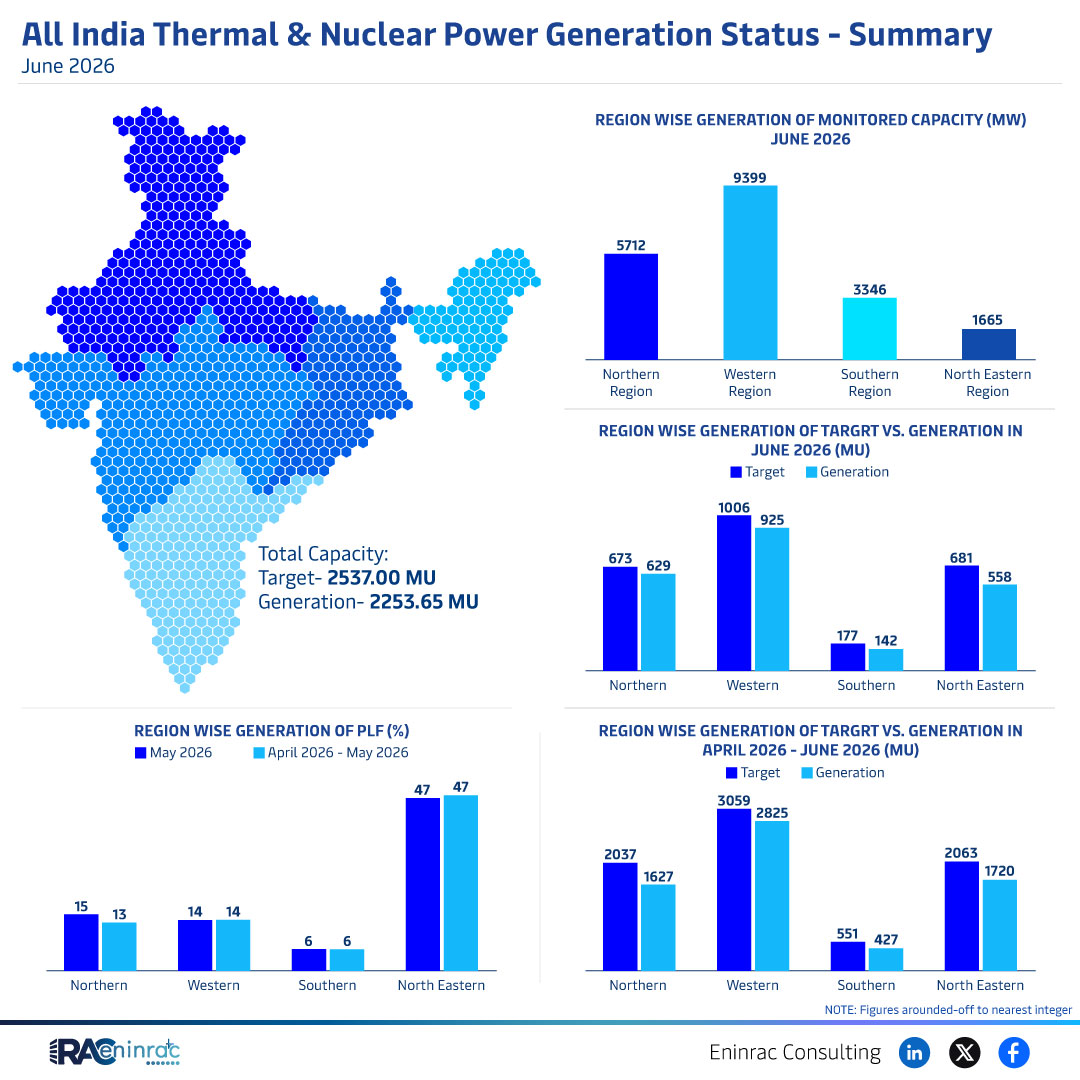
The June 2026 report on India thermal and nuclear power generation provides a concise snapshot of the nation’s electricity output against planned targets. It highlights total generation, regional contributions, and the gap between the projected 2,537 MU and the actual 2,254 MU produced. Understanding this data helps policymakers, investors, and industry observers gauge the performance of the power sector and identify areas needing attention or investment.
What Does the Data Reveal About This Topic?
The data shows that in June 2026 India’s combined thermal and nuclear generation reached 2,254 MU, falling short of the 2,537 MU target. This shortfall raises questions about capacity utilisation, fuel supply, and operational challenges across regions. It also indicates that while some regions exceed expectations, others lag, influencing overall national reliability.
Regional Performance Comparison for June 2026
When the figures are broken down by region, the northern zone emerges as the top performer with a target of 673 MU and an actual generation of 629 MU, closely approaching its goal. The western region recorded a target of 629 MU and generated 594 MU, while the southern zone lagged with a target of 551 MU but only 407 MU produced. The north‑eastern area posted modest numbers, reflecting infrastructure constraints. Monitored capacity data further confirms that the north holds the largest installed capacity at 9,399 MW, dwarfing western (3,346 MW) and southern (1,665 MW) capacities.
Impact on Sectors and Industries
The gap between target and actual generation influences several downstream sectors. Power‑intensive industries such as steel, cement, and chemicals may experience higher procurement costs or supply intermittency. Investors monitor these trends to assess the risk profile of utilities and renewable integration projects. Policymakers use the regional disparities to allocate funding for grid upgrades, fuel logistics, and plant maintenance, aiming to improve capacity utilisation and reduce reliance on imports. Consumers ultimately feel the effect through tariff adjustments and service reliability.
Key Takeaways
- India’s total thermal and nuclear generation in June 2026 was 2,254 MU, below the 2,537 MU target.
- Northern region led with the highest generation and closest alignment to its target.
- Western and southern regions fell short, highlighting regional operational gaps.
- Monitored capacity heavily favours the north, indicating potential for further output growth.
- The shortfall affects industrial costs, investment decisions, and policy priorities.
- Targeted infrastructure upgrades are essential to close the generation gap in upcoming months.
FAQs
What was the total power generation in India for June 2026?
India generated 2,254 MU of thermal and nuclear power in June 2026.
How does the actual generation compare to the target?
The actual output was 283 MU below the 2,537 MU target.
Which region contributed the most to power generation?
The northern region contributed the most, achieving 629 MU against a 673 MU target.
Why did the southern region underperform?
Limited capacity, fuel logistics, and maintenance issues constrained southern output.
What actions can policymakers take to improve generation?
Invest in grid upgrades, streamline fuel supply chains, and support plant efficiency programmes.