
Introduction
India’s wind power sector continues to expand rapidly, and the July 2026 snapshot offers a clear view of where the momentum is strongest. With more than 5,600 MW of total installed capacity reported for the quarter, the data highlights both the states leading in overall capacity and those adding the most new turbines. Understanding these patterns helps investors, policymakers, and industry analysts gauge future development opportunities, plan grid integration, and assess the impact on renewable energy targets. This article breaks down the July 2026 figures, compares state‑wise performance, and explains what the trends mean for India’s clean‑energy transition.
What Does the Data Reveal About This Topic?
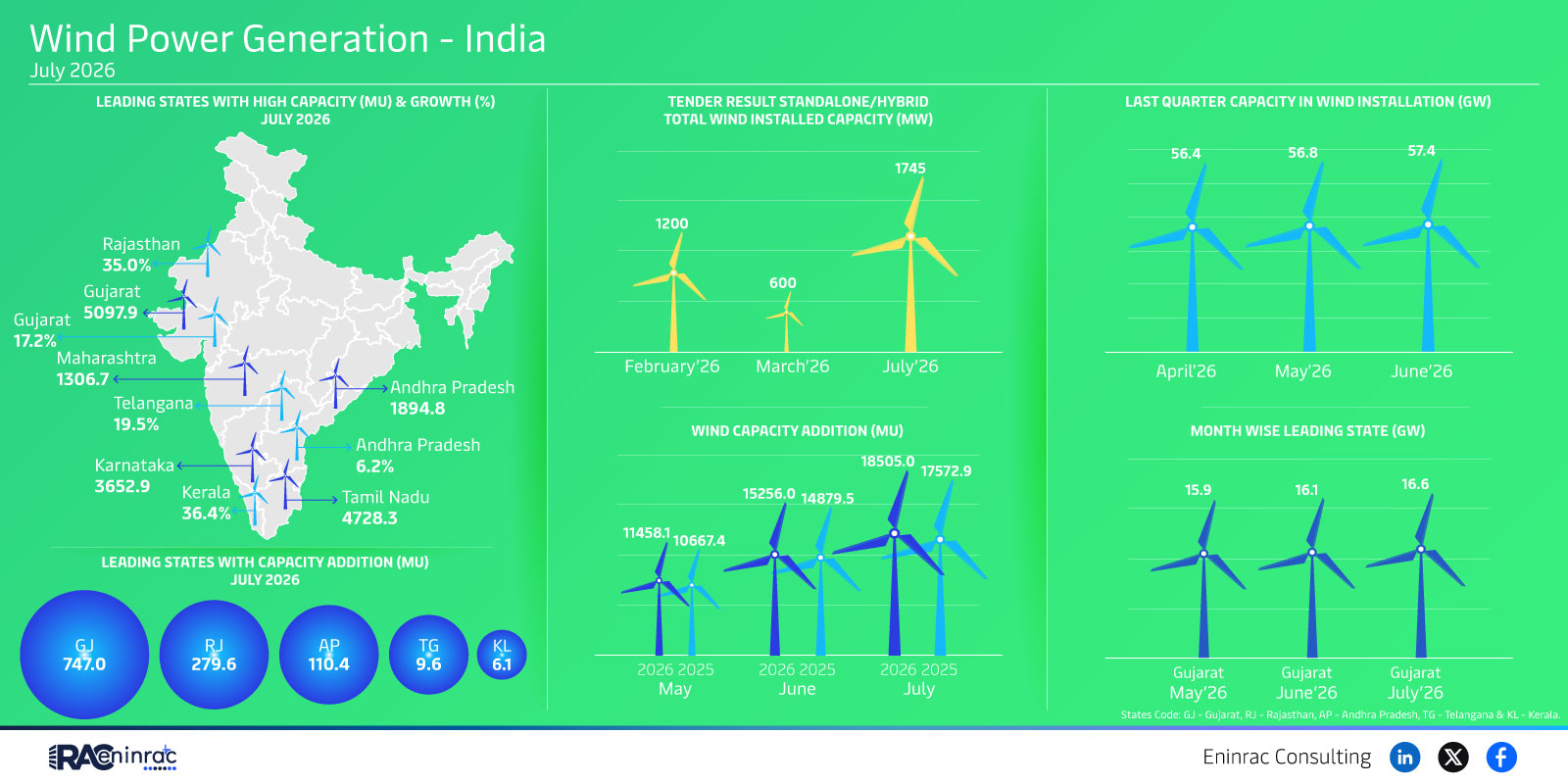
What does the July 2026 data tell us about wind power growth in India? The numbers show that Gujarat remains the dominant contributor, delivering the highest capacity addition across May, June and July, while Rajasthan and Andhra Pradesh also posted significant increments. Overall capacity rose modestly from 5,561 MW in the previous quarter to 5,620 MW, indicating steady but not explosive growth. The month‑wise breakdown reveals a consistent upward trend, with each month adding roughly 0.6 GW of new wind capacity, underscoring the sector’s resilience despite seasonal variability.
Statewise Capacity Leaders and Monthly Additions
Statewise Capacity Leaders and Monthly Additions. Gujarat tops the list with an impressive 1,894.8 MW of installed capacity, far surpassing the next highest state, Karnataka, at 3,652.9 MW when combined with Kerala and Tamil Nadu’s 4,728.3 MW figure. Rajasthan contributes 35 MW, and Andhra Pradesh adds 6.2 MW, reflecting a diverse geographic spread. When examining month‑wise capacity additions, Gujarat consistently leads, recording the largest wind capacity addition in May, June and July. This sustained performance pushes the national total toward the 5.6 GW mark, confirming Gujarat’s role as the powerhouse of India’s wind expansion.
Impact on Sectors and Industries
The continued rise in wind capacity influences several key sectors. Power utilities gain additional dispatchable renewable energy, reducing reliance on coal and improving grid stability. Manufacturing of turbine components experiences higher demand, creating jobs in states like Gujarat and Karnataka where supply chains are already established. Financial institutions see increased opportunities for green financing and green bonds, while state governments can meet renewable obligations under the national targets. Moreover, the growth reshapes energy markets by lowering wholesale electricity prices in regions with high wind penetration, benefitting industrial consumers and residential users alike.
Key Takeaways
- Gujarat leads both total installed capacity and monthly additions, solidifying its position as the top wind state.
- National wind capacity crossed the 5.6 GW threshold in Q2 2026, reflecting steady growth.
- Rajasthan and Andhra Pradesh, though smaller, showed notable capacity additions, indicating geographic diversification.
- Consistent month‑over‑month additions of about 0.6 GW demonstrate resilience against seasonal wind variations.
- Increased wind capacity supports renewable energy targets and reduces coal dependency for Indian power grids.
- Growth stimulates turbine manufacturing, green financing, and lower electricity prices in high‑wind regions.
FAQs
Which Indian state contributed the most wind capacity in July 2026?
Gujarat contributed the most, leading in capacity addition for May, June and July.
What was the total wind installed capacity in India by July 2026?
Approximately 5,620 MW (5.6 GW) across the country.
How does the monthly addition trend look for the second quarter of 2026?
Each month added roughly 0.6 GW, showing a steady upward trend.
Why is wind power growth important for India's energy mix?
It helps meet renewable targets, cuts coal use, improves grid stability, and lowers electricity costs.
What sectors benefit most from the wind capacity increase?
Power utilities, turbine manufacturers, financial institutions offering green financing, and consumers via lower prices.