
Introduction
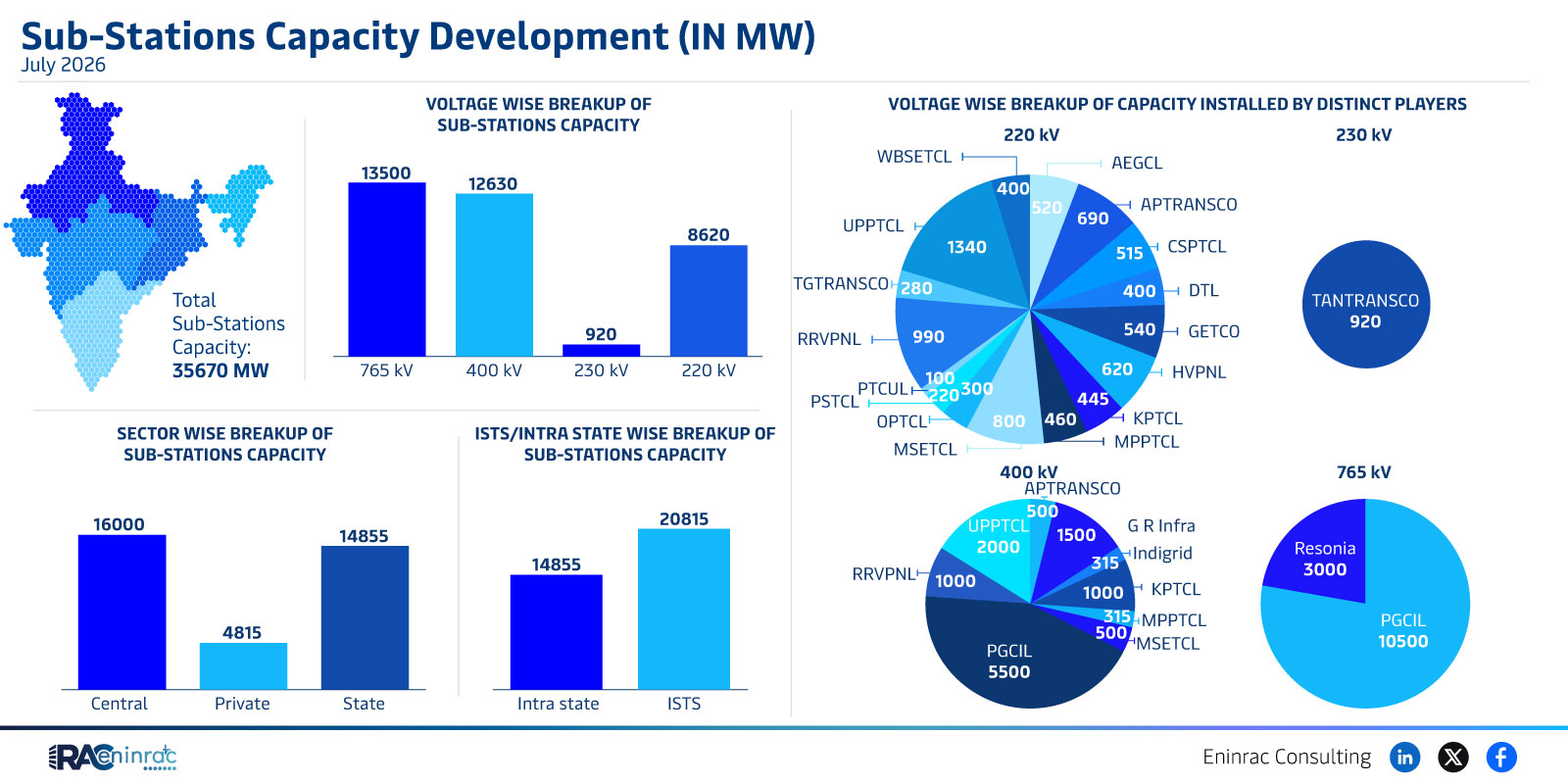
The July 2026 sub‑station capacity development report captures the installed megawatt capacity of major transmission players across India. It breaks down capacity by voltage level (220 kV and 230 kV) and highlights contributions from state transmission utilities such as WBSETCL, AEGCL, APTRANSCO, UPPTCL, CSPTCL, TGTRANSCOMF and others. Understanding this data helps policymakers, investors, and industry analysts gauge infrastructure growth, regional balance, and future investment needs in the power sector.
What Does the Data Reveal About This Topic?
What does the July 2026 data reveal about sub‑station capacity development in India? The figures show a total installed capacity of roughly 12,630 MW at 220 kV and 920 MW at 230 kV, indicating that the majority of new capacity is being added at the 220 kV level. State utilities dominate the 220 kV segment, while the 230 kV segment remains comparatively small, reflecting strategic focus on medium‑voltage networks for regional load management.
Voltage‑Wise Capacity Distribution Across Players
When comparing the 220 kV and 230 kV breakdowns, WBSETCL and AEGCL together account for over 80 % of the 220 kV capacity, with APTRANSCO contributing around 3 000 MW. UPPTCL, CSPTCL and TGTRANSCOMF each add modest shares ranging from 300 MW to 500 MW. The 230 kV class, represented mainly by a single entry of 920 MW, is primarily managed by RRVPNL‑GETCO. This uneven distribution underscores the emphasis on expanding medium‑voltage corridors to support growing demand in densely populated states while keeping high‑voltage expansion limited to strategic corridors.
Impact on Sectors and Industries
Sub‑station capacity development directly influences the reliability of electricity supply, the cost of power delivery, and the attractiveness of downstream industries. An expanded 220 kV network reduces transmission losses and eases the integration of renewable generation, benefiting manufacturing, agriculture and services. For investors, clear capacity growth signals opportunities in engineering, procurement, construction (EPC) contracts and equipment manufacturing. Policymakers can use these insights to prioritize funding, streamline approvals, and align grid reinforcement with state‑level renewable targets.
Key Takeaways
- Overall installed sub‑station capacity reached approximately 13,550 MW in July 2026.
- The 220 kV tier dominates with over 12,600 MW, while 230 kV adds just under 1,000 MW.
- WBSETCL and AEGCL together contribute the largest share of 220 kV capacity.
- APTRANSCO leads among state utilities with roughly 3,000 MW at 220 kV.
- High‑voltage (230 kV) expansion remains limited, centered on RRVPNL‑GETCO.
- Capacity growth supports renewable integration, reduces losses, and creates EPC market opportunities.
FAQs
Which voltage level received the most capacity addition in July 2026?
The 220 kV level received the majority of additions, accounting for over 12,600 MW of new capacity.
What are the leading players in 220 kV capacity?
WBSETCL, AEGCL and APTRANSCO are the top contributors, together providing more than 80 % of the 220 kV capacity.
Why is 230 kV capacity comparatively low?
Strategic focus on medium‑voltage expansion, cost considerations, and targeted high‑voltage corridors keep 230 kV development modest.
How does sub‑station capacity affect renewable energy integration?
Higher capacity at 220 kV reduces transmission bottlenecks, allowing smoother integration of solar and wind projects into the grid.
What opportunities arise for investors from this data?
Investors can target EPC contracts, transformer manufacturing, and grid‑automation technologies supporting the expanding 220 kV network.