
Introduction
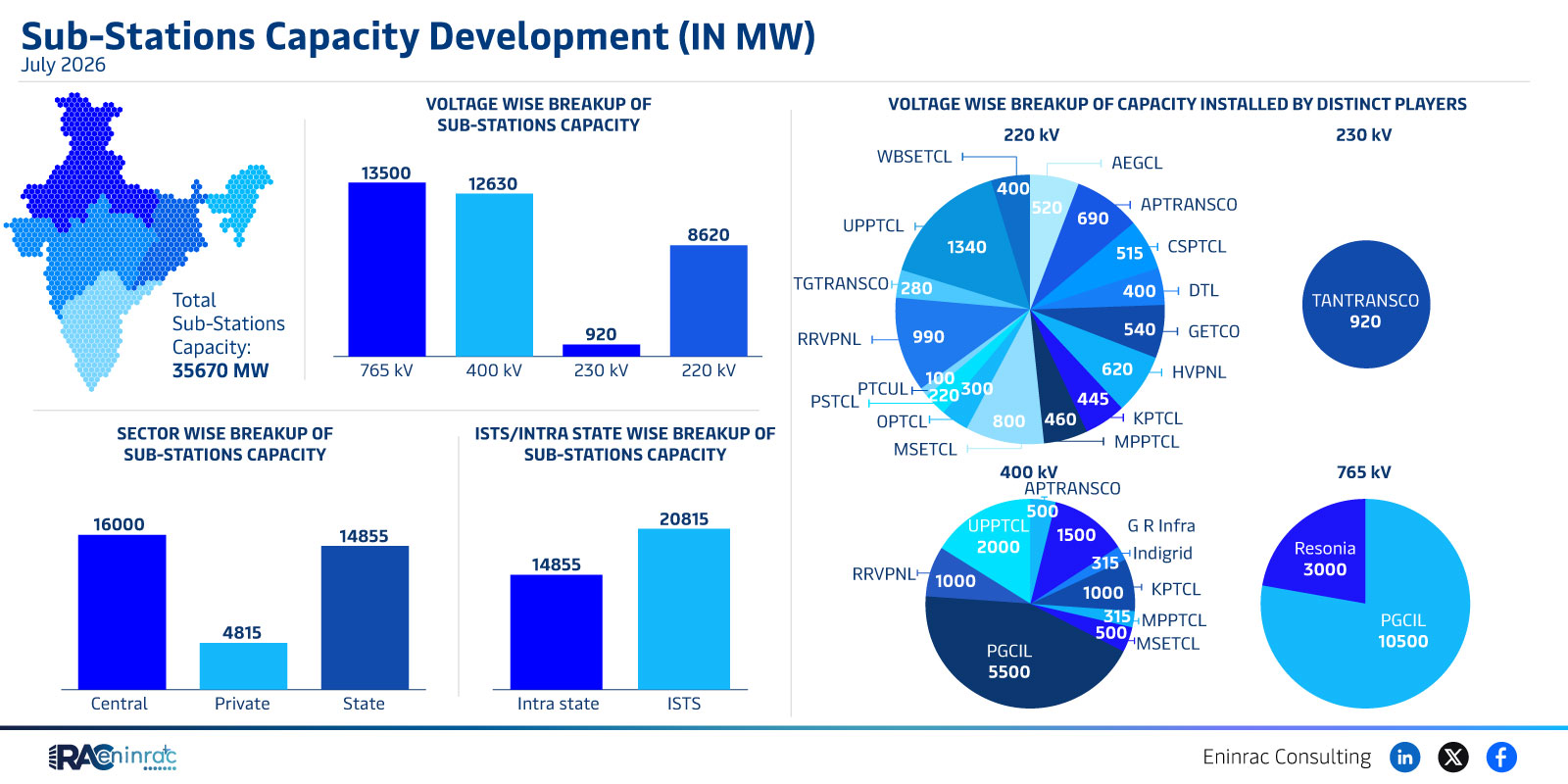
The July 2026 sub stations capacity development report provides a detailed snapshot of how new sub‑station capacity is being added across India. It breaks down the installed megawatt figures by voltage level, primarily 220 kV and 230 kV, and attributes the capacity to individual transmission utilities such as WBSETCL, AEGCL, APTRANSCO, UPPTCL and others. Understanding this data is crucial for investors, policymakers and industry analysts who monitor the growth of the transmission network, assess regional power reliability and plan future infrastructure investments. This article walks through the key numbers, highlights notable trends and explains the broader implications for the power sector.
What Does the Data Reveal About This Topic?
The raw figures show that a total of roughly 12,630 MW of sub‑station capacity was reported, with a significant portion allocated to the 220 kV tier and a smaller share to the 230 kV tier. Leading players such as WBSETCL and AEGCL dominate the higher‑voltage segment, while APTRANSCO, UPPTCL and CSPTCL contribute notable capacity in the lower tier. The data also suggests that some utilities, for example KPTCL, have not reported any new capacity for the period, indicating either a pause in development or reporting delays. Overall, the numbers point to a strengthening of high‑voltage transmission corridors.
Voltage Wise Capacity Distribution Among Players
When the capacity is examined by voltage level, the 220 kV segment accounts for the majority of the installed megawatts, reflecting the continued reliance on this voltage for regional load transfer. The 230 kV segment, though smaller, includes strategic projects aimed at enhancing inter‑state connectivity. WBSETCL leads the 220 kV additions with over 6,000 MW, while AEGCL follows closely with a substantial share. In the 230 kV band, APTRANSCO and TGTRANSCOMF emerge as significant contributors. The disparity between the two voltage levels underscores the phased approach of Indian transmission planning, where robust 220 kV networks are reinforced before expanding 230 kV corridors.
Impact on Sectors and Industries
The expansion of sub‑stations directly influences the reliability of power supply to industrial zones, commercial districts and residential areas. Higher capacity at 220 kV and 230 kV reduces transmission losses, enabling manufacturers to operate with fewer interruptions and lower electricity costs. For renewable energy developers, the enhanced transmission backbone facilitates the integration of solar and wind farms into the grid. Policymakers can leverage these capacity gains to meet national electrification targets and to support the push for new energy sources. Financial institutions also view this data as an indicator of asset growth, shaping investment decisions in the power infrastructure sector.
Key Takeaways
- The total reported sub‑station capacity for July 2026 exceeds 12,000 MW.
- 220 kV installations dominate the capacity mix, highlighting its role in regional distribution.
- WBSETCL and AEGCL are the top contributors in the high‑voltage segment.
- APTRANSCO and TGTRANSCOMF lead the 230 kV capacity additions.
- KPTCL reports no new capacity, suggesting a reporting gap or temporary pause.
- The growth supports industrial reliability, renewable integration and policy goals.
FAQs
What is the total sub‑station capacity added in July 2026?
Approximately 12,630 MW of new capacity was reported across all listed utilities.
Which voltage level receives the most capacity?
The 220 kV level receives the majority of the new capacity, reflecting its importance in the network.
Which utilities are the largest contributors?
WBSETCL and AEGCL lead the high‑voltage additions, while APTRANSCO and TGTRANSCOMF are key for 230 kV.
How does this data affect renewable energy projects?
Improved transmission capacity facilitates the integration of solar and wind farms, reducing curtailment.
Why does KPTCL show zero capacity?
The zero figure may indicate a reporting delay or a temporary pause in its sub‑station projects.