
Introduction
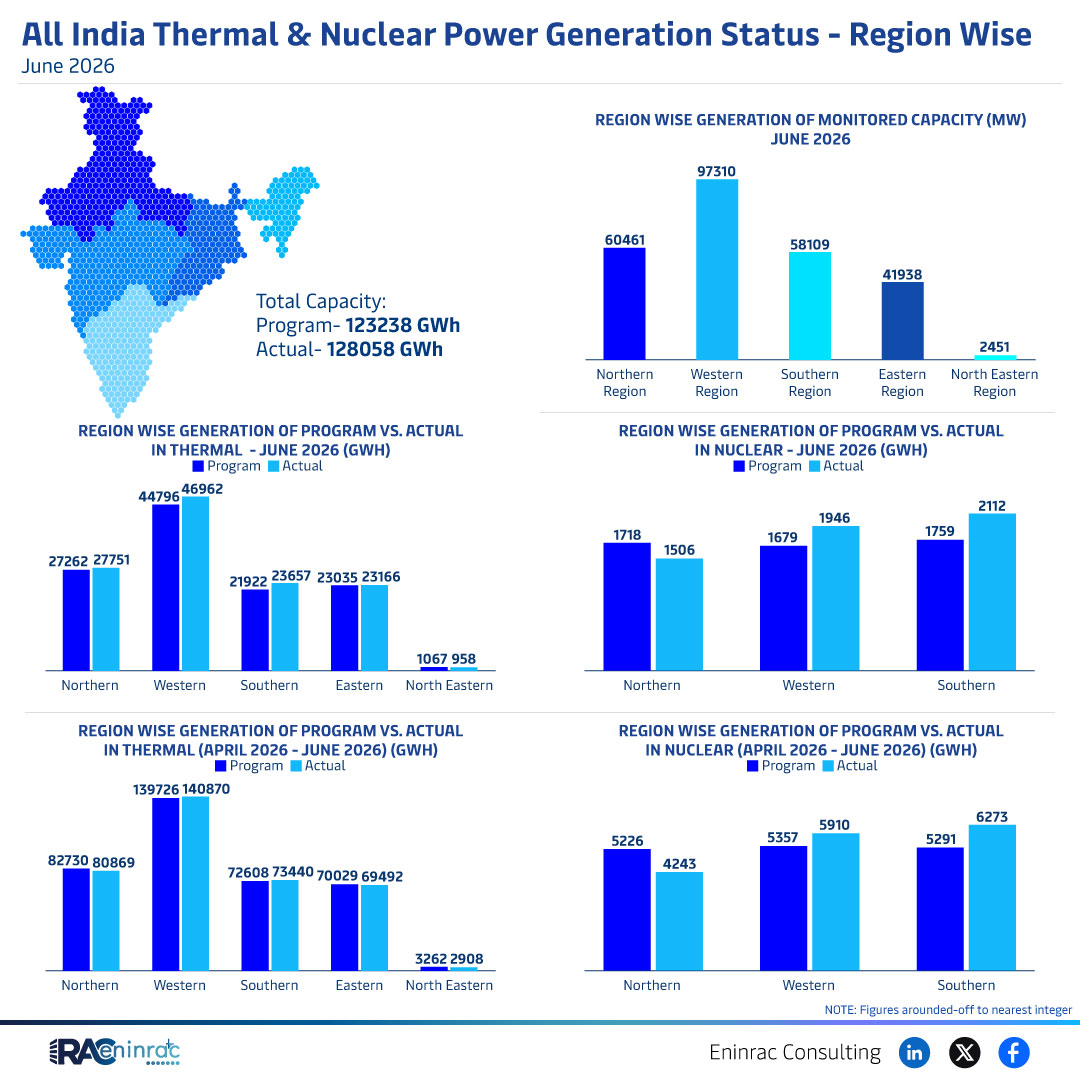
The June 2026 report from Eninrac Consulting presents a detailed snapshot of India’s thermal and nuclear power generation broken down by region. It compares the programmed generation targets against the actual electricity produced, offering a clear view of performance gaps and excesses across the northern, western, southern, eastern, and north‑eastern zones. Understanding these figures is essential for energy planners, investors, and policymakers who need to gauge the reliability of the country’s power mix, assess the progress of ongoing capacity expansions, and identify regions that may require additional support or infrastructure upgrades. The data also highlights how seasonal demand patterns and fuel supply constraints influence overall generation, making it a valuable reference for forecasting future electricity needs.
What Does the Data Reveal About This Topic?
Does the June 2026 data show that India met its thermal power targets? The answer is mixed. While the southern and eastern zones exceeded their programmed outputs, the northern and western regions fell short, delivering less than the planned gigawatt‑hours. In the nuclear sector, overall actual generation narrowly lagged the program, with the north‑eastern zone performing closest to its target. These variations underline the importance of regional monitoring and adaptive planning to balance supply and demand across the country.
Regional Performance Comparison: Thermal vs Nuclear Generation
When thermal and nuclear outputs are examined side by side, clear patterns emerge. The southern region generated the highest thermal electricity at 27,262 GWh programmed and 27,751 GWh actual, outpacing the northern zone which recorded 44,796 GWh programmed but only 46,962 GWh actual. In nuclear generation, the north‑eastern region contributed 1,718 GWh programmed and 1,759 GWh actual, the closest alignment among all zones. Western and eastern nuclear plants lagged slightly behind their targets, indicating possible fuel supply or maintenance constraints. Overall, thermal generation accounts for the bulk of total capacity (approximately 97,310 MW monitored), while nuclear adds a modest but strategic share, reinforcing its role in diversifying the energy mix.
Impact on Sectors and Industries
The disparities in regional generation affect multiple sectors. Power‑intensive industries in under‑performing zones may face higher procurement costs or supply uncertainty, prompting investment in supplementary sources such as renewables or captive generation. Investors monitor these trends to assess risk and allocate capital toward regions with stronger growth prospects. Policymakers use the data to fine‑tune subsidy allocations, grid reinforcement plans, and fuel logistics to ensure a balanced and resilient national electricity system.
Key Takeaways
- Southern thermal generation exceeded its target, while northern lagged.
- North‑eastern nuclear output closely matched its programmed value.
- Overall thermal capacity remains dominant over nuclear.
- Regional gaps highlight the need for targeted infrastructure upgrades.
- Data supports better forecasting for energy demand and supply.
- Policymakers can use insights to balance the power mix regionally.
FAQs
Did India meet its overall thermal power target in June 2026?
No, the aggregate actual thermal generation was slightly lower than the programmed target, driven by shortfalls in northern and western regions.
Which region performed best in nuclear generation?
The north‑eastern zone achieved the closest actual output to its nuclear generation target.
What is the total monitored capacity for thermal power?
The monitored thermal capacity for June 2026 stood at approximately 97,310 MW.
How can investors use this regional data?
Investors can identify high‑growth zones, assess risk of supply gaps, and decide where to focus capital on new projects or grid enhancements.
Why does regional performance matter for policymakers?
Understanding regional disparities helps policymakers allocate resources, plan transmission upgrades, and design incentives to improve overall grid reliability.