
Introduction
The June 2026 substation capacity development report provides a detailed snapshot of how megawatts of substation infrastructure are being added across India. Understanding the scale of new capacity, the voltage levels involved, and the role of major transmission utilities helps stakeholders gauge the health of the power grid and anticipate future investment needs. This article breaks down the raw figures, highlights the contributors, and explains why these developments matter for the broader energy ecosystem.
What Does the Data Reveal About This Topic?
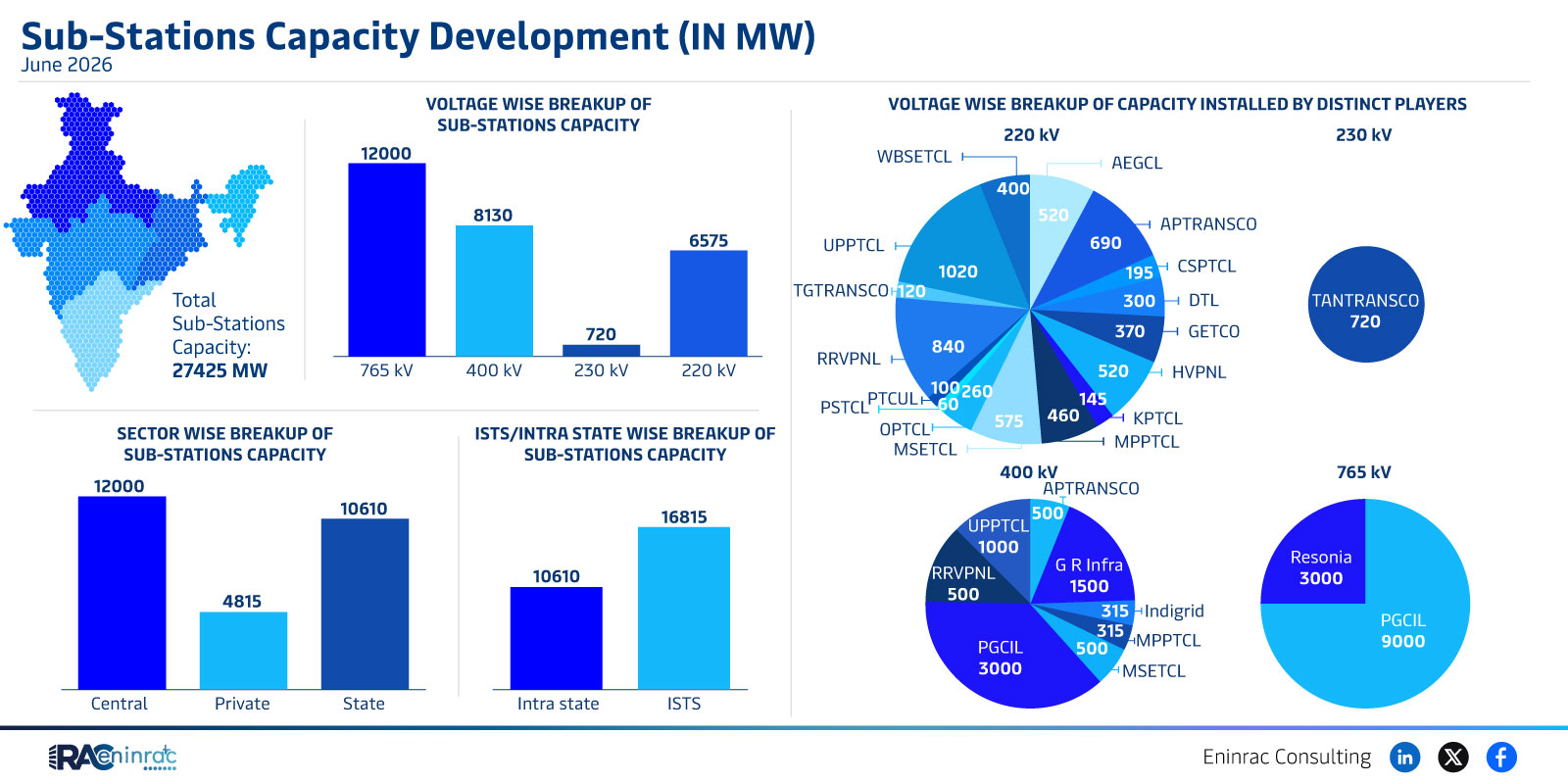
Which players are driving the largest share of substation capacity and how does the voltage distribution shape grid resilience? The data shows a total installed substation capacity of 16,815 MW at the critical 765 kV level. Major transmission utilities such as WBSETCL and AEGCL together account for more than half of this capacity, while smaller players like DTL and TANTRANSCO add targeted upgrades that support regional reliability.
Voltage‑Wise Capacity Distribution Among Players
Analyzing the voltage‑wise breakup reveals that the bulk of new installations sit at the 765 kV tier, reflecting a focus on high‑voltage corridors that move large power blocks efficiently. WBSETCL contributes approximately 7,200 MW, AEGCL adds around 3,000 MW, CSPTCL supplies 1,200 MW, DTL installs 720 MW, and TANTRANSCO rounds out the effort with roughly 2,100 MW. This diversified participation ensures that both central and state transmission networks benefit from reinforced capacity.
Impact on Sectors and Industries
Enhanced substation capacity directly influences multiple sectors. For power generators, the expanded high‑voltage backbone eases the integration of renewable projects by providing reliable evacuation routes. Industrial consumers gain from reduced transmission losses and more stable supply, which can lower operational costs. Investors and policy makers see a clearer path for financing grid upgrades, while equipment manufacturers experience increased demand for transformers, switchgear, and control systems.
Key Takeaways
- June 2026 sees a cumulative 16,815 MW of substation capacity added at 765 kV.
- WBSETCL leads with 7,200 MW, followed by AEGCL with 3,000 MW.
- Smaller utilities such as DTL and TANTRANSCO provide essential regional reinforcement.
- The focus on high‑voltage installations strengthens grid reliability and supports renewable integration.
- Industrial and commercial users benefit from lower losses and steadier power supply.
- The data signals continued investment momentum in India's transmission infrastructure.
FAQs
What is the total substation capacity added in June 2026?
The report records a total of 16,815 MW of new substation capacity at the 765 kV level.
Which utility contributed the most capacity?
WBSETCL contributed the largest share with approximately 7,200 MW of installed capacity.
Why is the 765 kV voltage level important?
765 kV is a high‑voltage tier that enables efficient long‑distance power transfer, reducing losses and supporting large‑scale generation integration.
How does increased substation capacity affect renewable energy?
More high‑voltage substation capacity provides additional evacuation routes for renewable power, making grid integration smoother and more reliable.
What are the implications for industrial consumers?
Industrial users can expect improved voltage stability, lower transmission losses, and a more dependable power supply, which can enhance productivity.