
Introduction
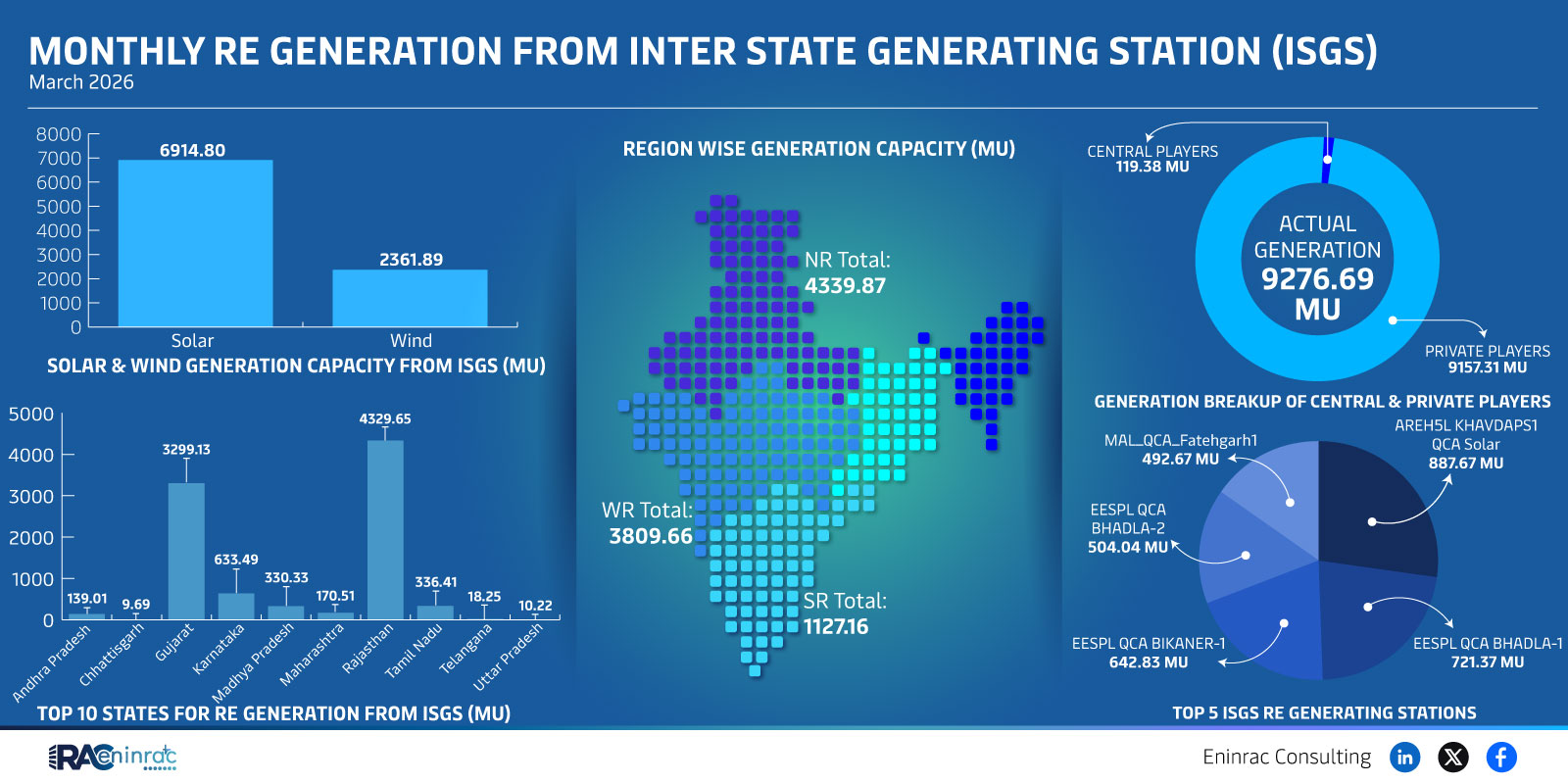
The March 2026 monthly report for Inter State Generating Stations (ISGS) provides a detailed snapshot of power generation across regions, highlighting total output, solar and wind contributions, and the top five generating stations. Understanding these figures is essential for energy analysts, policymakers, and investors who track the performance of India’s power sector and the shift toward renewable sources.
What Does the Data Reveal About This Topic?
The data shows that ISGS produced a total of 9,276.69 MU in March 2026, with a notable solar and wind capacity of 9,157.31 MU. This raises the question: how significant is renewable generation within the overall output? The answer is that renewable sources dominate the generation mix, accounting for nearly the entire capacity reported, indicating a strong transition toward clean energy.
Regional Generation Capacity Comparison
When comparing regional capacity, the chart indicates that the highest actual generation reached 2,361.89 MU, while other regions contributed lower volumes. The top five ISGS stations, including BHADLA-2, lead the output, reflecting geographic concentration of high‑capacity plants. This comparative view highlights disparities between regions and underscores where infrastructure investments are most effective.
Impact on Sectors and Industries
The surge in solar and wind generation influences multiple sectors. Utilities benefit from lower fuel costs and reduced emissions, while equipment manufacturers see increased demand for turbines and photovoltaic panels. Investors are attracted to renewable projects due to stable returns, and policymakers can leverage the data to design incentives that further accelerate clean‑energy adoption.
Key Takeaways
- Total ISGS generation in March 2026 was 9,276.69 MU.
- Solar and wind capacity contributed 9,157.31 MU, dominating the mix.
- The highest regional output recorded was 2,361.89 MU.
- Top five stations, such as BHADLA-2, drive the majority of generation.
- Renewable dominance supports India’s clean‑energy targets.
- Sectoral impacts include lower utility costs, higher equipment demand, and attractive investment opportunities.
FAQs
What was the total generation from ISGS in March 2026?
The total generation reported was 9,276.69 MU.
How much solar and wind capacity was recorded?
Solar and wind capacity amounted to 9,157.31 MU.
Which region produced the highest generation?
The region with the highest actual generation recorded 2,361.89 MU.
What are the top ISGS stations?
The top five stations include BHADLA-2 and four other leading facilities.
Why is renewable generation important for the power sector?
Renewables reduce reliance on fossil fuels, lower emissions, and provide stable, long‑term cost advantages.