
Introduction
The May 2026 peak power demand data for North India provides a snapshot of electricity consumption across the region’s key states. Understanding which states draw the most power helps utilities, policymakers, and investors plan for capacity upgrades, demand‑side management, and renewable integration. This article breaks down the numbers, highlights the leading demand centers, and explains the broader implications for the power sector.
What Does the Data Reveal About This Topic?
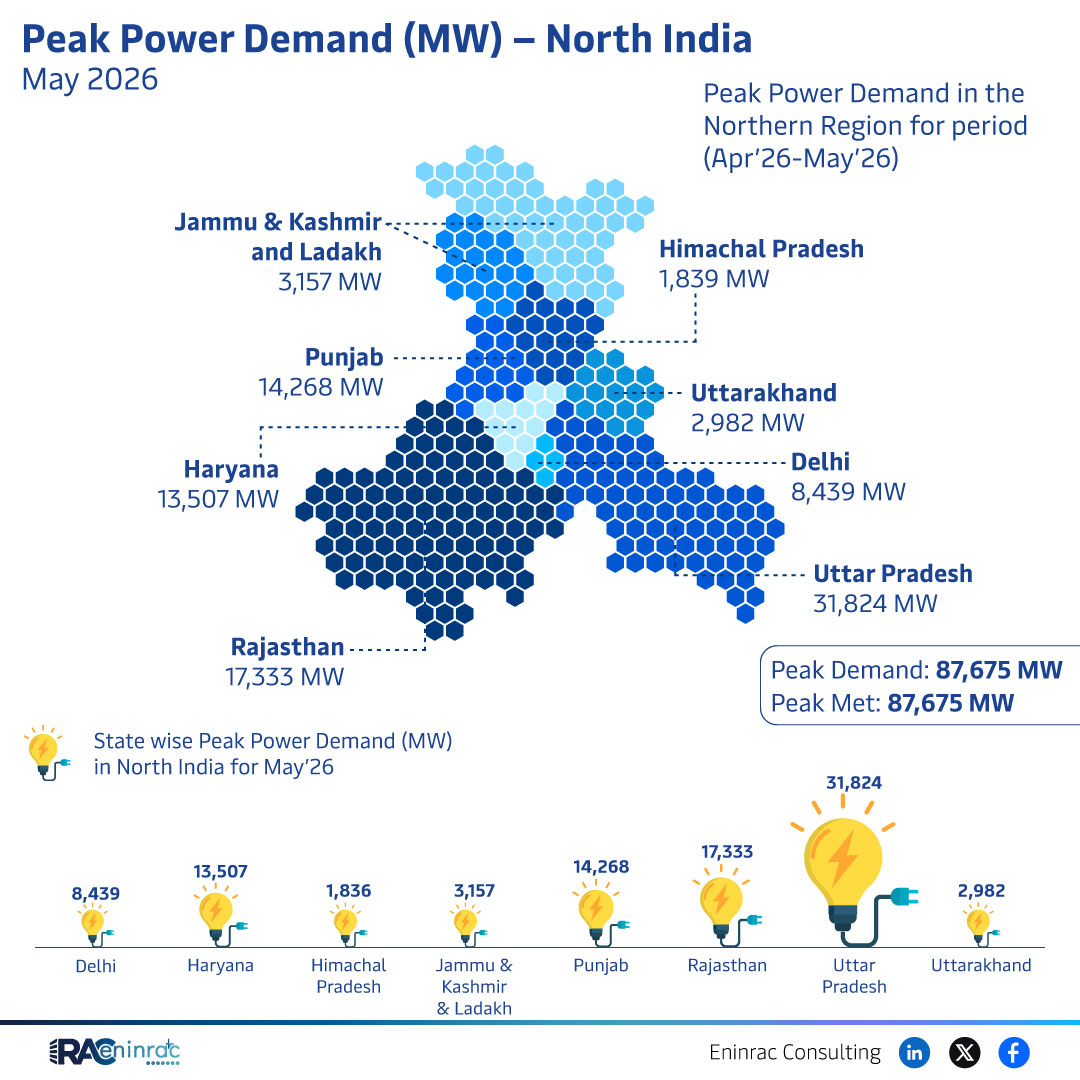
Which states recorded the highest peak demand in May 2026? The data shows Uttar Pradesh leading with 31,824 MW, followed by Rajasthan at 17,333 MW and Haryana at 13,507 MW. Together these three states account for more than half of the total 87,675 MW peak demand in North India.
State‑wise Comparison of Peak Power Demand
When comparing the figures, Uttar Pradesh’s demand dwarfs the next highest state, Rajasthan, by nearly double. Haryana and Punjab also show strong demand, with 13,507 MW and 8,439 MW respectively. Smaller contributors include Himachal Pradesh (3,157 MW), Jammu & Kashmir‑Ladakh (1,839 MW), and Uttarakhand (2,982 MW). Delhi’s demand is modest at 1,836 MW, reflecting its relatively lower industrial load compared with the larger surrounding states.
Impact on Sectors and Industries
High peak demand influences several sectors. Power generators must ensure sufficient thermal and hydro capacity, while transmission operators need to reinforce inter‑state corridors to avoid bottlenecks. Industries in Uttar Pradesh and Rajasthan, such as manufacturing and agro‑processing, are major load drivers, prompting them to explore demand‑response programs. Policymakers can use this data to prioritize renewable integration in high‑demand zones, reducing reliance on fossil fuels.
Key Takeaways
- Uttar Pradesh leads North India with 31,824 MW peak demand in May 2026.
- Rajasthan and Haryana are the second and third highest demand states.
- Four states (Uttar Pradesh, Rajasthan, Haryana, Punjab) together exceed 70 % of regional peak demand.
- Smaller states like Himachal Pradesh, Jammu & Kashmir‑Ladakh, and Uttarakhand each stay below 4,000 MW.
- High demand regions will require reinforced transmission and increased renewable capacity.
- Accurate demand data supports better planning for utilities, investors, and policymakers.
FAQs
What was the total peak power demand for North India in May 2026?
The combined peak demand across all North Indian states was 87,675 MW.
Which state had the lowest peak demand?
Jammu & Kashmir‑Ladakh recorded the lowest demand at 1,839 MW.
How does Delhi’s demand compare to its neighboring states?
Delhi’s peak demand of 1,836 MW is lower than that of Haryana and Punjab, reflecting its smaller industrial base.
Why is Uttar Pradesh’s demand so high?
Uttar Pradesh hosts large industrial clusters, extensive agricultural processing, and a high population, all contributing to its substantial electricity consumption.
What actions can utilities take to manage this peak demand?
Utilities can implement demand‑response programs, upgrade transmission lines, and accelerate renewable integration in high‑demand states.